

Ruby Glass Glassware
Ruby glass glassware brings deep, saturated colour to a room through Victorian decanters, Bohemian vases, and hand-blown wine glasses.
Ruby Glass Glassware
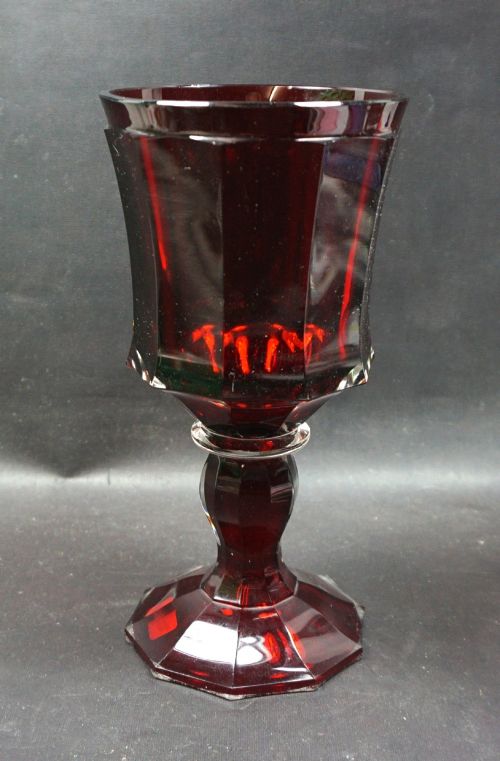
Ruby glass glassware encompasses a rich variety of decorative and practical objects shaped in deep red tones. When searching this phrase, a buyer encounters everything from delicate wine glasses and finger bowls to large epergnes and biscuit barrels.
The pieces appearing on this page span the eighteenth, nineteenth, and early twentieth centuries. Victorian and Bohemian examples dominate, originating from workshops that utilised deep cranberry and overlaid crystal techniques.
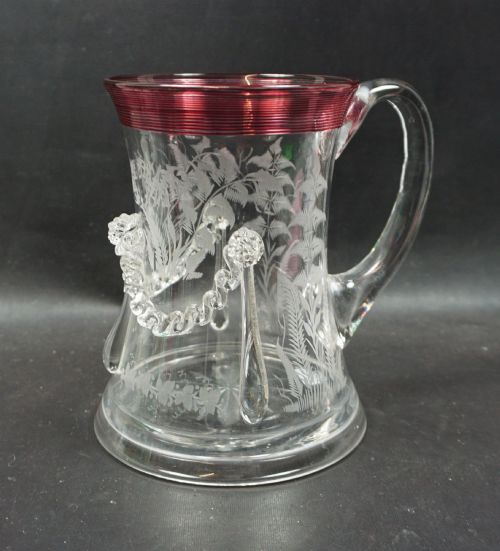
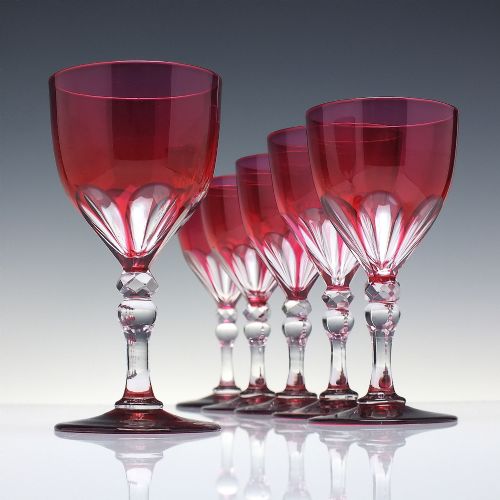
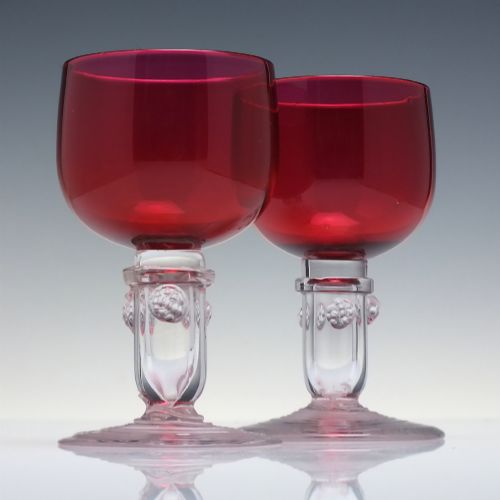
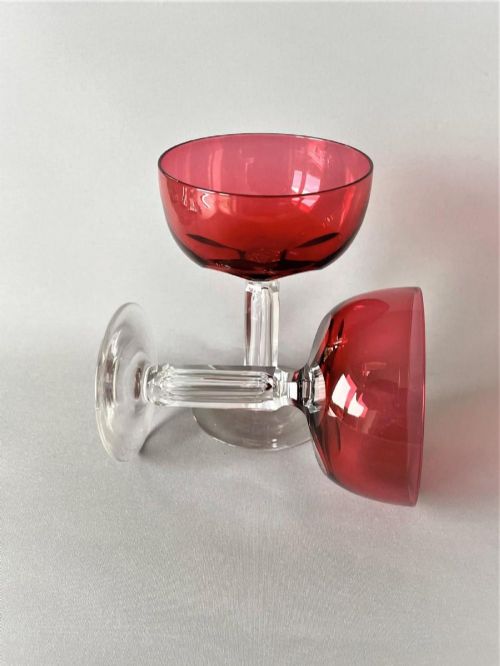
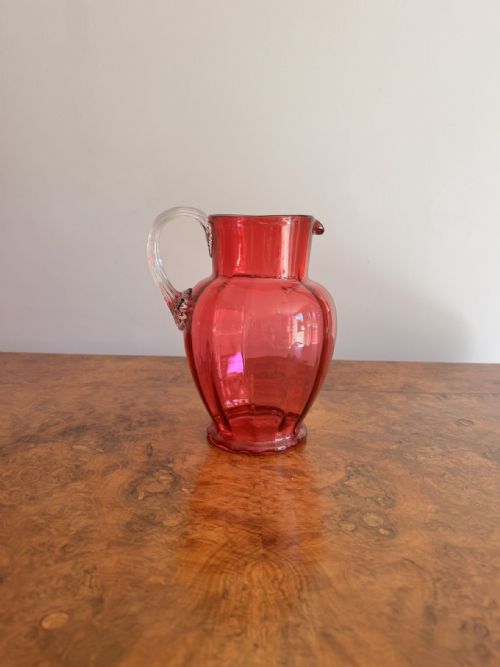
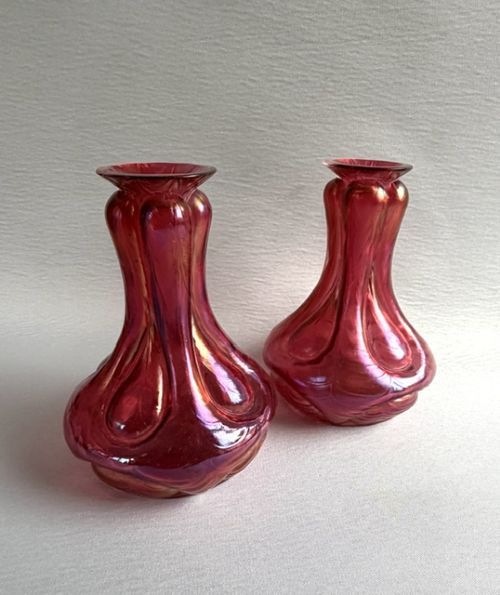
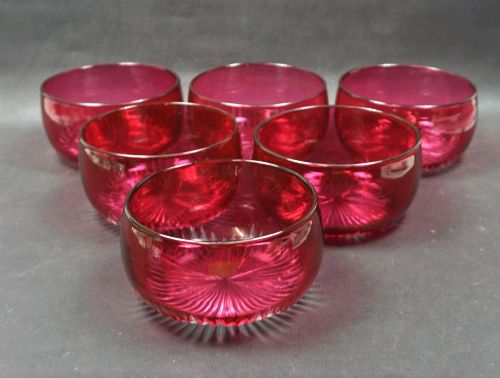
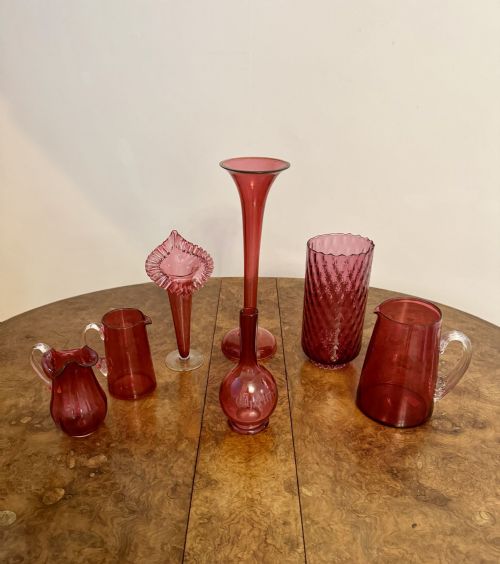
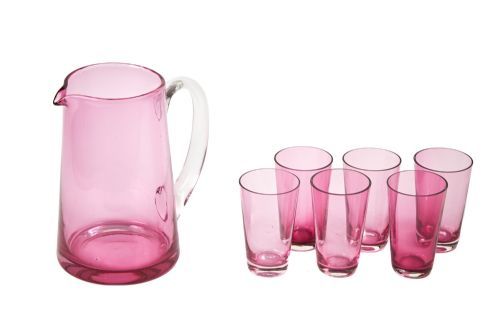
Forms range from intimate table settings, such as sets of six wine glasses, to substantial display items like gilded tazzas and Kralik iridescent stem vases. Jugs, decanters, and bells also feature frequently among the domestic items.
How they were made
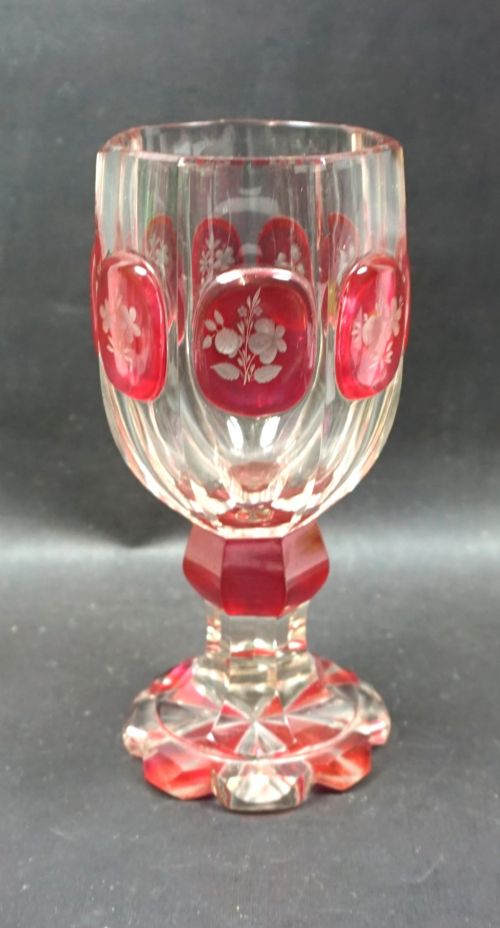
Makers produced ruby glass by adding gold chloride to the molten batch, creating the characteristic rich red or cranberry tone. Lead crystal provided a heavy, clear base for overlaid or cased vessels that were subsequently cut to reveal the contrasting layers beneath.
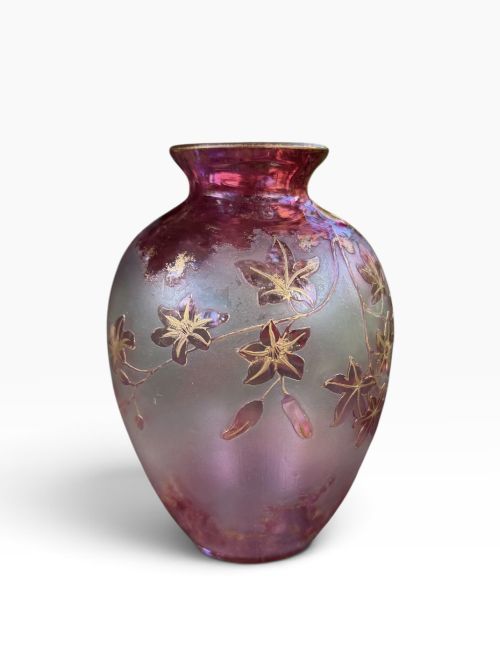
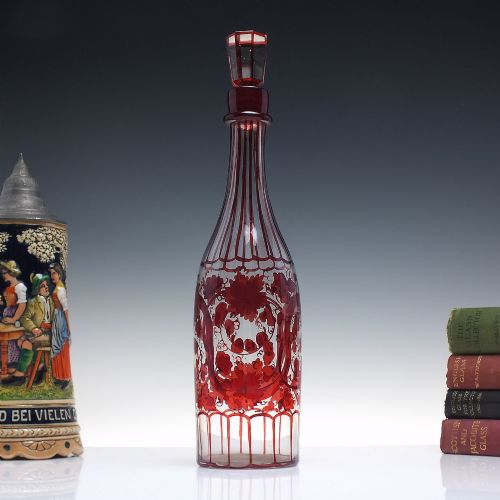
Surface decoration involved several skilled techniques including acid etching, hand painting, gilding with gold leaf, and intricate engraving. Enamel work frequently added floral motifs, while specialised pieces featured Mary Gregory style white enamel figures.
Ruby Glass Glassware Retail Price Guide 2026
Typical asking prices for ruby glass glassware among the pieces listed under this phrase on Sellingantiques today, from the lower quarter to the upper quarter. They describe what is for sale here now, not the wider market.
Object forms span practical tableware such as wine glasses, decanters, and finger bowls, alongside display pieces including vases, bells, and epergnes.
What varies in quality
Depth of colour and consistency of the glass batch set pieces apart, with superior items displaying an even, luminous red without cloudiness. The precision of the overlay cut in cased glass determines how sharply the clear layer contrasts against the ruby surface.
Execution of surface ornamentation dictates the distinction between standard domestic items and high-end display pieces. Hand-painted enamelling, crisp acid etching, and intact gold leaf gilding reflect the skill of the decorator and the workshop standard.
Completeness and matching integrity influence the desirability of sets, particularly with wine glasses, finger bowls, and decanters. Pairs of bells, vases, and decanters retain greater presence when both matching components survive alongside original stoppers or fittings.
Kralik·Baccarat
The Ruby Glass Glassware Glossary
- Cranberry Glass
- A transparent pinkish-red glass coloured with gold chloride, widely produced during the Victorian era for tableware and decorative vessels.
- Overlaid Glass
- A technique where a layer of ruby glass is fused over a clear crystal base, allowing craftsmen to cut away sections to expose the clear layer beneath.
- Epergne
- A large, multi-tiered centrepiece featuring central trumpets or baskets, frequently executed in cranberry glass to hold fruit or flowers.
- Mary Gregory
- A style of decorative glass featuring white enamel silhouettes of children amidst foliage, popular on late nineteenth-century Victorian pieces.
- Pontil Mark
- The rough scar left on the base of a blown glass vessel where the pontil rod was attached during manufacturing.
- Tazza
- An ornamental pedestal cup or shallow bowl raised on a stem, often gilded and used for display on dining tables.
Ruby Glass Glassware: Frequently Asked Questions
How do I clean antique ruby glass?
Wash pieces gently in warm soapy water using a soft cloth, avoiding harsh abrasives that might damage surface gilding or enamel decoration.
Dry them immediately with a lint-free towel to prevent water spots on the glass.
Are these pieces safe for daily use?
While nineteenth-century wine glasses and jugs were designed for dining, antique glass requires careful handling and hand washing.
Avoid placing gilded or enamelled items in dishwashers or exposing them to sudden temperature changes.
How can I tell Bohemian glass from Victorian English pieces?
Bohemian glass frequently employs heavy overlay cutting, amber staining, and intricate architectural or floral engraving.
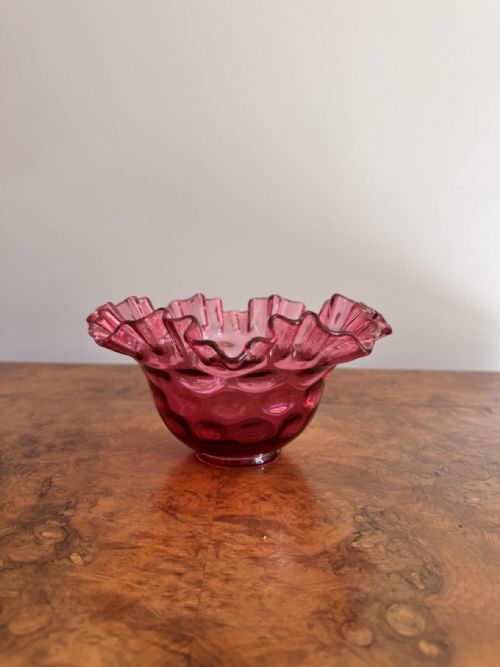
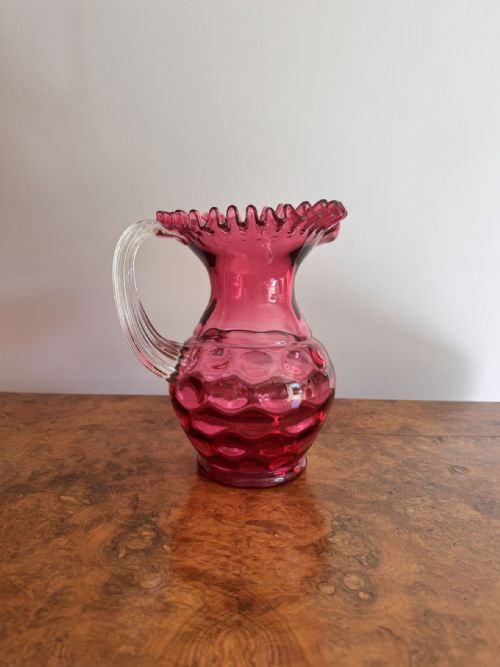
Victorian English items often showcase lighter blown forms, cranberry colouring, and applied clear glass handles or ruffled rims.
What is the difference between ruby glass and cranberry glass?
Cranberry glass specifically refers to transparent glass coloured with gold chloride, producing a distinctive pinkish-red hue.
Ruby glass is a broader term encompassing deeper red shades achieved through various metallic oxide formulations.