



Ruby Gemstone Ring
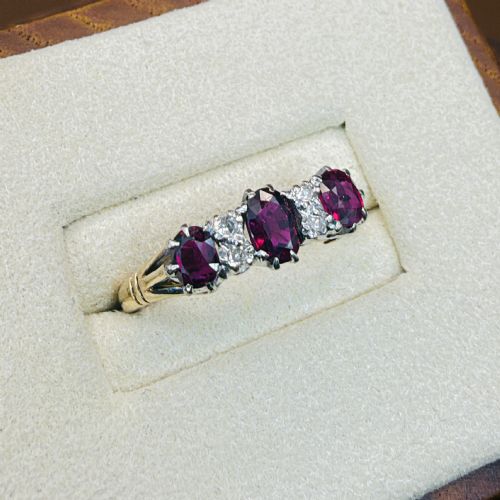
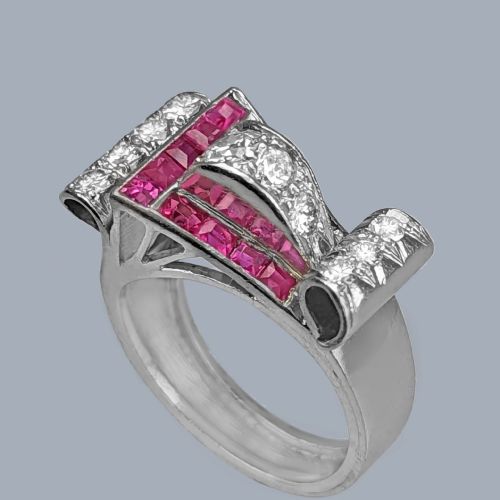
A ruby gemstone ring brings together rich red corundum and brilliant diamonds in mountings that span from Victorian starbursts to Art Deco platinum settings.
Ruby Gemstone Ring
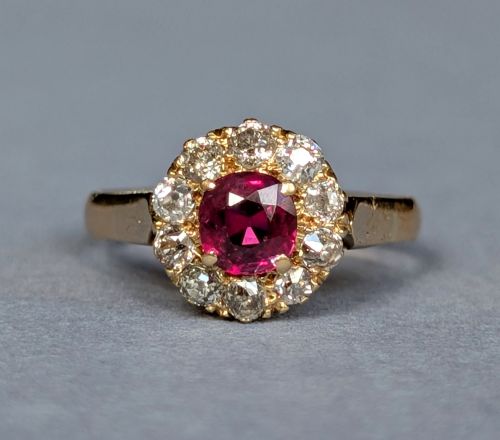
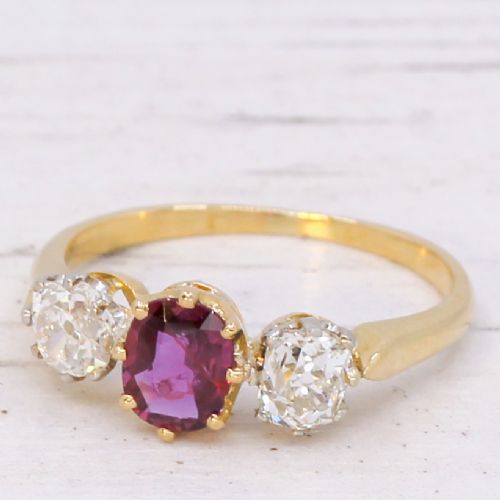
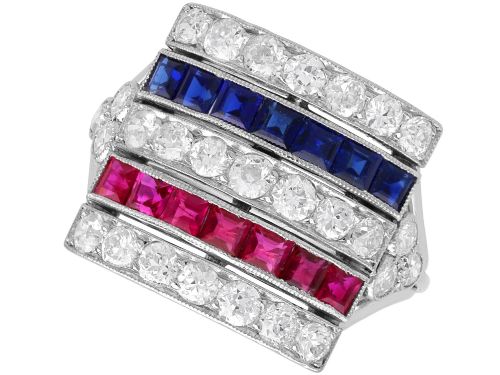
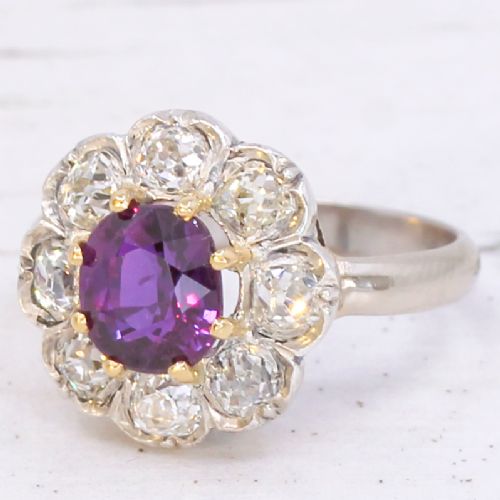
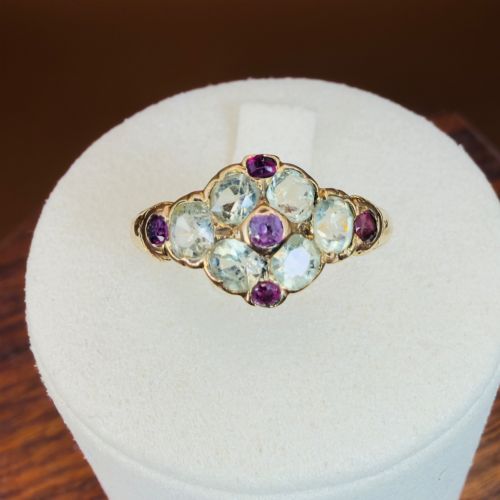
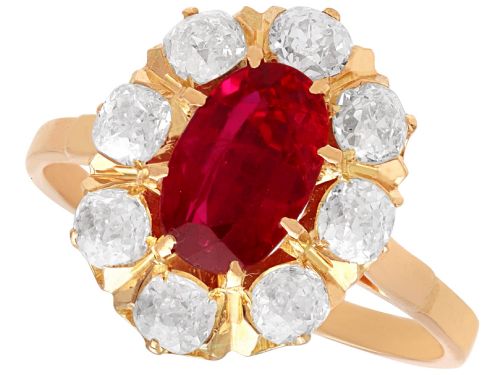
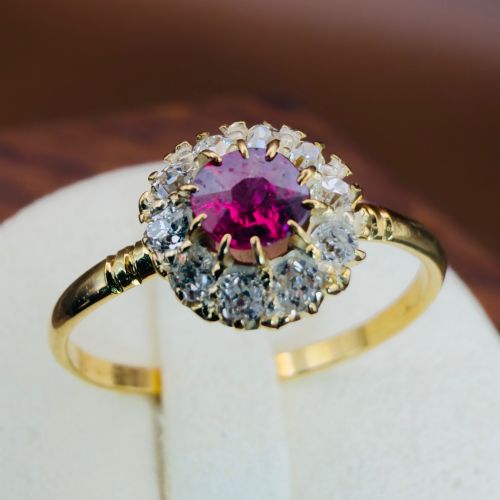
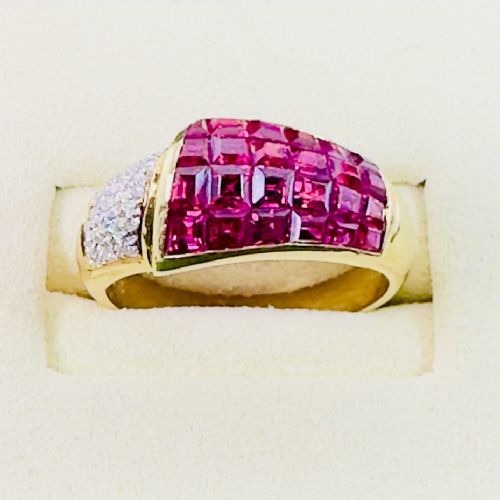
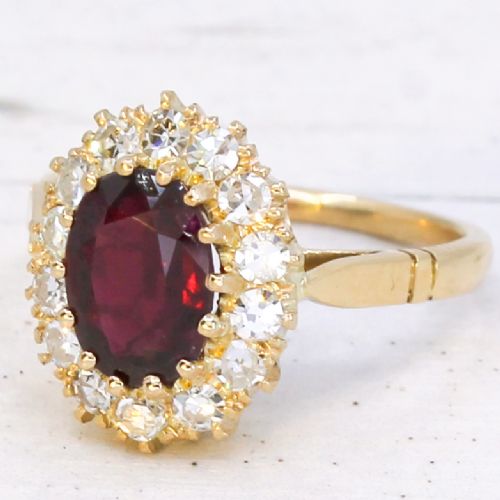
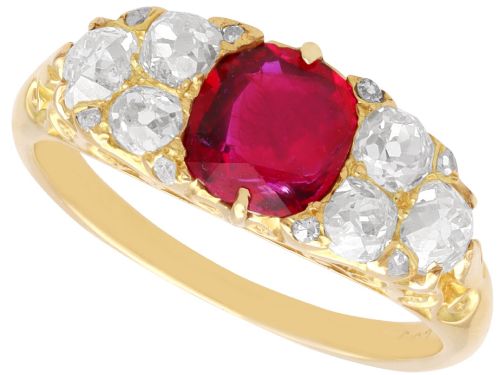
A ruby gemstone ring centres on the distinctive red corundum stone, frequently paired with accompanying diamonds in cluster, three-stone, or band formations. Buyers seeking this style will encounter examples spanning the Victorian, Edwardian, and Art Deco periods, alongside mid-century and vintage pieces.
Origin details occasionally highlight stones from Burma, incorporating unheated gems set within older mountings. These varied forms reflect shifting aesthetic preferences across the nineteenth and twentieth centuries, uniting different eras through the enduring appeal of red corundum.
Materials and construction
Jewellers predominantly utilised eighteen-carat gold and platinum to house these red stones, frequently combining yellow gold shanks with platinum settings to enhance the whiteness of supporting diamonds. Starburst, gypsy, and buckle rings display distinct metalworking techniques appropriate to their respective decades.
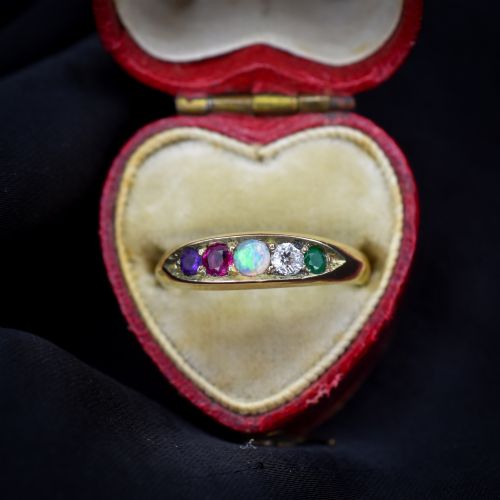
Gemstones underwent various cutting methods, from old mine cuts and rose cuts in nineteenth-century pieces to oval and baguette cuts in later mid-century examples. Pearl and amethyst accents also appear alongside diamonds to complement the central red corundum.
Ruby Gemstone Ring Retail Price Guide 2026
Typical asking prices for ruby gemstone ring among the pieces listed under this phrase on Sellingantiques today, from the lower quarter to the upper quarter. They describe what is for sale here now, not the wider market.
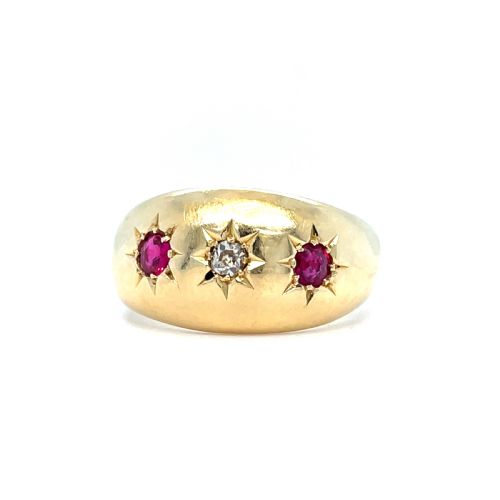
Several pieces incorporate secret starburst patterns, ensuring the metalwork shines even from the underside of the finger.
Distinctions in craftsmanship and materials
Quality rests significantly upon the origin and natural state of the corundum, with unheated Burmese stones commanding particular attention from collectors. The depth of the red hue and the clarity of the crystal structure fundamentally influence the character of the piece.
The precision of the metalwork, whether intricate Edwardian filigree or substantial Art Deco platinum geometry, dictates the overall integrity of the mount. Additionally, the age and cut of surrounding diamonds contribute substantially to the unified visual impact of the cluster or trilogy.
The Ruby Gemstone Ring Glossary
- Cluster ring
- A setting where a central gemstone is encircled by a border of smaller stones, typically diamonds.
- Navette
- A boat-shaped mounting style that tapers to points at either end, popular during the Victorian and Edwardian eras.
- Old mine cut
- An early diamond cut featuring a near-square girdle, high crown, and large culet, common in nineteenth-century jewellery.
- Gypsy ring
- A band style where gemstones are flush-set directly into the thick metal surface rather than held in raised prongs.
- Trilogy
- A three-stone arrangement representing the past, present, and future, frequently alternating rubies and diamonds.
Ruby Gemstone Ring: Frequently Asked Questions
How do I care for my ruby ring?
Clean the piece gently using warm soapy water and a soft brush, avoiding harsh chemical ultrasonic cleaners that might damage vulnerable settings or softer accent stones.
Store the item separately in a fabric-lined box to prevent harder gems like diamonds from scratching the gold mount or the corundum surface.
Can I wear a ruby ring daily?
Corundum ranks nine on the Mohs hardness scale, making these pieces durable enough for regular wear when the structural prongs remain secure and robust.
Delicate antique bands from the Victorian or Edwardian periods benefit from occasional inspection by a jeweller to ensure the claws hold the stones firmly.
What does unheated ruby mean?
An unheated ruby has not undergone thermal enhancement to improve its natural colour or clarity, retaining its original appearance directly from the earth.
Such stones often carry gemmological reports confirming their natural state, which interests collectors seeking unaltered historical specimens.
How do I identify an Edwardian ruby ring?
Edwardian designs frequently utilise platinum or white gold frameworks, often incorporating delicate openwork motifs and milgrain detailing around the gemstone borders.
These pieces typically date from the early twentieth century and balance light, airy metal structures with vibrant red corundum and old-cut diamonds.