


Ruby Diamond Statement Ring
A ruby diamond statement ring commands attention with bold stones and substantial precious metal work.
Ruby Diamond Statement Ring
When you search for a ruby diamond statement ring, you encounter striking jewel forms designed to dominate the hand. These pieces span periods from the Victorian era and Edwardian times through Art Deco, Retro Modern, and mid-century designs.
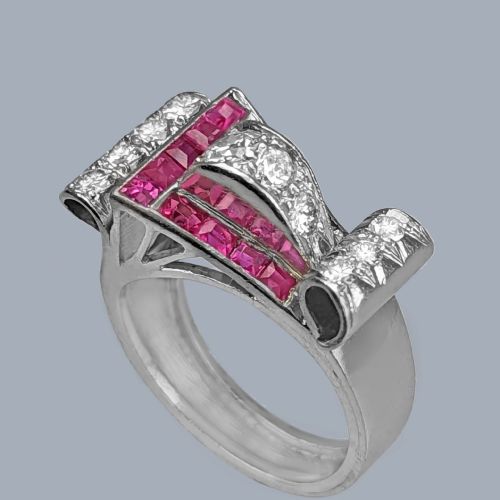
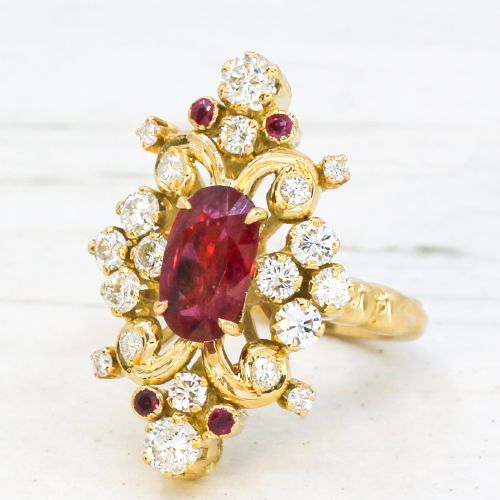
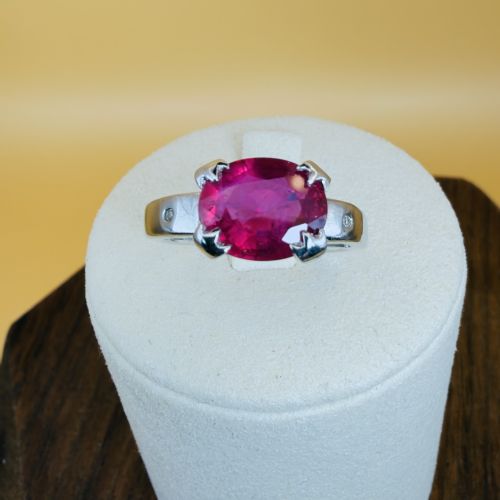
You meet various configurations on this page, including elaborate oval clusters, buckle motifs, spiral clusters, and geometric tank rings. The selection draws on yellow gold, white gold, rose gold, and platinum to mount significant rubies alongside brilliant diamonds.
How they were made
Goldsmiths utilise durable precious metals such as 18ct yellow gold, 18ct white gold, and platinum to construct robust settings capable of securing large centre stones. Traditional techniques involve hand-working these metals into intricate lattice frames and bombé contours.
Setters combine brilliant-cut, old-cut, and oval-cut diamonds with natural unheated rubies, Burmese rubies, and synthetic stones. Each gem is secured within claw, bezel, or flush settings tailored to the specific period style.
Some mid-century cocktail rings are so generously domed they practically require their own postcode.
What varies in quality
The distinction between tiers rests upon the provenance, weight, and treatment status of the rubies and diamonds. Large carat weights with natural unheated origins, particularly from Burma, elevate a piece above standard commercial examples.
Execution and period integrity also dictate standing. Master-level workshop assembly, distinct design characteristics such as Art Deco platinum work or signed mid-century cocktail styling, and heavy precious metal construction set superior specimens apart.
Kutchinsky
The Ruby Diamond Statement Ring Glossary
- Bombé
- A rounded, dome-shaped ring profile popular in mid-century cocktail jewellery. This swollen contour creates maximum visual volume on the finger.
- Tank ring
- A bold, architectural jewellery style emerging around the 1940s, often resembling heavy machinery or military vehicle tracks. These pieces use stepped gold work to frame central gems.
- Old-cut diamond
- An earlier diamond cutting style featuring a small table, high crown, and open culet. These stones display broad facet patterns that catch candlelight effectively.
- Unheated ruby
- A natural corundum gemstone that has not undergone thermal enhancement to improve colour or clarity. Unprocessed stones hold greater appeal for collectors.
Ruby Diamond Statement Ring: Frequently Asked Questions
How do I style a statement ring?
Wear a prominent ruby and diamond design on your hand as a standalone piece to let the colourful gems and precious metal work draw the eye. Avoid crowding adjacent fingers with other large jewels so the silhouette remains unobstructed.
Pair the piece with simple evening wear or tailored daytime attire to balance the visual weight of the mounting. Let the design dictate the mood of your ensemble.
What is a cocktail ring?
A cocktail ring is a large, decorative piece of jewellery designed to catch attention during social gatherings. These items typically feature oversized gemstones and substantial precious metal mounts.
Originating in earlier decades when bold accessories marked social occasions, they continue to serve as focal points for formal dress. Their generous proportions distinguish them from everyday bands.
How do I care for my ring?
Clean your jewellery gently using warm water, mild soap, and a soft brush to remove everyday oils from the rubies and diamonds. Avoid harsh chemical dips that might damage softer precious metals or treated stones.
Store the piece separately in a lined box to prevent scratches against other items. Regular inspection by a specialist ensures the settings remain secure.
Are these rubies natural?
The selection includes both natural unheated stones and synthetic variations depending on the manufacturing period and workshop origin. Listings specify whether a ruby is natural or synthetic based on gemological evidence.
Examining the internal characteristics reveals the origin and history of the stone. Certification or listing details provide clarity on the exact nature of the gems.