





Royal Vienna Ceramic
Royal vienna ceramic pieces are ornate porcelain items from the nineteenth century, prized by collectors for their classical painted scenes and rich gilding.
Royal Vienna Ceramic
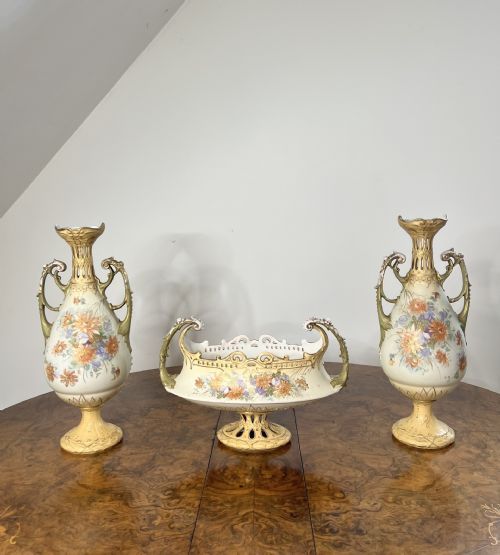
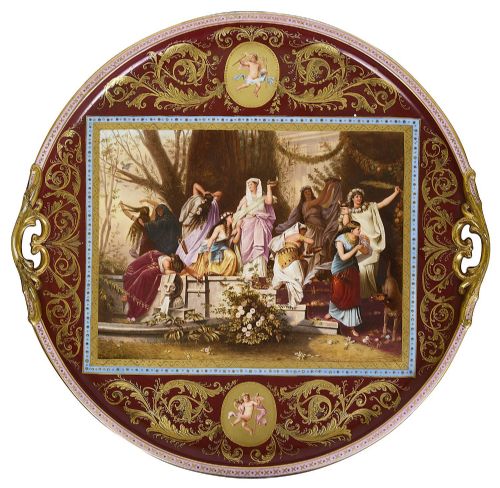
Royal vienna ceramic objects comprise nineteenth century porcelain items including decorative chargers, cabinet plates, urns, ewers, and garniture sets. These pieces date across the decades from eighteen fifty to eighteen ninety, capturing the historicist taste of the period.
The dominant aesthetic draws heavily on Neoclassical, Rococo Revival, and Victorian classical styles, often featuring mythological and historical figure subjects painted across the surface. Collectors encounter these works primarily as display items such as large wall chargers, lidded vases, and cabinet plates.
Forms range from chocolate cups and side vases to massive centrepieces and matching urn pairs. The origin spans Vienna style workshops producing elaborate porcelain decorated with hand-painted scenes.
How royal vienna ceramic pieces were made
Maker operations utilised fine porcelain bodies shaped into complex forms like lidded urns, ewers, and heavy chargers. Artisans applied rich enamel paints to render detailed allegorical, biblical, and classical figure subjects across the ceramic surface.
Gold leaf and extensive gilding highlight borders, handles, and framing elements around the painted scenes, often paired with deep cobalt glaze backgrounds. Skilled painters executed minute portraits and narrative illustrations by hand before final kiln firing.
Royal Vienna Ceramic Retail Price Guide 2026
Typical asking prices for royal vienna ceramic among the pieces listed under this phrase on Sellingantiques today, from the lower quarter to the upper quarter. They describe what is for sale here now, not the wider market.
Listings feature items exclusively from the nineteenth century, spanning decades from eighteen fifty to eighteen ninety across porcelain, enamel, gold leaf, and cobalt glaze.
What varies in quality
The standard of painted detail on the porcelain surface separates average items from exceptional examples, particularly in facial expressions and anatomical drawing within classical or mythological scenes. Finely executed brushwork depicting complex narratives like mythological tragedies or classical histories marks the upper tier.
The application of gilding and gold leaf ornamentation also differs, with superior pieces displaying heavy, intricate, burnished gold work rather than flat metallic washes. Overall scale and ambition - such as massive diameter chargers or sculptural garniture sets with lidded vases - indicate higher production tier status.
The Royal Vienna Ceramic Glossary
- Charger
- A large decorative plate intended for display on a wall or sideboard rather than dining use. These items frequently carry the most ambitious hand-painted mythological or historical scenes.
- Garniture set
- A matched group of three or more vases or urns designed to be displayed together on a mantelpiece or cabinet top. They share unified decorative motifs and gilding patterns.
- Cobalt glaze
- A rich blue ceramic colouring applied beneath or over the glaze to provide deep background contrast against white porcelain and gold leaf. It creates the dramatic framing seen on nineteenth century Vienna urns.
- Cabinet plate
- A smaller porcelain plate produced specifically for display in a cabinet or on a stand. They often feature finely painted individual portraits or allegorical figures.
- Ewer
- A large jug with a wide spout and handle, shaped in classical revival forms. In nineteenth century Vienna porcelain, these served purely decorative display functions.
Royal Vienna Ceramic: Frequently Asked Questions
What are royal vienna ceramic pieces?
Royal vienna ceramic items are nineteenth century porcelain objects decorated with hand-painted classical, mythological, and historical scenes, heavily accented with gold leaf and gilding. They encompass large chargers, cabinet plates, urns, ewers, and chocolate cups created during the height of Vienna historicism.
These pieces reflect the revival styles of the Victorian era, drawing on Neoclassical and Rococo aesthetics. Collectors value them primarily for the fine miniature painting executed across porcelain surfaces.
How were they used historically?
Historically, royal vienna ceramic items served as high-status display objects rather than functional tableware. Large chargers hung on walls or sat on sideboards, while urns and garniture sets decorated formal drawing rooms.
Cabinet plates were housed in glass display furniture to protect their delicate enamel paintings and gold leaf trim from dust and handling. Chocolate cups represented more intimate decorative arts used within elite domestic settings.
How do you display them safely?
Display royal vienna ceramic pieces away from direct sunlight to prevent the hand-painted enamel colours and gold leaf from fading over time. Secure heavy items like large urns and chargers on stable surfaces or specialised wall hangers.
Keep porcelain away from areas prone to sudden temperature fluctuations or heavy vibrations that could dislodge display stands. Gentle dusting with a soft, dry brush maintains the glazed and gilded surfaces without causing abrasion.
How do you identify nineteenth century styles?
Identify nineteenth century Vienna porcelain by examining the combination of classical revival painting subjects, cobalt glaze, and heavy raised gilding. The visual vocabulary draws on Neoclassical and Rococo revival motifs typical of the eighteen fifties through eighteen nineties.
Look for narrative titles or subject descriptions associated with classical mythology, ancient history, or allegorical themes painted across chargers and urns. The characteristic weight of the porcelain and the precision of the enamel work further indicate the period.