
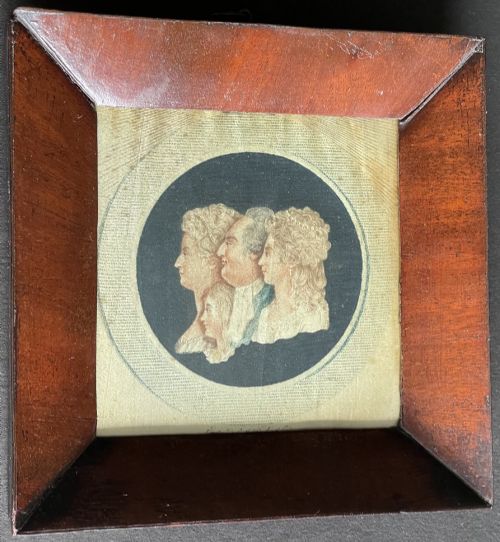


Royal Portrait Miniature
These royal portrait miniature works capture monarchs and figures in delicate detail, offering an intimate glimpse into historical likenesses.
Royal Portrait Miniature
When you search for a royal portrait miniature, you encounter small-scale painted likenesses of sovereigns and nobility from periods including the 18th Century, 19th Century, Regency, and 1920. These objects take the form of paintings, framed prints, and detailed miniature portraits depicting figures such as Louis XVI, Emperor Akbar II, and King Henry VIII.
The pieces on this page range from oil paintings and watercolours to prints on silk, reflecting diverse regional schools and revival styles like Neoclassical and Tudor Renaissance. You are likely to meet works framed in brass or wood, capturing military officers, consorts, and princes with remarkable precision.
Makers and artists represented span from named portraitists such as Henry Pierce Bone and Susie Lassam to continental schools of the 19th Century. Each piece serves as a portable window into court life and royal iconography across different centuries.
How they were made
These works rely on delicate media such as watercolour, oil paint, and print on silk, applied carefully to paper, ivory, or silk surfaces. Artisans utilised fine brushes to achieve minute facial expressions and intricate costume details.
Even Captain Richard Hamilton managed to get his portrait painted, proving military whiskers required just as much tiny brushwork as a king.
What varies in quality
Condition and originality of the surrounding materials also dictate quality, particularly the preservation of the original glass, paper, ivory, or silk. Pieces that retain their historic frames and unblemished painted surfaces command greater appreciation.
Henry Pierce Bone·Susie Lassam·Alexander Melville
The Royal Portrait Miniature Glossary
- Miniature portrait
- A small-scale painting or likeness created with exceptional detail. These works were often designed to be carried or worn close to the body.
- Regency
- A historical period and stylistic era spanning the early 19th century. Pieces from this time often exhibit refined Neoclassical influences and delicate framing.
- Watercolour
- A pigment medium mixed with water, applied to paper or ivory. It allows for translucent layers that give skin tones a luminous quality.
- Gold leaf
- Hammered gold beaten into extremely thin sheets. It is utilised to gild frames and highlight decorative elements within the composition.
- Mughal
- An artistic style and empire tradition originating in the Indian subcontinent. Works in this tradition display meticulous attention to textile patterns and regal posture.
Royal Portrait Miniature: Frequently Asked Questions
What is a royal portrait miniature?
A royal portrait miniature is a small, hand-painted or printed likeness of a monarch or noble figure. These portable artworks were created to display allegiance, affection, or status.
They frequently feature notable historical individuals like Queen Victoria or Louis XVI, rendered on materials such as ivory, paper, or silk.
How were these miniature portraits displayed?
Historically, these small portraits were framed in wood, brass, or glass and kept on domestic surfaces or carried on the person. Some were designed to be worn as personal tokens or badges of office.
The inclusion of glass protected the delicate watercolour or oil paint from dust and moisture.
How do I date a portrait miniature?
Dating relies on the costume, hair styling, and the specific sovereign or military uniform depicted in the artwork. Revivals and artistic styles such as Regency or Art Deco also provide clear chronological markers.
Additionally, framing techniques and backing materials help place the piece within the 18th or 19th century.
What materials are used in these pieces?
Artists utilised watercolour, oil paint, and ink on supports like paper, ivory, and silk. Frames incorporate brass, wood, and gold leaf alongside protective glass panels.
These diverse materials reflect the changing technical preferences of portraitists across different centuries.
How should I care for a miniature painting?
Keep miniature portraits away from direct sunlight to prevent the fading of delicate watercolours and silk dyes. Stable indoor humidity protects organic materials like paper, ivory, and wood frames.
Avoid touching the painted surface directly and ensure the glass covering remains intact and clean.