





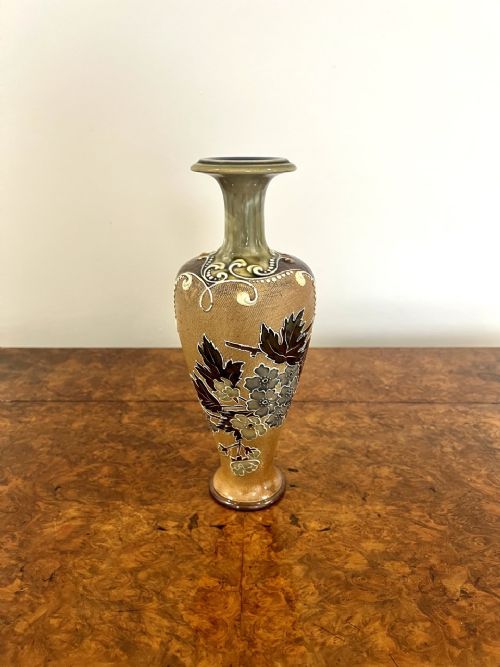


Royal Doulton Art Nouveau
Royal Doulton art nouveau pieces bring flowing floral lines and rich earth tones into a room, offering functional ceramic beauty from the late nineteenth and early twentieth centuries.
Royal Doulton Art Nouveau
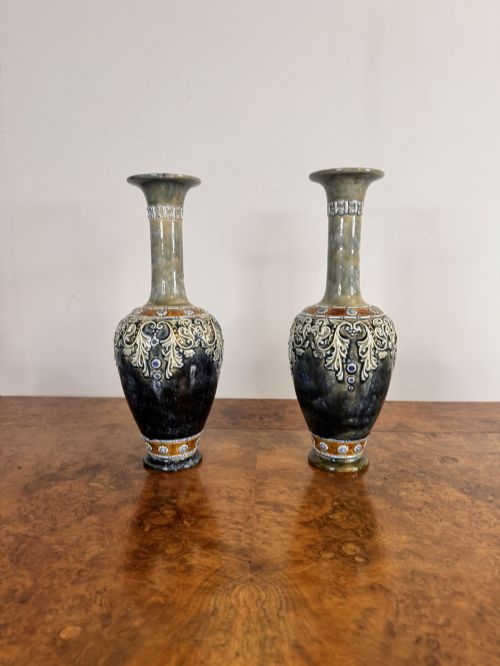
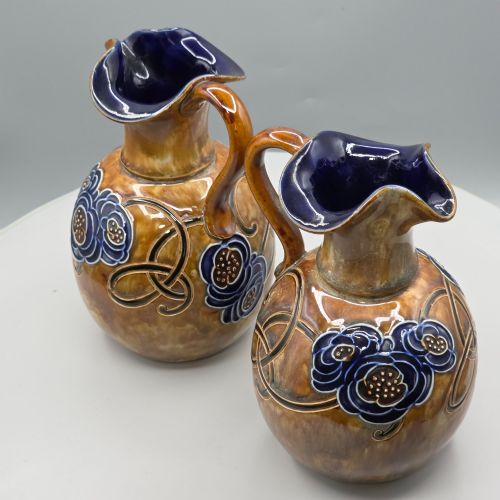
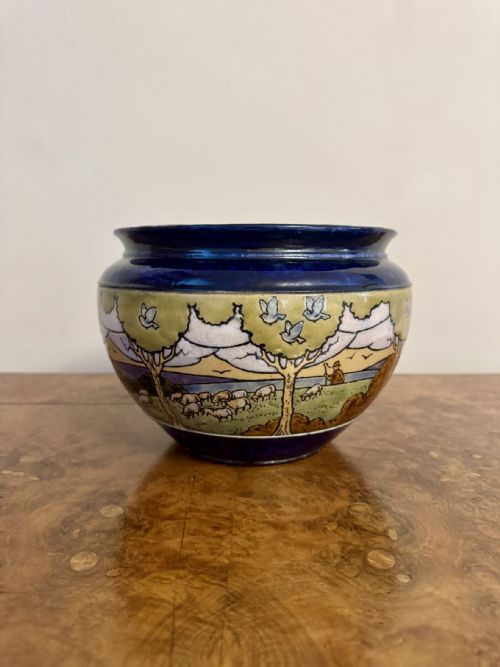
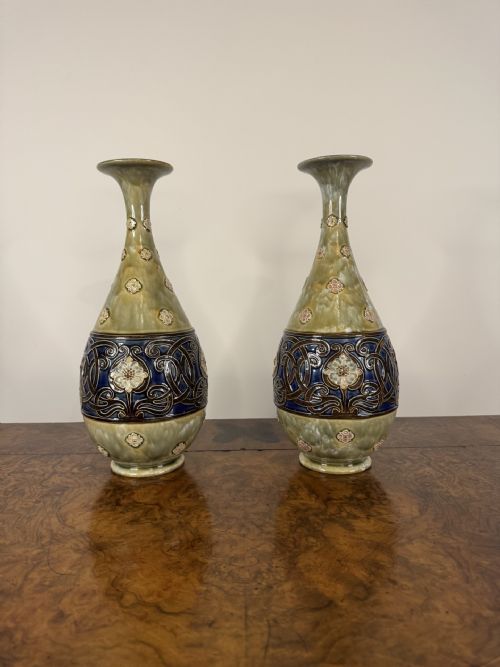
Royal Doulton art nouveau items span vases, jardinieres with stands, jugs, loving cups and tobacco jars produced across the Victorian, Edwardian and later periods. Stoneware forms the backbone of these listings, often shaped into baluster silhouettes or large planters.
The aesthetic bridges late Victorian sensibilities with the organic curves of the arts and crafts movement. Buyers encounter everything from tall pairs of handled vessels to small tobacco jars bearing distinct floral and sporting motifs.
How they were made
Makers shaped ceramic, earthenware, porcelain and stoneware by hand or on the wheel before applying rich glazes. Salt glazing and intricate surface incisions created textured finishes that hold coloured pigments in deep relief.
Some decorative vessels incorporated handpainted details alongside applied gold leaf accents. Artists signed specific works directly into the clay, marking individual studio execution within the broader pottery production.
Royal Doulton Art Nouveau Retail Price Guide 2026
Typical asking prices for royal doulton art nouveau among the pieces listed under this phrase on Sellingantiques today, from the lower quarter to the upper quarter. They describe what is for sale here now, not the wider market.
Listings span ceramic, stoneware, earthenware and porcelain across the nineteenth and twentieth centuries.
What varies in quality
Quality rests on the depth of the glaze application and the crispness of the incised ornament across the ceramic body. Pieces featuring named artist attribution or complex handpainted scenery stand apart from standard factory output.
Balanced proportions in matched pairs and the preservation of delicate surface detail dictate desirability. Heavier stoneware vessels with complex multi-toned finishes represent the high watermark of this ceramic tradition.
Louisa Wakely·John H Plant·Maud Bowden·Doulton Lambeth
The Royal Doulton Art Nouveau Glossary
- Baluster
- A vase form with a rounded body that tapers toward the top. This shape provides a stable base while offering generous surface area for flowing floral decoration.
- Jardiniere
- A large ornamental pot designed to hold potted plants. These often sit upon matching ceramic pedestals to elevate the greenery.
- Stoneware
- A hard, impervious ceramic fired at high temperatures. It resists moisture and provides a durable ground for rich salt glazes.
- Glaze
- A glassy coating fused to the ceramic body through firing. It adds colour, shine and waterproof qualities to the finished vessel.
- Arts and Crafts
- A design movement valuing handcraftsmanship and simple forms. It heavily influenced the organic motifs found on these ceramics.
Royal Doulton Art Nouveau: Frequently Asked Questions
What periods do these pieces date from?
The items span from the late nineteenth century through the Edwardian era into the nineteen-twenties. Victorian and arts and crafts influences shape the earliest examples.
Production continued past the turn of the century with glazed stoneware and handpainted earthenware vessels.
How do I identify a jardiniere stand?
Jardinieres often appear alongside matching pedestals designed to support the heavy planted bowl. Together they form a tall display piece for corners or entryways.
Individual planters lack the matching base column but share the same glazed stoneware construction.
Are these items made of stoneware or porcelain?
Stoneware forms the primary material for the majority of these listings, prized for its durability and textured surface finish. Earthenware and porcelain also appear among the decorated vessels and bowls.
Each material responds differently to the glazes and handpainted pigments applied by the studio artists.
How do I spot artist signatures?
Makers and decorators often inscribed their initials or full names directly into the wet clay before firing. These signatures typically appear on the underside or near the base of vases and tobacco jars.
Specific attribution adds distinct context to the manufacturing history of individual ceramic pieces.