
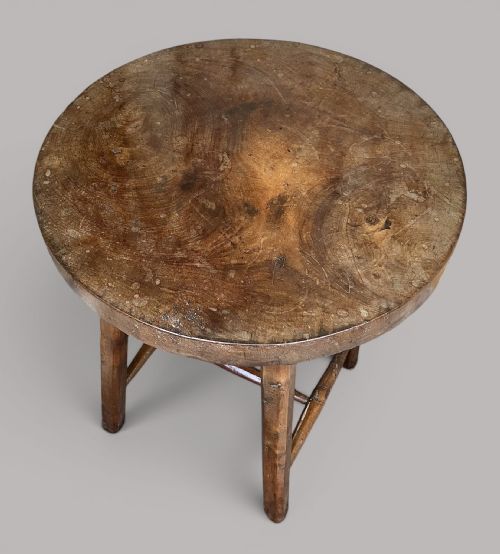
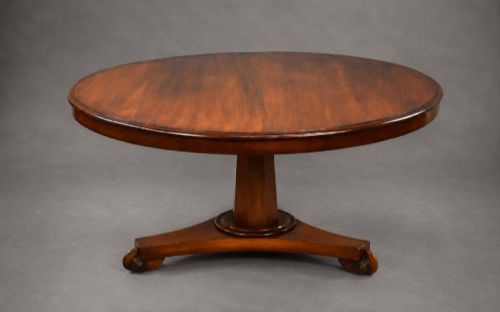
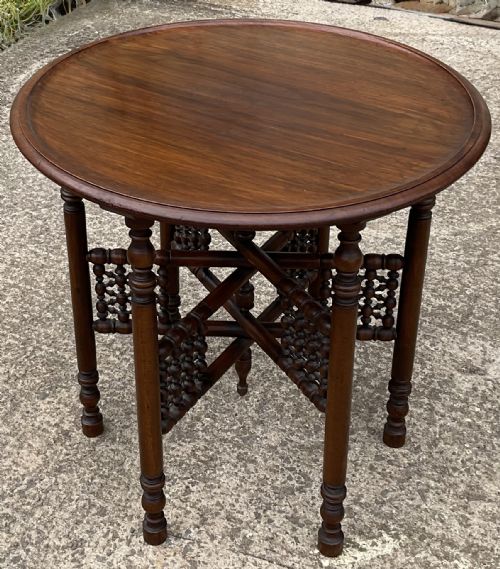


Round Wooden Low Table
These round wooden low table examples offer useful low surfaces in walnut, oak, and mahogany across styles from Georgian primitive to Art Deco.
Round Wooden Low Table
A round wooden low table serves as a functional centrepiece for seating areas, drawing from forms originally made as wine tables, lamp tables, or wine and occasional tables. Buyers searching for a round wooden low table will find pieces adapted or lowered from earlier periods alongside dedicated designs from the twentieth century.
The selection ranges from Georgian primitive solid walnut circular tables and Victorian mahogany coffee tables to Art Deco blond oak examples and Chinese hardwood low coffee tables. Many pieces date from the nineteenth century, the Edwardian era, and the nineteen-thirties, reflecting diverse regional workshops and vernacular traditions.
How they were made
Construction relies heavily on timber choices such as walnut, mahogany, oak, elm, and cherry, utilised either as solid wood or as figured walnut veneer and burr walnut veneer. Workshops applied traditional joinery methods, sometimes incorporating marquetry tops, carved details, or drop leaves depending on the regional style and period.
Surfaces received finishes appropriate to their era, ranging from French polished walnut to carved French and Chinese ornamentation, or simpler vernacular treatments on English oak and primitive walnut.
Several tables spent their early lives holding afternoon tea before settling down near the sofa.
What varies in quality
Quality depends upon the selection of timber, such as highly figured walnut veneer or solid burr elm, and the crispness of any carved decoration or marquetry work. The integrity of the conversion from taller wine or occasional tables to lower coffee table heights also distinguishes finer examples.
Proportion and structural stability separate standard production from more distinctive pieces, particularly when examining the joinery of legs and the flatness of circular tops across various stylistic revivals.
The Round Wooden Low Table Glossary
- Pie crust
- A raised, carved circular moulding along the edge of a table top, resembling pastry crimping. This decorative border appears frequently on finer walnut coffee tables.
- Marquetry
- Inlaid wood pieces fitted together to form decorative patterns on a table top. Craftsmen use contrasting timbers to create floral or geometric designs.
- Biedermeier revival
- A nineteenth-century stylistic influence revived in later furniture, favouring clean lines and polished timber surfaces without excessive ornamentation.
- Drop leaf
- A hinged table flap that can be lowered or raised supported by folding brackets or swinging legs. This mechanism allows a round table to adjust in width.
Round Wooden Low Table: Frequently Asked Questions
Are these original low tables?
Many round wooden low tables from earlier eras were originally taller wine, lamp, or occasional tables that were subsequently lowered to function as coffee tables. Dedicated low tables become more common in listings from the twentieth century onwards.
Examining the proportions of the legs and the block joints underneath often reveals whether a piece was adapted during its history or manufactured at its current height from the outset.
How do I care for walnut veneer?
Walnut veneer surfaces require gentle cleaning with a soft, dry cloth and protection from direct sunlight and extreme humidity. Avoid placing hot cups or damp glasses directly on the polished wood.
Applying occasional appropriate wax polish helps maintain the lustre of the grain without building up heavy residues that obscure the figured patterns.
What is figured walnut?
Figured walnut refers to timber cut from specific parts of the tree, such as burls or forks, which display distinctive, swirling grain patterns. Cabinet makers prized these sections for prominent display on table tops.
Tables utilising burr walnut veneer or solid figured timber offer rich visual movement compared to plain straight-grained boards.
How do I identify a Georgian piece?
Georgian primitive tables typically display heavier solid timber construction, straightforward joinery, and simpler turned supports without elaborate revival ornamentation. They show the hand-working marks characteristic of eighteenth-century country workshops.
Comparing the timber species, such as solid walnut, and the construction methods against known vernacular examples helps confirm the period.