


Round Top Stand
A round top stand offers a compact surface supported by a central pillar, valued for utility beside a chair or in a tight corner.
Round Top Stand
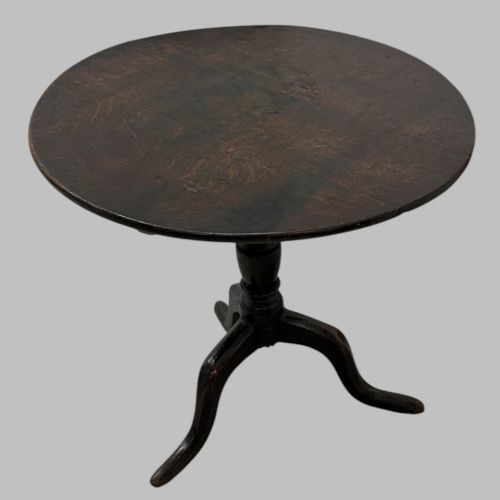
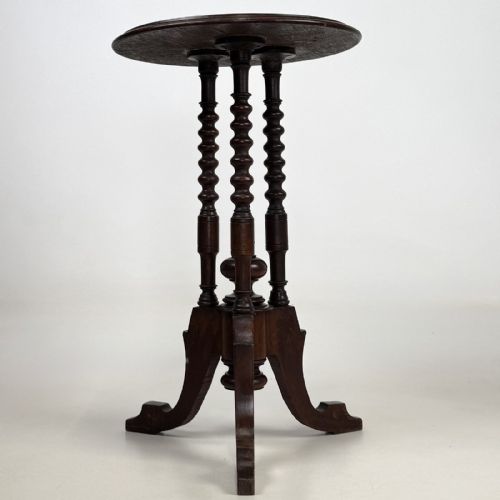
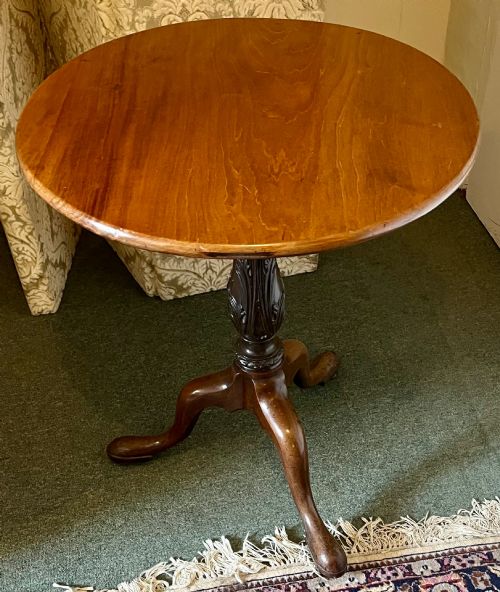
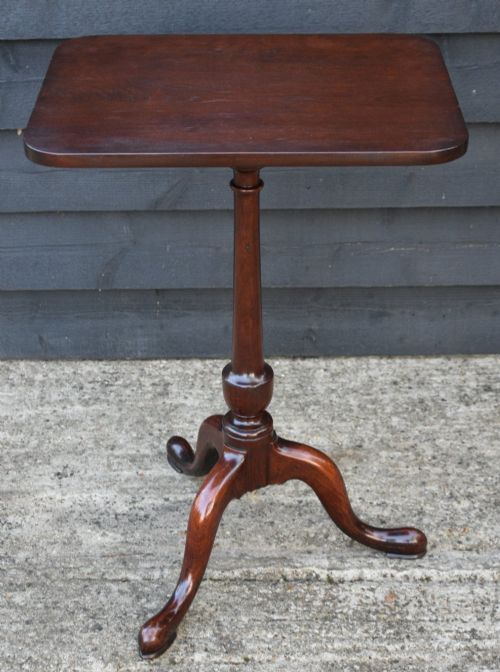
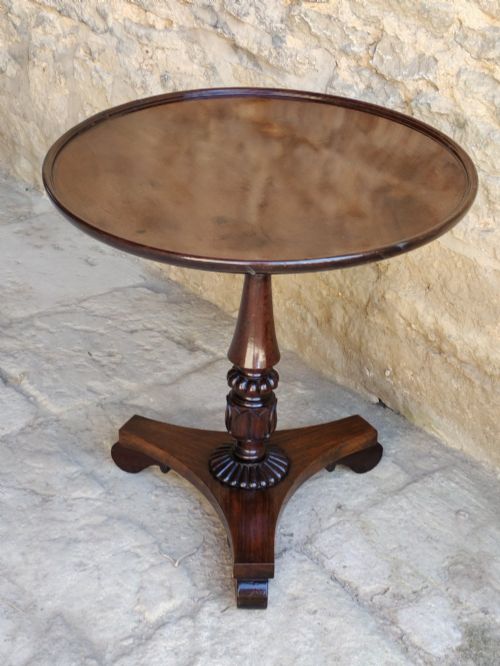
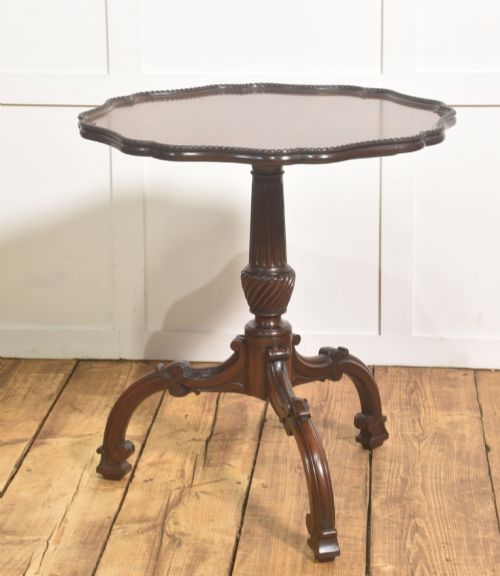
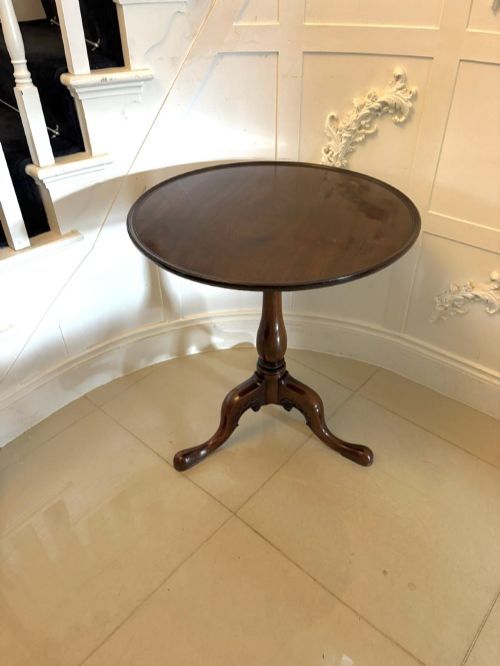
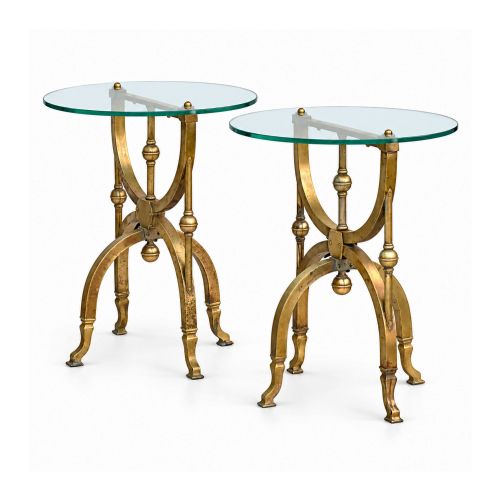
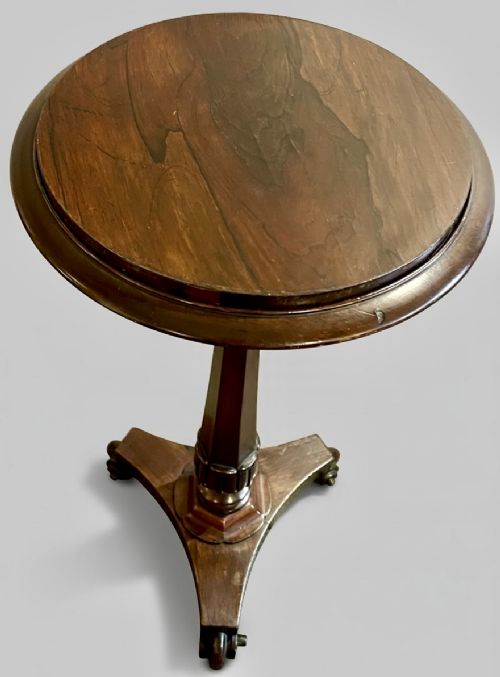
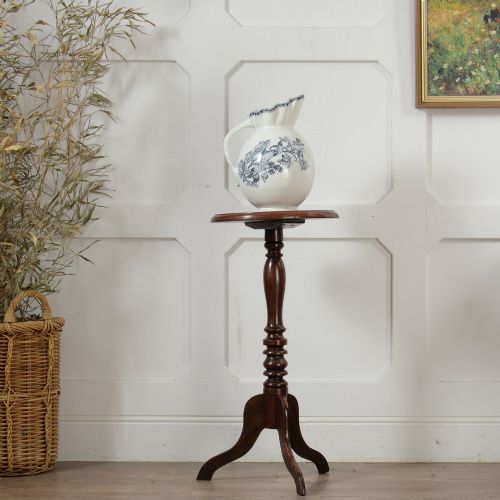
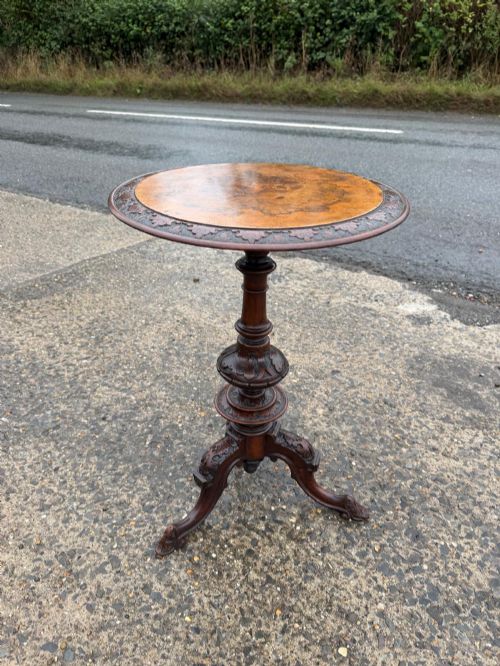
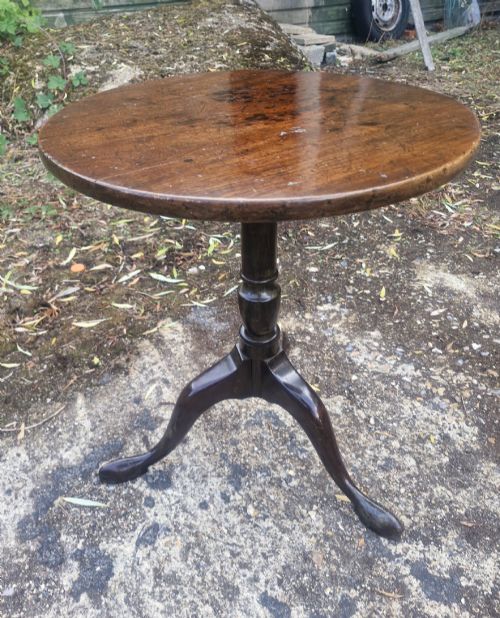
When you search for a round top stand, you encounter small occasional tables designed with circular surfaces and pillar supports, frequently functioning as wine tables, lamp tables or tilt-top tables. These pieces span centuries from the Georgian and Regency eras through the Victorian period and into the early twentieth century.
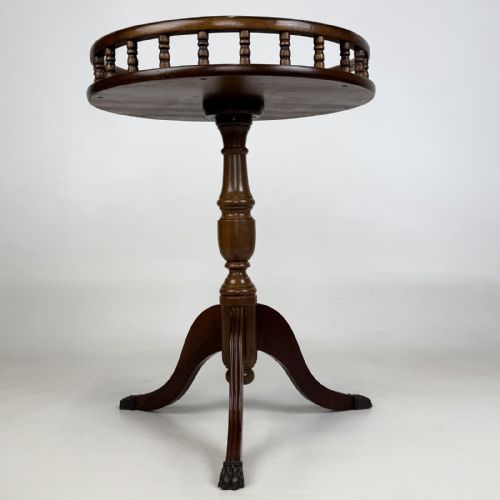
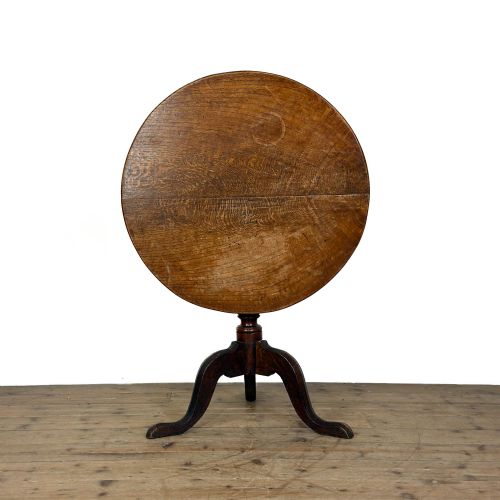
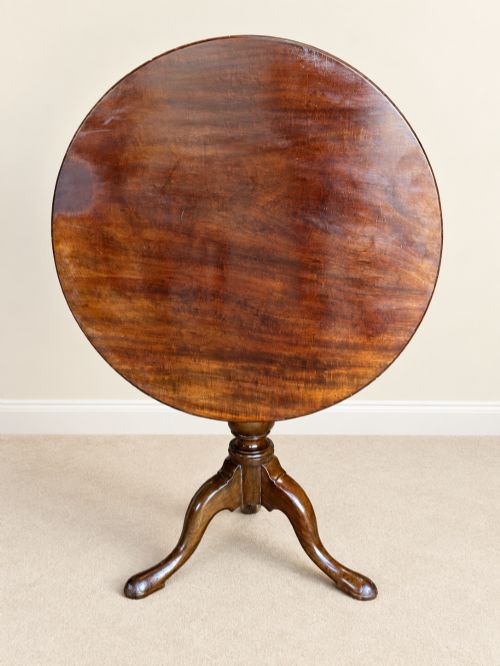
The versions you meet most often on this page are constructed from mahogany, oak or walnut, often featuring tripod legs that provide stability without taking up much floor space. Examples range from plain functional surfaces to those with raised galleries or tilt mechanisms.
Origins represented in these listings include English workshops alongside occasional Continental or Swedish pieces, with styles drawing on traditional cabinet-making conventions such as Chippendale Revival and George II influences.
How round top stand items were made
Makers relied primarily on dense hardwoods such as mahogany, walnut, rosewood, and oak, selecting timber for its grain pattern and durability. Secondary supports utilised beech or fruitwood for turned columns and legs.
Construction techniques featured three-legged tripod bases joined to a central pedestal, sometimes incorporating a birdcage mechanism or a tilt-top function that allowed the circular surface to fold vertically when not in use.
Round Top Stand Retail Price Guide 2026
Typical asking prices for round top stand among the pieces listed under this phrase on Sellingantiques today, from the lower quarter to the upper quarter. They describe what is for sale here now, not the wider market.
Several tilt-top stands include clever release catches designed so a tired butler could stow them flat in a narrow hallway.
What varies in quality
The standard of a round top stand depends heavily on the selection of timber, with figured mahogany, burr wood veneers or solid burr oak marking out finer examples from plain utility pieces. Joinery details, such as the precision of the birdcage mechanism and the crispness of turned pillars or carved tripod legs, further distinguish the work.
Proportion and stability determine the success of the design, where slender yet robust legs support a balanced circular top without excessive play in the central column.
The Round Top Stand Glossary
- Tripod base
- A support structure consisting of three legs branching out from a central vertical column. This configuration prevents rocking on uneven floors.
- Tilt-top
- A hinged tabletop mechanism allowing the circular surface to pivot and lock vertically. This function enabled easier storage against a wall when the table was not in use.
- Birdcage
- A revolving wooden framework fitted beneath the tabletop of a pillar table. It permits the top to both rotate and tilt.
- Gallery
- A raised wooden rim or border running around the edge of the circular top. It prevents items from rolling off the surface.
- Dishtop
- A tabletop turned from a single solid piece of timber with a concave centre. The resulting shallow depression contains small objects securely.
Round Top Stand: Frequently Asked Questions
What is a round top stand used for?
These pieces function as convenient side tables for holding lamps, drinks, or small decorative items beside seating.
Their compact circular footprint allows them to fit easily into corners or narrow spaces where larger furniture will not go.
How do you operate a tilt-top mechanism?
A release catch or pin beneath the circular surface allows the top to pivot ninety degrees on its pivot block.
This lets the table stand flat against a wall when not in use, a space-saving feature common on older examples.
What is a birdcage support?
A birdcage is an assembly of small turned columns and horizontal plates placed between the pillar and the tabletop.
It allows the circular top to rotate horizontally as well as tilt vertically, providing greater flexibility in placement.
Are these tables sturdy?
Tripod bases provide three points of contact with the floor, which remains stable on even surfaces.
Because the weight centres over the pillar, lighter items are held securely, though heavy pressure near the edge should be avoided.
How do I identify a Georgian style?
Georgian and revival pieces typically feature clean classical lines, polished mahogany or oak timbers, and restrained carving on the knees or feet.
Proportions remain elegant and functional without excessive ornamentation.