

Round Top Pedestal
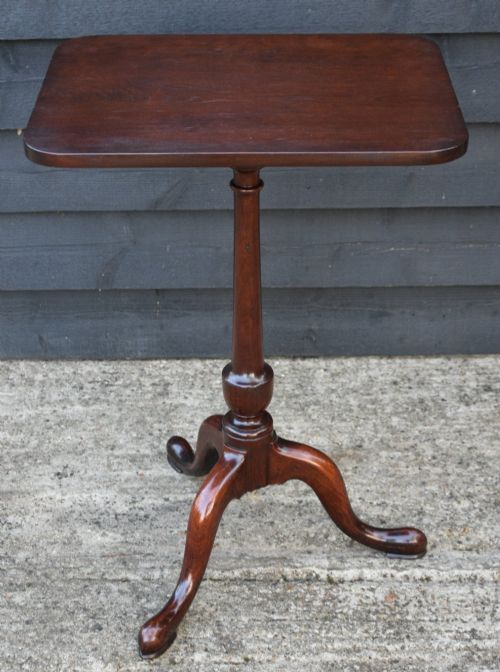
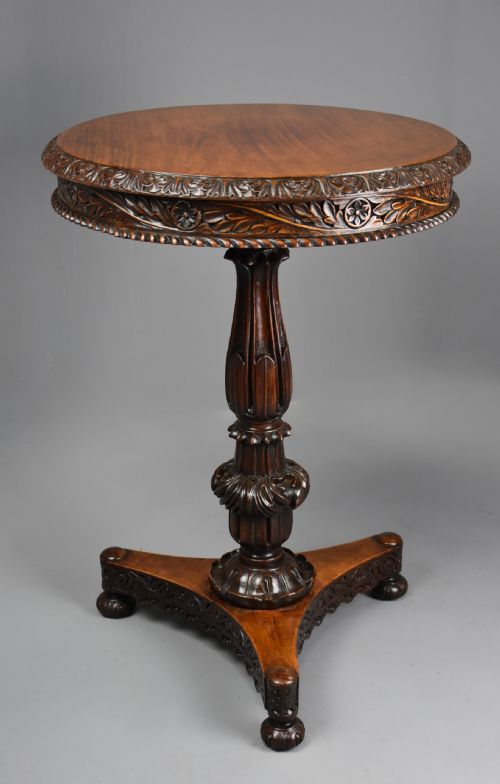
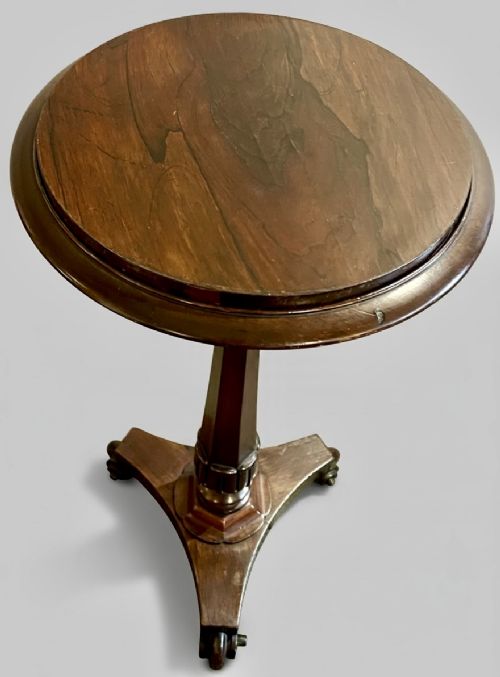
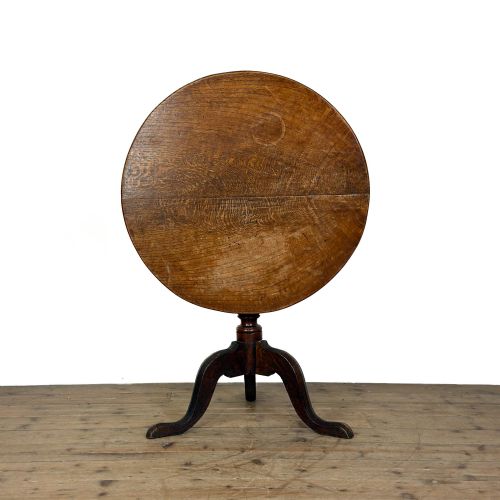
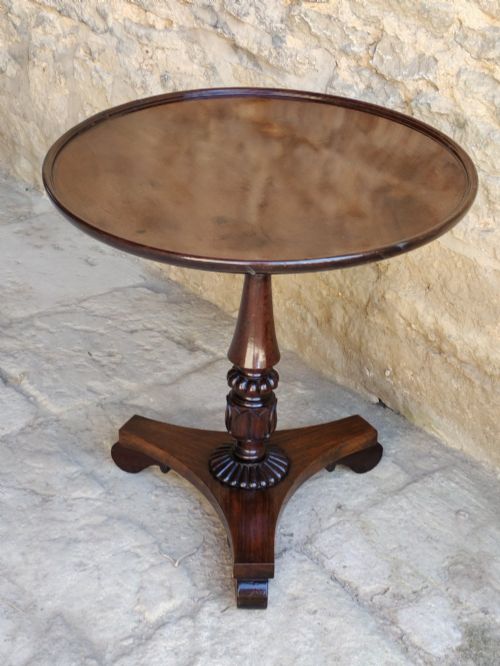
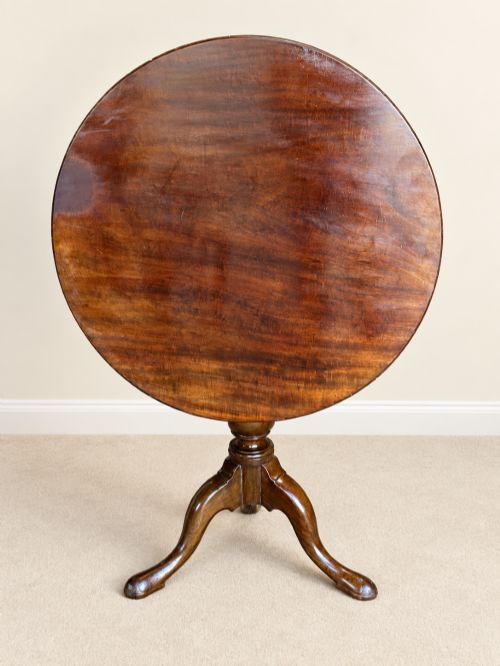
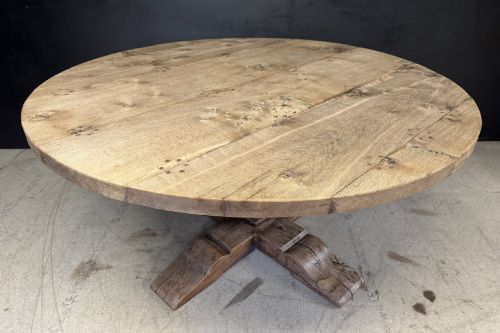
These round top pedestal tables bring classical proportion and versatile surface space to any room, taking the form of tripod wine tables, tilt-top breakfast pieces and centre tables.
Round Top Pedestal
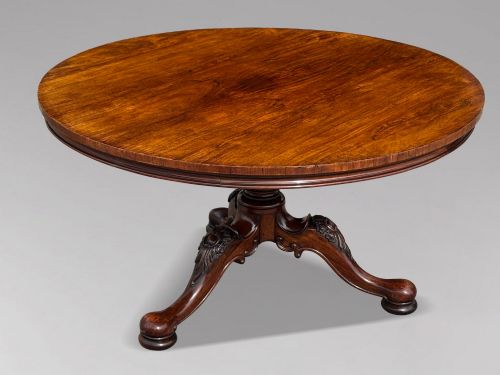
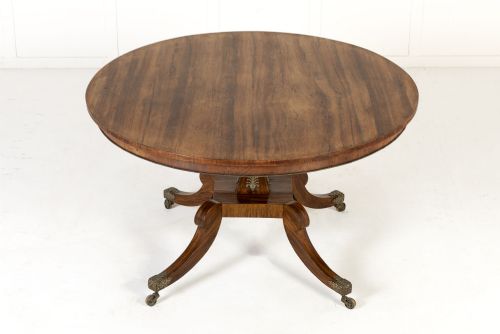
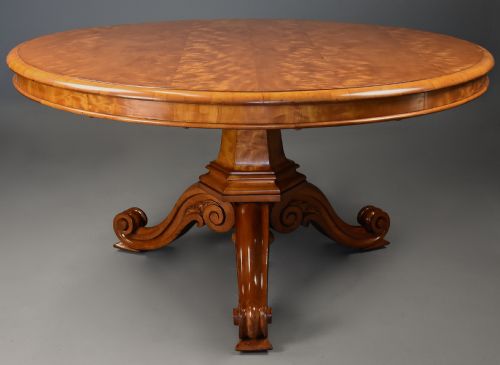
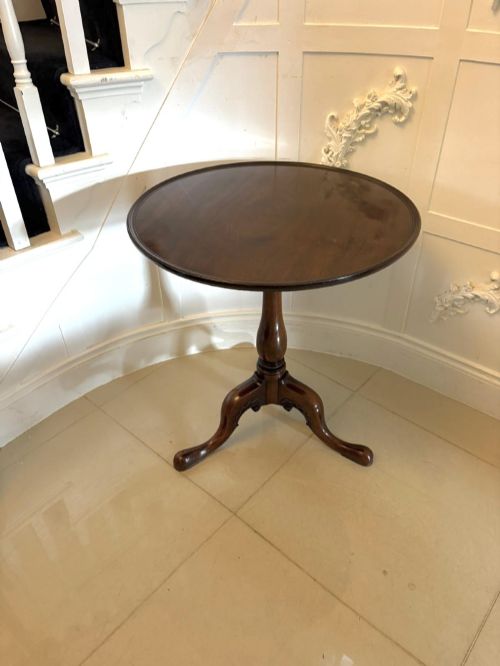
A round top pedestal table serves multiple functions across domestic interiors, appearing as a compact wine table, a tilt-top breakfast piece or a grand centre table. When searching for this form, you meet pieces raised on a central pillar supported by three feet or a heavier base, originating from the Georgian, Regency and Victorian periods.
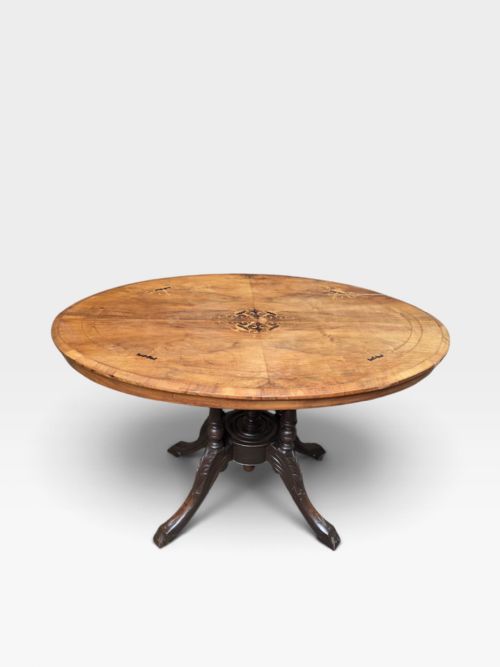
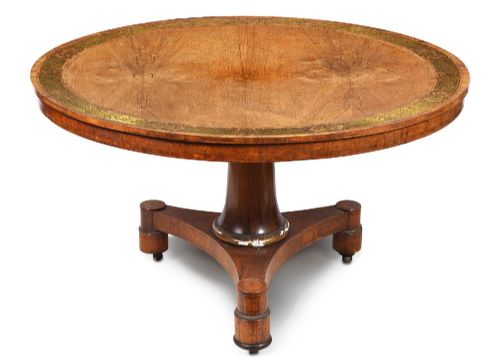
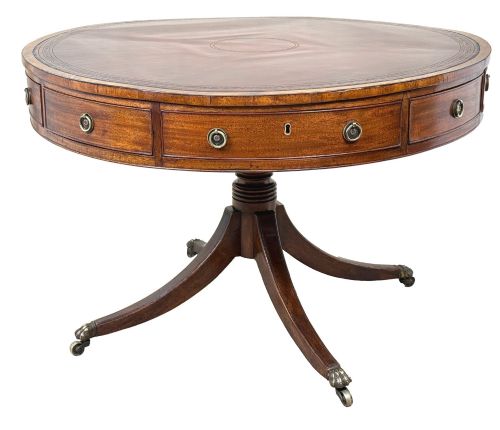
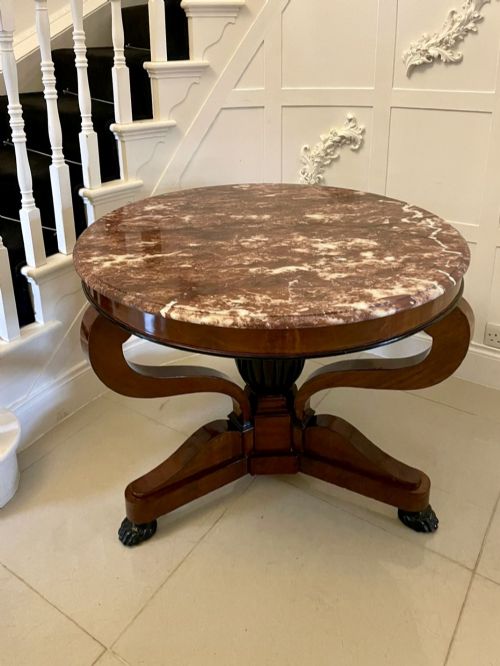
The selection ranges from small mahogany tripod wine tables and occasional tables designed for lamps to large rosewood and walnut centre tables intended for the middle of a room. Examples span from the eighteenth century through to the early twentieth century, including revival styles and continental gueridon forms.
Dining and breakfast variants often feature tilting tops for easy storage against a wall when not in use. Smaller occasional and lamp tables provide practical surfaces while maintaining a minimal floor footprint due to their single central support.
Materials and construction
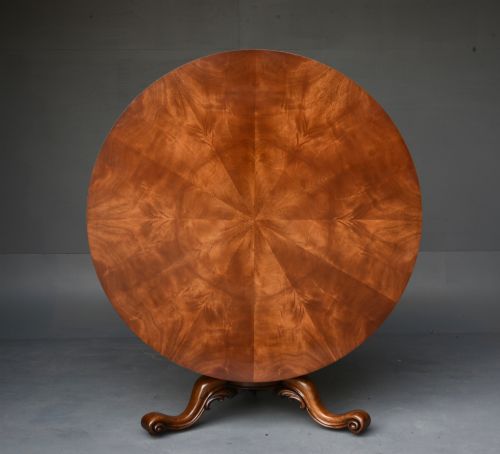
Cabinet makers utilised dense hardwoods such as mahogany, rosewood, walnut and oak, often selecting figured veneers like burr walnut, flame mahogany and burr birch for the table tops. Solid timber forms the structural pillars and tripod legs, frequently finished with carved details or brass inlay.
Many tables incorporate tilt-top mechanisms using a birdcage or catch block to allow the circular surface to pivot vertically. Tripod bases join the central pedestal using tenons or dovetails, ensuring stability beneath the single vertical column.
Round Top Pedestal Retail Price Guide 2026
Typical asking prices for round top pedestal among the pieces listed under this phrase on Sellingantiques today, from the lower quarter to the upper quarter. They describe what is for sale here now, not the wider market.
Some tilt-top tables feature a clever birdcage mechanism that lets the top both pivot and spin simultaneously.
Assessing quality and craftsmanship
Quality rests in the selection of timber veneers and the crispness of any carved or inlaid decoration, such as boxwood stringing or marquetry. Superior examples display carefully matched grain patterns across the circular top and robust, well-proportioned pillar supports.
The integrity of the tilt mechanism and the firmness of the tripod base dictate daily utility. Better constructed pieces maintain a level top without wobble, demonstrating precise joinery where the pillar meets the legs.
Gillows
The Round Top Pedestal Glossary
- Tilt-top table
- A table with a hinged top that pivots to a vertical position when not in use. This mechanism allowed tables to be stored against walls in smaller rooms.
- Tripod table
- A small table supported by a single central pillar resting on three legs. This design became popular during the Georgian period for tea, wine or occasional use.
- Gueridon
- A small French round table, often used as a centre table or occasional piece. The form dates back to the seventeenth century and frequently appears in mahogany or walnut.
- Marquetry
- Decorative woodwork where pieces of veneer are fitted into a ground to form geometric or floral designs. Victorian and Georgian makers applied this technique to table tops.
- Piecrust table
- A table with a raised, carved edge shaped in undulating curves resembling pastry work. This decorative edging typically appears on eighteenth-century mahogany wine and tea tables.
Round Top Pedestal: Frequently Asked Questions
How do I use a pedestal table?
These tables suit placement in the centre of a room, beside a sofa or as a lamp table in a corner. Their single central column leaves room for chairs to tuck underneath without knocking against table legs.
Larger circular versions work well as breakfast or small dining tables, while smaller tripod variants hold drinks, books or decorative lamps.
What is a gueridon?
A gueridon is a small French circular table supported by a central pillar. They arrived in various woods including mahogany, walnut and exotic veneers.
Cabinet makers designed them as decorative centre tables or occasional surfaces for holding lighting and ornaments in formal French and English interiors.
How do I tell Georgian from Victorian pieces?
Georgian tables from the eighteenth and early nineteenth centuries often emphasise clean architectural lines, Cuban mahogany timbers and understated tripod bases. The joinery and turning tend to reflect classical restraint.
Victorian examples frequently introduce heavier carvings, rosewood or burr walnut veneers, marquetry inlay and more ornate pedestal shapes reflecting later revival tastes.