

Round Top Pedestal Table
A round top pedestal table delivers centuries of compact dining and display utility, resting on a sturdy central column.
Round Top Pedestal Table
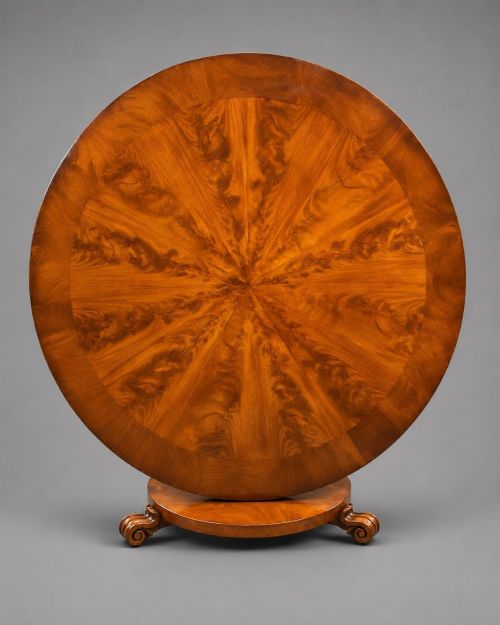
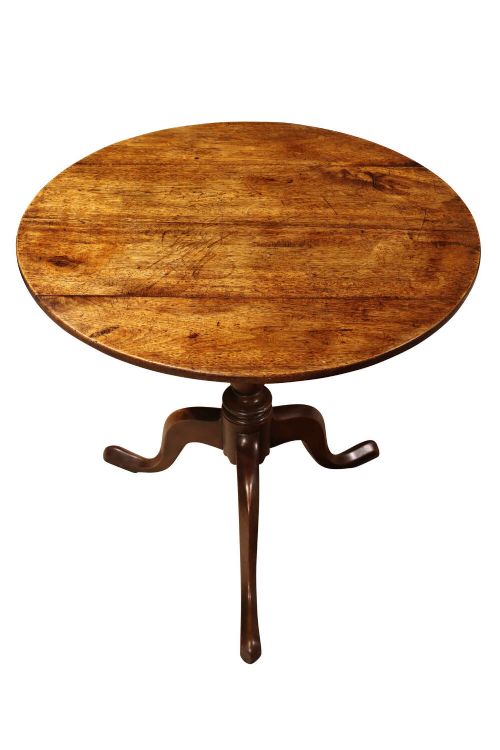
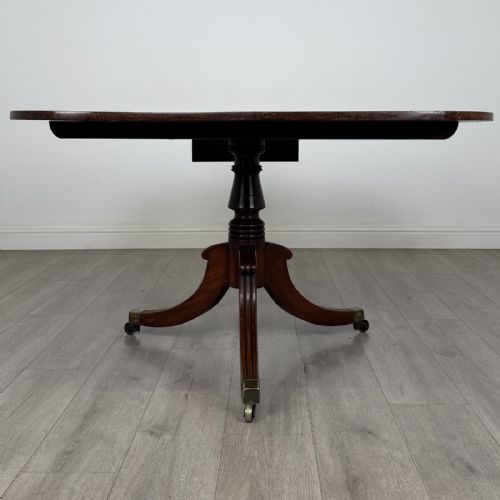
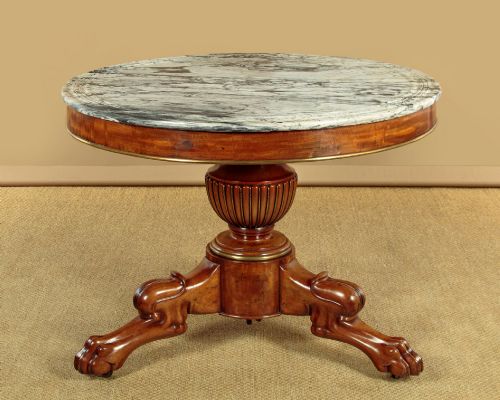
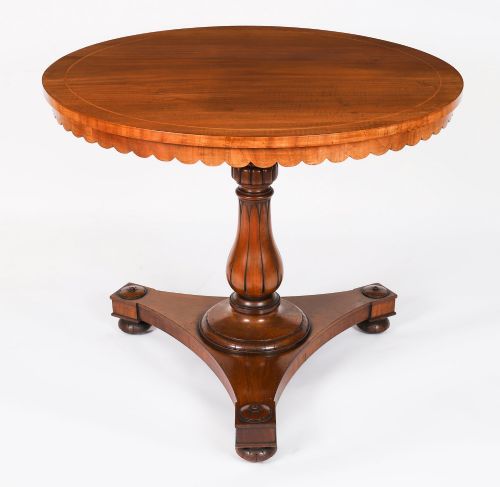
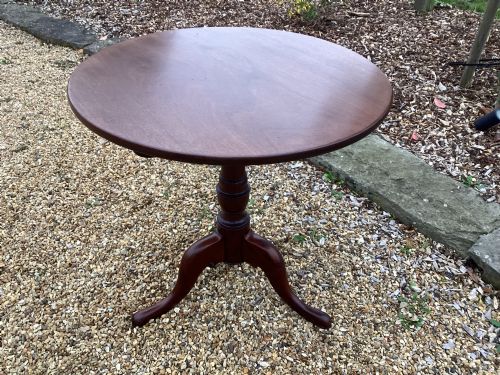
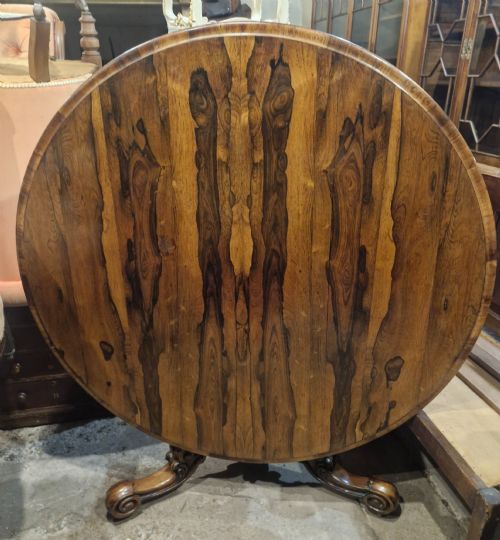
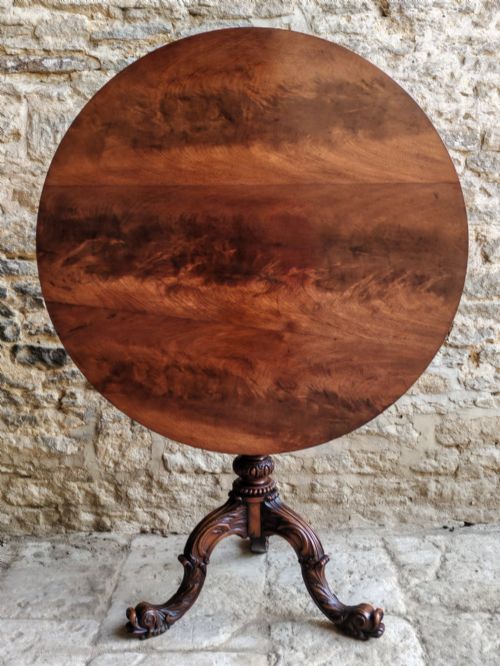
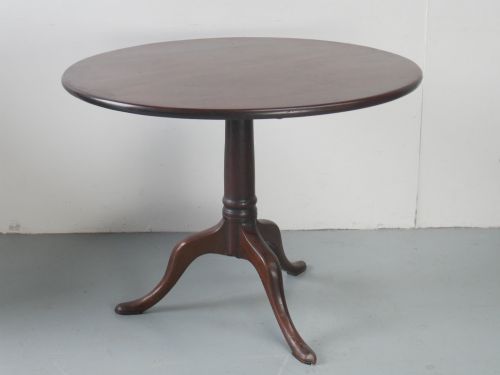
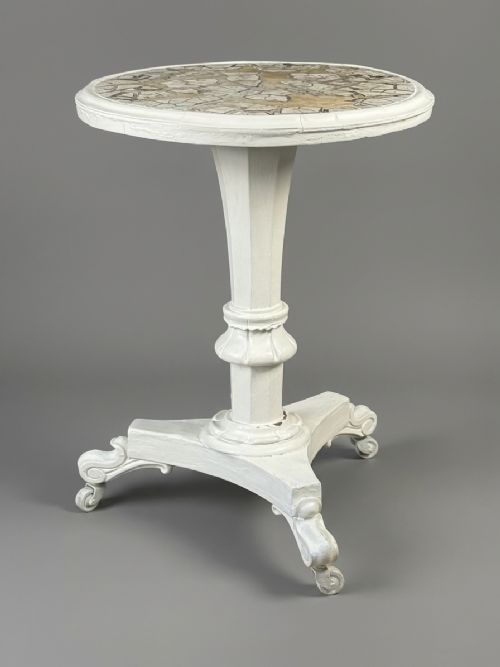
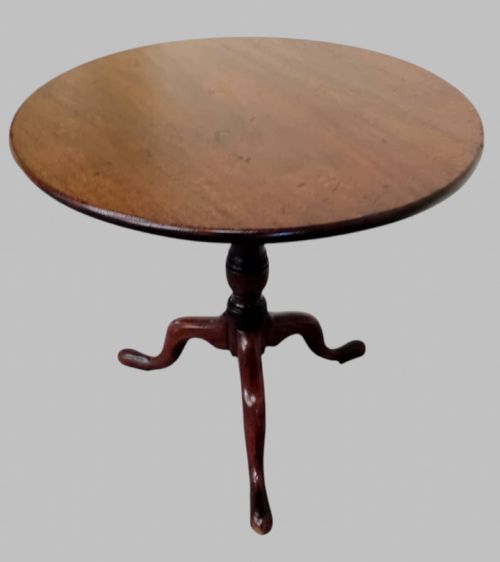
A round top pedestal table supports its circular surface on a central column, which commonly divides into tripod legs for stability. These pieces emerge across Georgian, Regency, and Victorian periods as flexible items used for dining, tea, wine, or lamp placement.
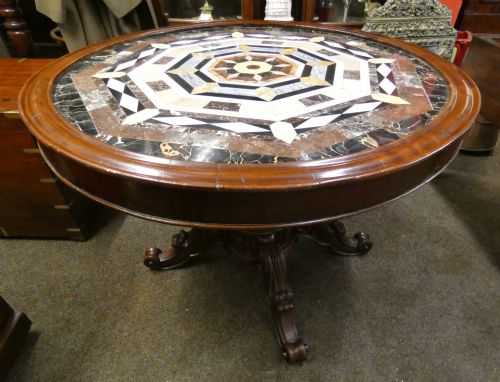
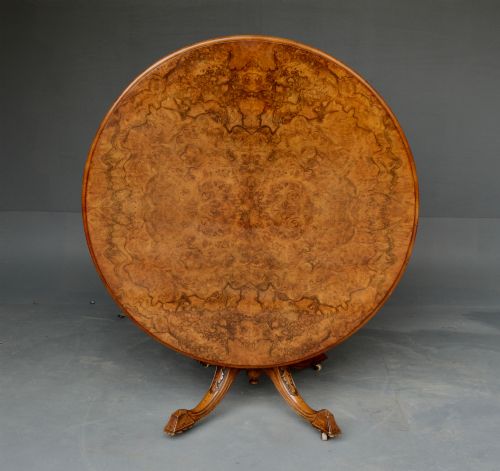
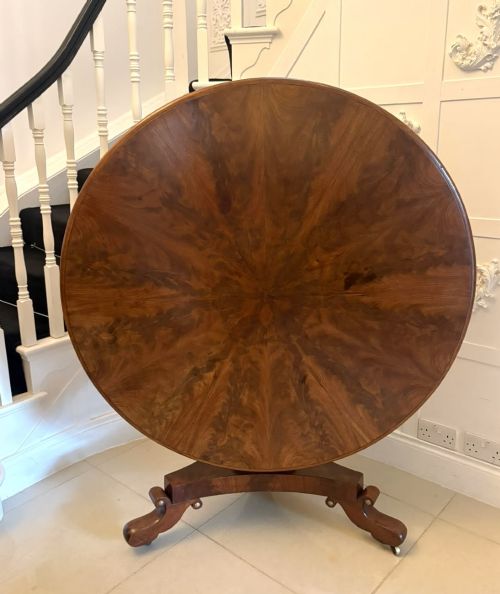
The selections here span centuries of British, French, and Swedish design, taking the form of large dining pieces, tilt-top breakfast tables, and small wine tables. Mahogany, rosewood, and walnut serve as the primary timbers supporting these circular designs.
Materials and construction methods
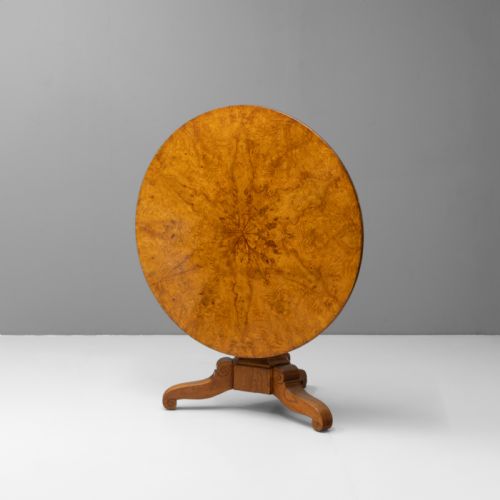
Cabinetmakers utilised solid timbers alongside veneers, applying flame mahogany, burr walnut, and burr birch to the circular tops for distinct figure. Brass inlay, marquetry, and carved details appear across various periods to embellish the edges and pedestals.
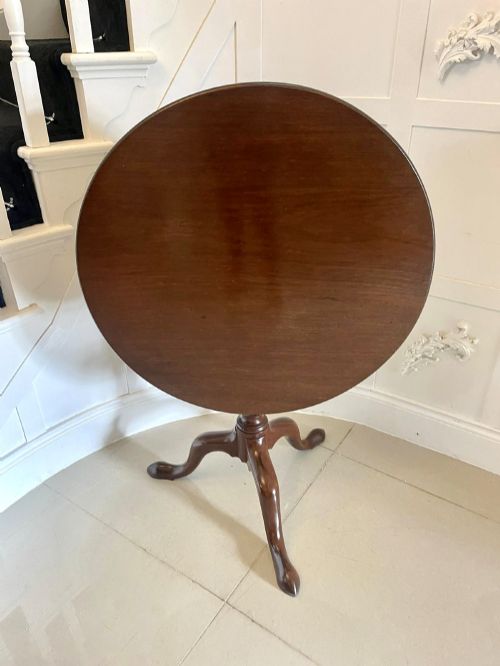
Many examples feature tilt-top mechanisms, allowing the circular surface to pivot vertically when not in use. Tripod bases employ dovetailed or tenoned joints connecting the legs to the central turned pillar.
Round Top Pedestal Table Retail Price Guide 2026
Typical asking prices for round top pedestal table among the pieces listed under this phrase on Sellingantiques today, from the lower quarter to the upper quarter. They describe what is for sale here now, not the wider market.
Period styles span Georgian, Regency, Victorian, William IV, French Empire, and Chippendale Revival.
Determining quality and execution
Quality rests upon the selection of timber figure, where finely figured satin birch or book-matched veneers elevate a piece above plain surfaces. The crispness of hand-carving on the tripod legs and pillar separates standard production from superior workshops.
Structural integrity of the tilt mechanism and the central column's connection to the base dictate long-term durability. Refined proportions between the diameter of the round top and the spread of the pedestal legs mark thoughtful execution.
Gillows
The Round Top Pedestal Table Glossary
- Tilt top
- A circular table top hinged to the pedestal column, allowing the surface to fold flat for storage or space-saving. This mechanism often locks into place with a brass catch.
- Tripod base
- A pedestal support featuring three radiating feet attached to a central turned column. This configuration ensures the table remains stable on uneven floors.
- Gueridon
- A small French occasional table supported by a central pillar or figures. These pieces frequently feature marble tops or delicate wood veneers.
- Piecrust edge
- A raised, carved circular rim shaped in undulating curves resembling pastry work. This decorative border is typical on finer Georgian wine and dining tables.
- Drum top library table
- A large circular table featuring a deep frieze containing alternating drawers and dummy drawers. These examples usually rest on a substantial central pedestal.
Round Top Pedestal Table: Frequently Asked Questions
How were round top pedestal tables used originally?
These tables served multiple domestic functions depending on their scale and height. Smaller versions functioned as wine or lamp tables, while larger tilt-top examples held breakfast service or acted as centre tables.
The tilt mechanism allowed households to clear floor space quickly by folding the top against the wall when the table was not in active use.
How do I identify a Georgian pedestal table?
Georgian examples display classic proportions, restrained carved details, and dense timbers such as Cuban mahogany or country walnut. The tripod legs often terminate in pad feet or simple claw and ball designs.
Construction methods on these pieces show hand-cut joinery and aged patina consistent with eighteenth and early nineteenth-century cabinetmaking practices.
Can I use a tilt top table for daily dining?
Tilt-top tables provide stable surfaces for dining provided the locking mechanism beneath the top engages securely. Larger examples easily accommodate multiple seats for casual meals.
Care should be taken with polished wood and marquetry surfaces by using placemats to protect the historic finish from heat and moisture.