


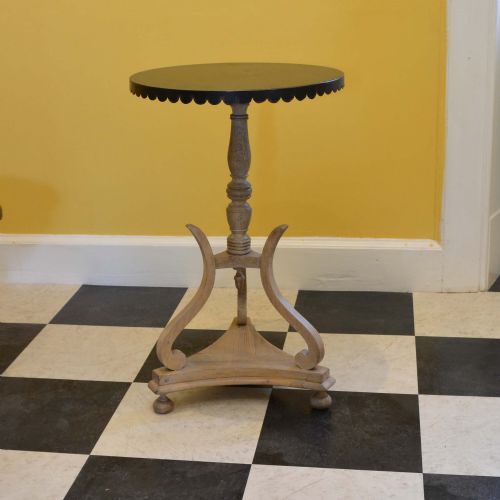
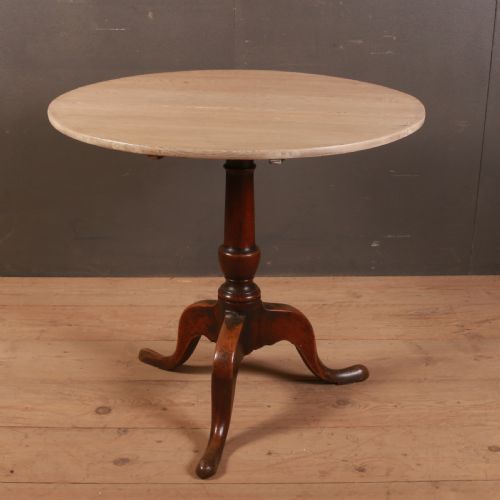

Round Oak Candle Table
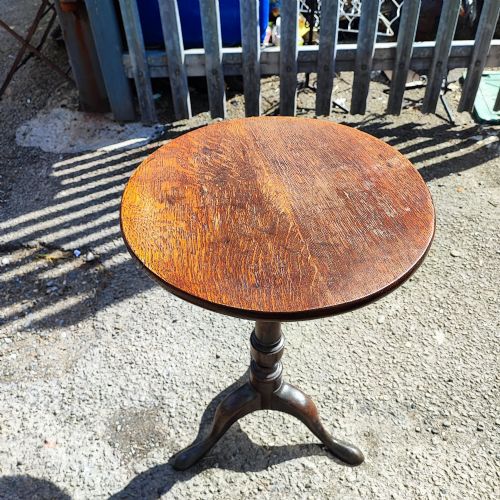
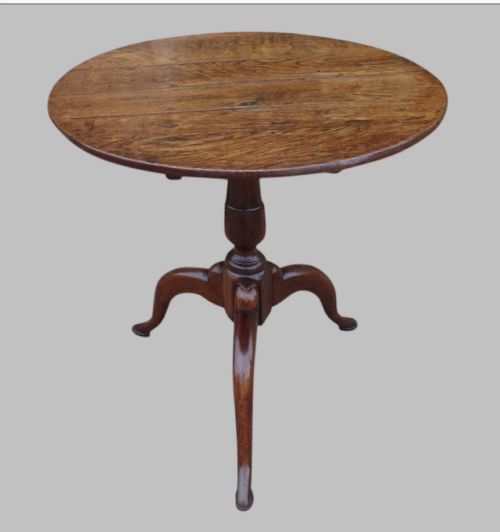
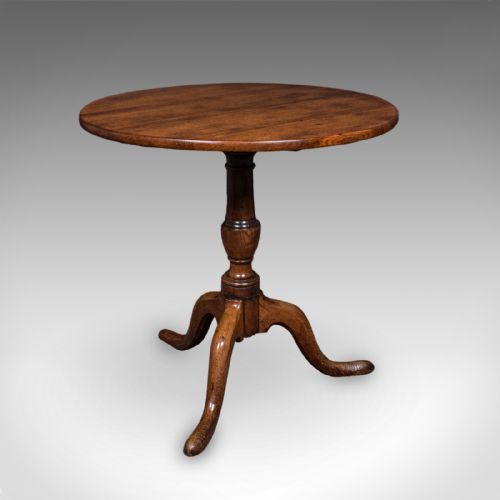
A round oak candle table brings compact utility and plain country character to a room, offering a sturdy surface raised on a central tripod base.
Round Oak Candle Table
A round oak candle table is typically found in Georgian, Regency, and nineteenth-century forms, serving as a small occasional, side, or wine table. These pieces stand on slender tripod legs that support a circular top, designed for easy movement beside a chair or bed.
The versions most common on this page date from the eighteenth and nineteenth centuries, including George III examples and rustic Welsh primitive pieces. Makers built them for practical daily use, resulting in straightforward constructions intended to hold a light or a glass.
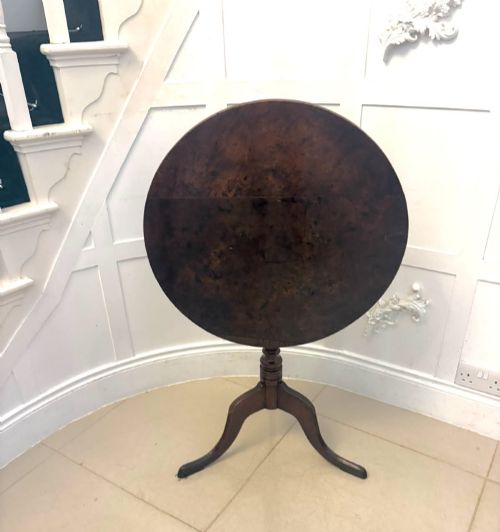
Most examples rely on a tilt-top mechanism, allowing the circular board to swing vertically against the pedestal when not in use. This clever design saved precious floor space in historic rooms and remains a defining characteristic of the surviving pieces.
How they were made
Cabinet makers selected solid timber such as plain oak, burr oak, elm, and beech for the structural frames and tops. Secondary woods occasionally appear in the lesser components, while select Regency examples incorporate satinwood, yew wood, marquetry inlay, or ebonised timber.
Turned pedestals and tapered legs demand precise lathe work to ensure the central column stands straight and stable on three feet. The top attaches to the stem via a birdcage or tilting block mechanism, secured by wooden pins or early iron fastenings.
Tilt-top mechanisms let these tables hug walls like shy ghosts when the candles finally go out.
What varies in quality
Quality rests in the choice of timber and the crispness of the turning on the central pillar. Plain boards show honest grain, but sections featuring burr oak, marquetry inlay, or contrasting satinwood and yew wood represent a more ambitious commission.
The grace of the tripod legs dictates the overall elegance of the silhouette, moving from heavy primitive country forms to refined Regency proportions. Stability and the tight fit of the tilting mechanism separate standard utility items from better-resolved workshop pieces.
The Round Oak Candle Table Glossary
- Tripod table
- A small freestanding table supported by three legs radiating from a central pillar. This three-point stance ensures stability on uneven historic floors.
- Tilt top
- A tabletop mounted on a hinge mechanism that rotates to a vertical position. It allows the furniture to stand flat against a wall when not in use.
- Burr oak
- A figured timber harvested from tree growths containing clustered bud distortions. It yields a rich, swirling grain pattern prized for decorative surfaces.
- Ebonised timber
- Wood stained or treated to imitate ebony. This dark finish provides sharp contrast on Regency and nineteenth-century details.
- Occasional table
- A small, movable piece designed for a specific, temporary function within a room. These versatile items easily shift position according to daily needs.
Round Oak Candle Table: Frequently Asked Questions
What is a round oak candle table?
A round oak candle table is a compact antique stand featuring a circular wooden top supported by a central pillar and three legs. These tables were originally designed to hold a single light source beside a seating area.
Today, they function well as small side tables or lamp stands in modern interiors, taking up minimal floor space while adding period character.
How were these tables used originally?
Historic households used these small stands to position candles or oil lamps close to a chair for reading or handwork. Their portability meant servants could move them around the room as evening fell.
They also served as wine tables during gatherings, holding glasses and bottles within easy reach of guests seated around the room.
How do I tell an 18th-century table from a 19th-century one?
Eighteenth-century examples often display simpler country construction with pegged joints, plain oak boards, and heavier tripod feet. They carry the marks of hand-tooling and natural timber ageing.
Nineteenth-century pieces sometimes introduce decorative elements like ebonised finishes, satinwood highlights, or more elaborate turning inspired by Regency taste.
How do I care for an antique oak table?
Protect the surface by avoiding direct placement near heat sources or strong sunlight, which can dry out historic timber and warp the top. Use coasters to guard against moisture rings.
Apply a traditional beeswax polish occasionally to nourish the grain and maintain a soft natural sheen without building up synthetic residue.