


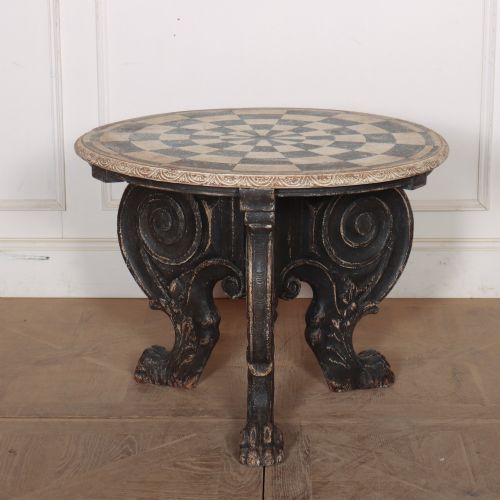


Round Oak Accent Table
A round oak accent table brings practical timber and sturdy tripod or pedestal frames into sitting rooms and studies alike.
Round Oak Accent Table
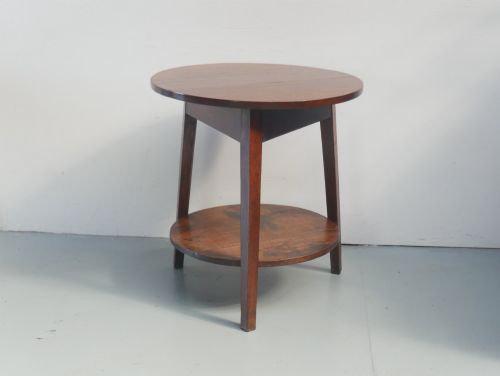
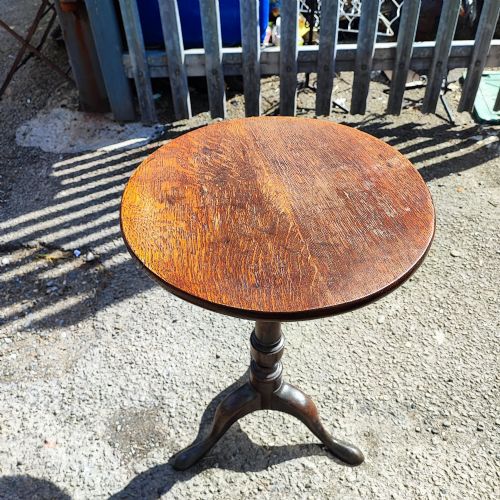
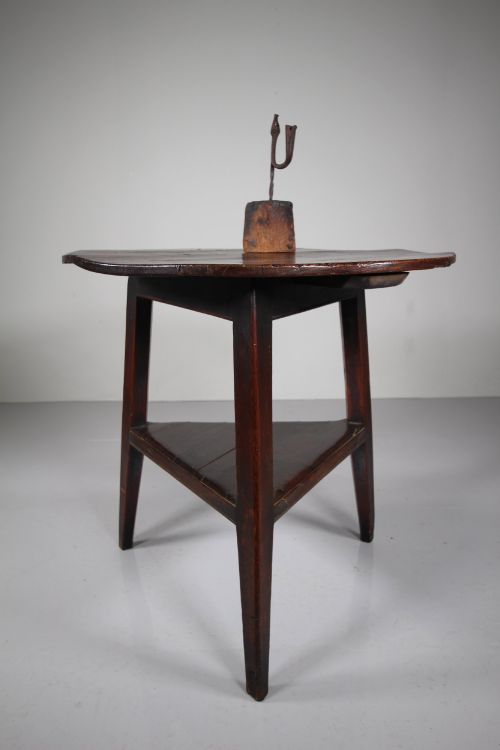
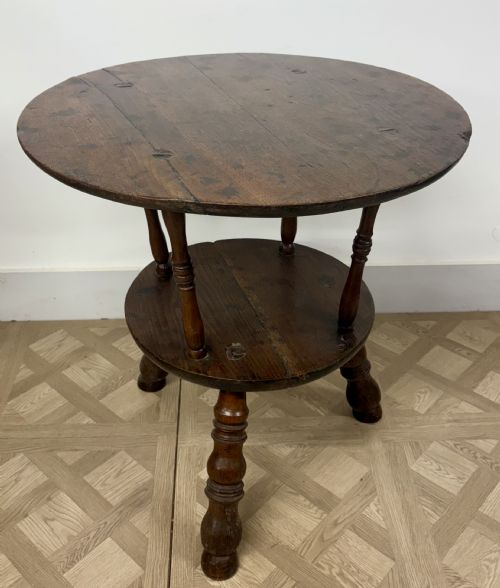
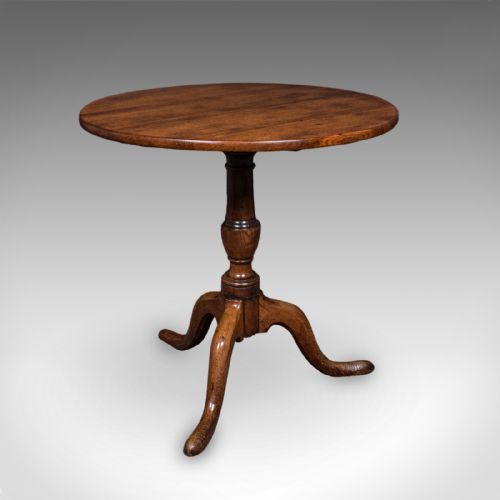
A round oak accent table spans compact side pieces, occasional tables, coffee tables, and tripod forms intended for everyday use. You will frequently encounter compact cricket tables and tilt-top designs from the eighteenth and nineteenth centuries.
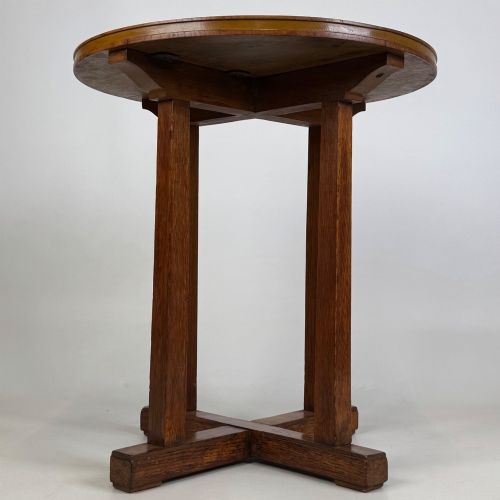
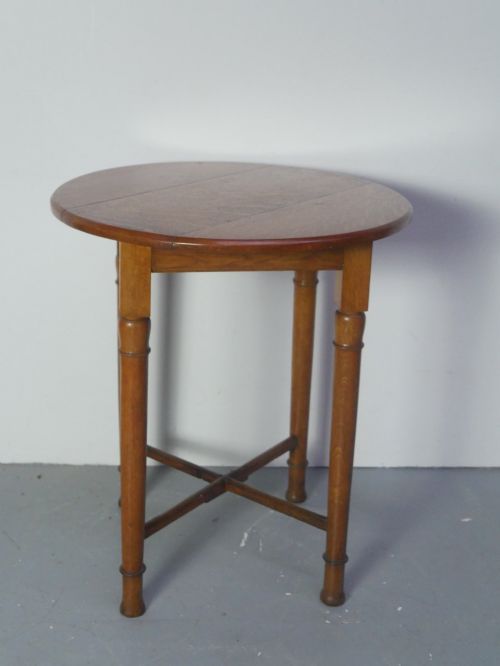
The selection ranges from vernacular English and Welsh country pieces to formal Georgian designs and later Arts and Crafts or Art Deco interpretations. Regional variations appear in simple three-legged tripod frames and circular tops intended to sit beside chairs or by firesides.
How they were made
Makers utilised solid timber construction, selecting oak alongside secondary woods such as elm, beech, and pine for structural supports and table bases. Tops frequently feature plain boards or figured pollard oak veneers.
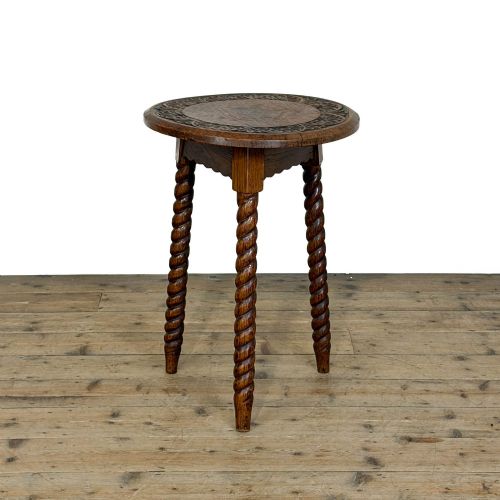
Carpentry techniques include pegged joints, turned stems, and tripod legs designed to remain stable on uneven floors. Certain examples incorporate tilt mechanisms, carved borders, or inlaid details executed by hand.
Listings span periods from the 18th century through the Georgian, Victorian, Edwardian, and Art Deco eras, showcasing side, coffee, and cricket table forms.
What varies in quality
Quality rests upon the choice of timber and the proportion of the circular top relative to the supporting legs. Finer examples display carefully matched grain patterns, balanced tripod geometry, and crisp hand-carved detailing.
Simpler vernacular pieces rely on honest utility, where the character of the wood and the integrity of the original joints define the piece rather than elaborate ornamentation.
The Round Oak Accent Table Glossary
- Cricket table
- A small circular wooden table featuring three legs, traditionally associated with vernacular English and Welsh farmhouse interiors. Their three-legged design prevents rocking on uneven stone floors.
- Tripod table
- A freestanding small table supported by a central pillar and three spreading feet. This format gained widespread popularity during the Georgian period for tea and wine service.
- Tilt-top table
- A table designed with a hinged top that pivots vertically to allow compact storage against a wall when not in use. The brass catch or wooden locking mechanism secures the top in the horizontal position.
- Pollard oak
- Timber sourced from trees that were periodically pruned back to the trunk, producing highly figured, mottled grain patterns. Cabinet makers utilised these distinctive veneers for statement table tops.
- Vernacular furniture
- Domestic objects made by local craftsmen using regional traditions and readily available native timbers rather than following metropolitan fashion. These pieces prioritize sturdy utility over high-style ornamentation.
Round Oak Accent Table: Frequently Asked Questions
What is a cricket table?
A cricket table is a traditional three-legged round table with a wooden top, originating in country workshops.
Their design provided stability on uneven floors found in older vernacular buildings.
How were these tables used?
These pieces served as portable surfaces for tea, wine, reading lamps, or parlour games beside seating.
Their compact scale allowed them to be moved easily around the room as needed.
How do I date an oak table?
Dating relies on examining construction methods, tool marks, timber selection, and stylistic details.
Earlier pieces show hand-cut pegging and vernacular turning, while later examples reflect Arts and Crafts or Art Deco design influences.
Where should I place an accent table?
Round accent tables fit neatly beside armchairs, in small hallways, or as central coffee tables in compact seating arrangements.
Their circular profile softens room layouts that feature many straight architectural lines.