

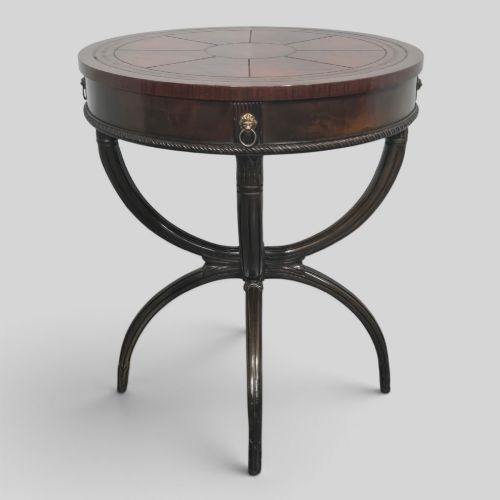
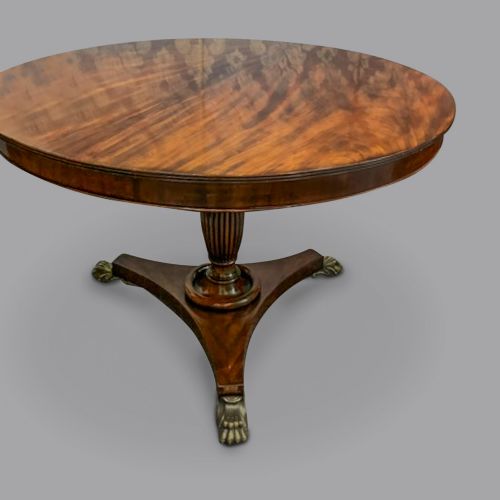
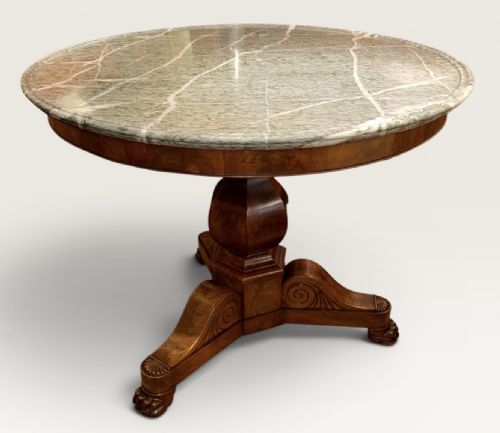

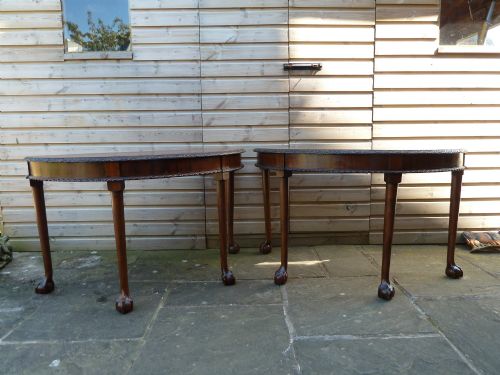


Round Mahogany Hall Table
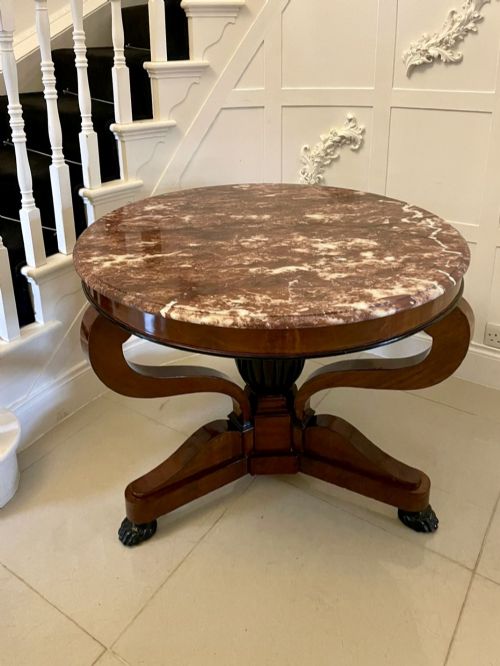
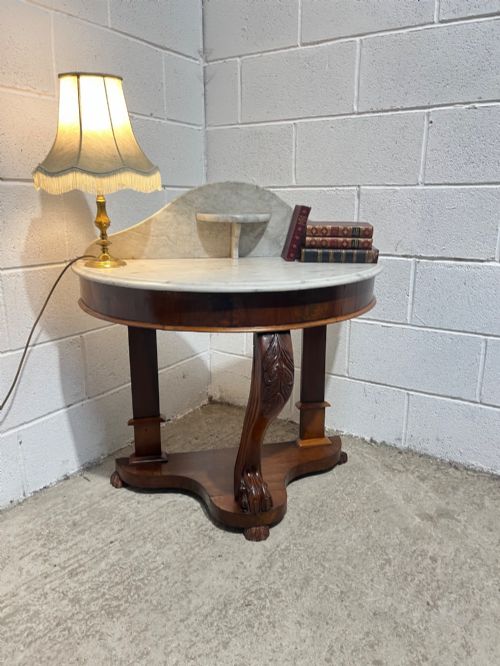
When you need a round mahogany hall table, you are looking at circular timber furnishings designed for entrance spaces from Georgian, Regency, and Victorian periods.
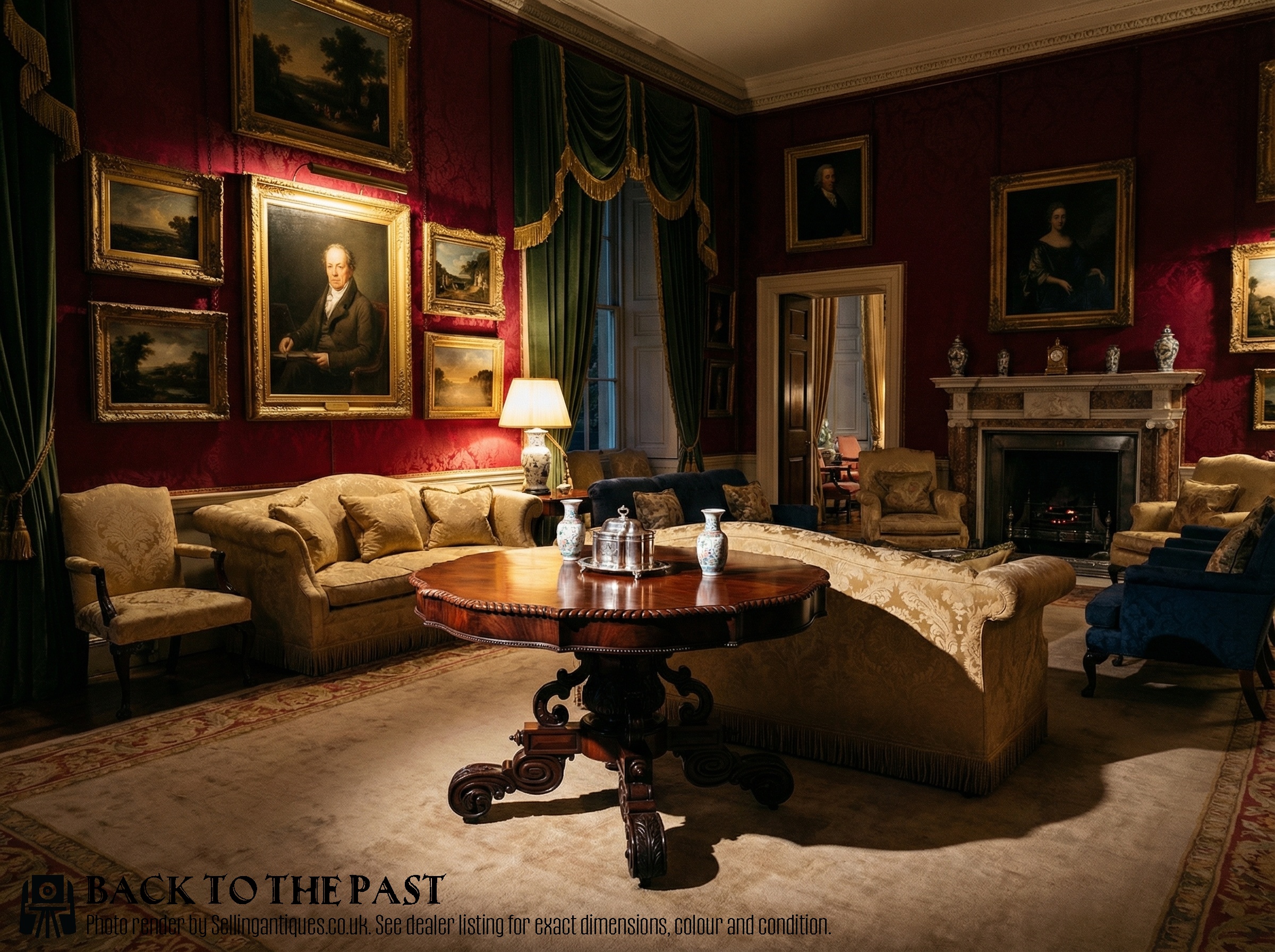
Round Mahogany Hall Table
A round mahogany hall table is a piece designed primarily for entrance spaces, serving as a surface for lamps, plants, or incoming post. When you search for this phrase, you encounter various forms including centre tables, gueridons, drum tables, and occasional tables.
The pieces on this page span from the Georgian and Regency eras through the Victorian and Edwardian periods, as well as the 1920s. You meet circular designs supported by pedestals, tripod bases, or four-legged frames, often constructed with mahogany timber.
How they were made
Cabinet makers utilised solid mahogany and flame mahogany veneer laid over secondary timbers, often shaping circular tops to sit upon central pedestals or carved bases. Workshops incorporated brass mounts, ormolu, and leather inset writing surfaces on select drum and centre tables.
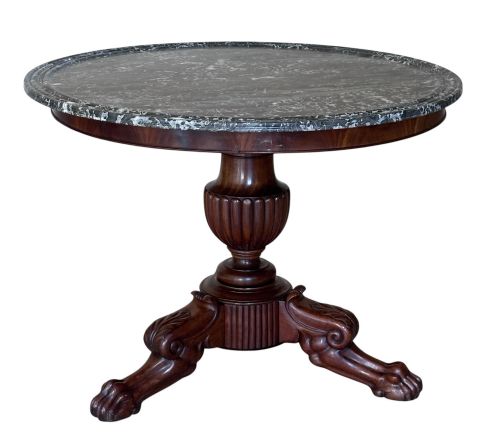
Many examples feature contrasting timber inlays such as satinwood, walnut, or marquetry work. Marble tops appear frequently on French gueridons and console tables from the nineteenth century, fitted directly into the wooden frames.
The furniture includes French Empire, Regency, Victorian, Georgian, and Edwardian styles, spanning console tables, gueridons, drum tables, and occasional pieces.
What varies in quality
The standard of a round mahogany hall table rests upon the choice of timber figure, particularly the depth and movement within flame mahogany veneer. Superior examples display precise marquetry inlay, finely cast brass or ormolu details, and substantial marble slabs.
Construction methods dictate longevity, seen in the stability of the central pedestal or tripod base and the crispness of carved wooden elements. Tables exhibiting integrated drawers with functional writing slopes or fitted interiors demonstrate higher craftsmanship.
The Round Mahogany Hall Table Glossary
- Gueridon
- A small French round table, often featuring a central pedestal base and a marble top. These pieces originated in the seventeenth century and remained popular through the nineteenth century.
- Drum Table
- A circular library or centre table with a deep top containing drawers, resembling the shape of a drum. They frequently incorporate leather writing inserts on the surface.
- Demilune
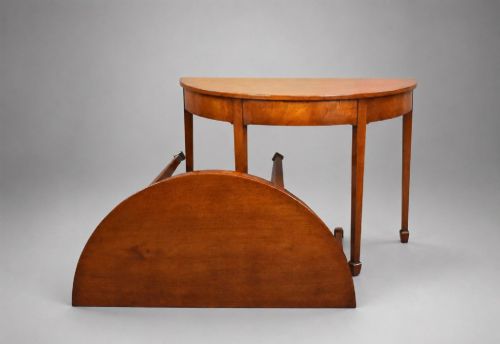
- A half-moon shape used for console and hall tables designed to sit flush against a wall. The term describes tables with a straight back edge and a curved front.
- Ormolu
- Gilded bronze applied as decorative mounts on furniture during the eighteenth and nineteenth centuries. This technique enhances the visual richness of French empire and nineteenth-century pieces.
Round Mahogany Hall Table: Frequently Asked Questions
Where do I put a round mahogany hall table?
These circular tables fit well in spacious entrance halls, landings, and reception rooms where they can be accessed from all sides. They serve as a functional surface for table lamps, decorative bowls, or visiting cards.
Because many examples feature polished timber or marble tops, positioning them away from direct heat sources helps preserve the mahogany and any delicate veneer work.
What is the difference between a gueridon and a centre table?
A gueridon is a specific type of round table, typically French in origin, which frequently incorporates a marble top and a single pedestal base. Centre tables encompass a broader category of freestanding tables meant to occupy the middle of a room rather than sit against a wall.
While many gueridons function as centre tables, centre tables also include larger drum tables with drawers and four-legged Victorian or Georgian designs without marble inserts.
How do I care for a mahogany hall table?
Routine maintenance involves dusting with a soft, dry cloth to prevent particulate buildup on the polished mahogany or veneer. Avoiding silicone-based polishes preserves the original finish over time.
For tables with leather inserts or marble tops, specialised care is required to protect the leather from moisture and the stone from acidic spills. Placing felt pads under objects prevents scratching.
Are these tables sturdy enough for daily use?
Nineteenth-century and earlier tables were constructed to withstand everyday domestic demands using dense hardwoods like mahogany. Pedestal and tripod designs distribute weight effectively when placed on level flooring.
Care should be taken with pieces featuring delicate satinwood inlay or raised flame mahogany veneer to avoid heavy impact or deep scratching during daily transit through the hall.