



Round Gilt Table
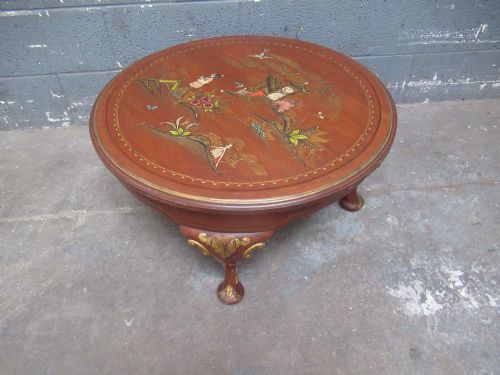
A round gilt table brings warmth and reflected light to a room, functioning as an occasional piece, a centre table, or a coffee table.
Round Gilt Table
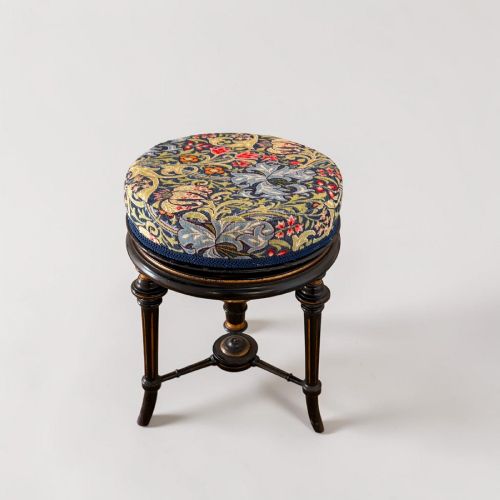
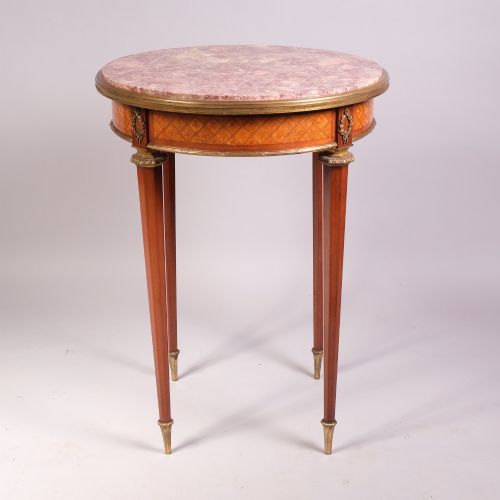
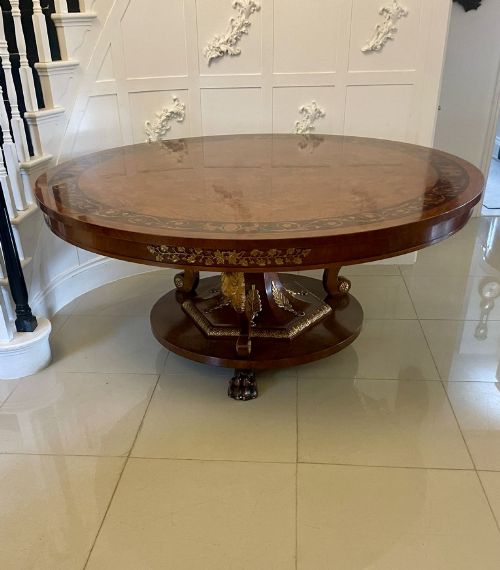
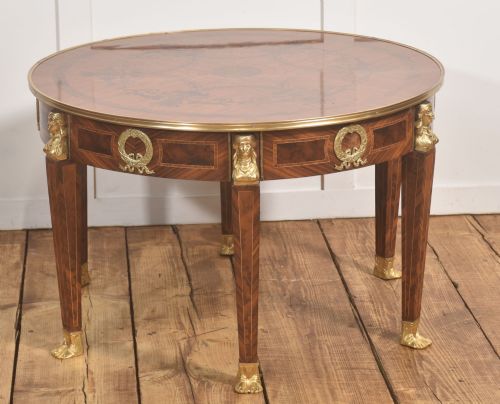
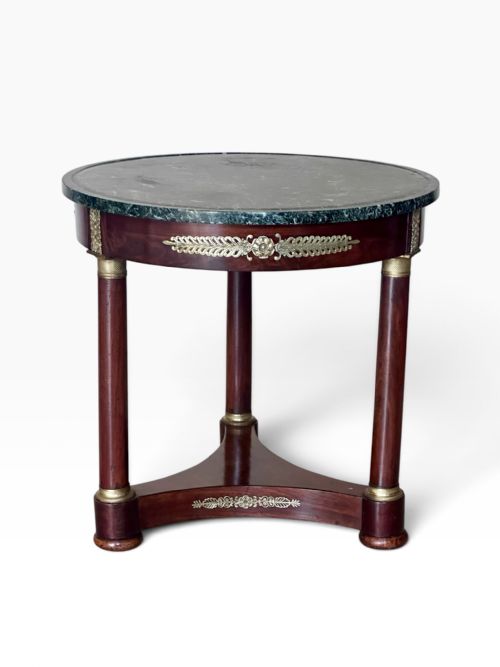
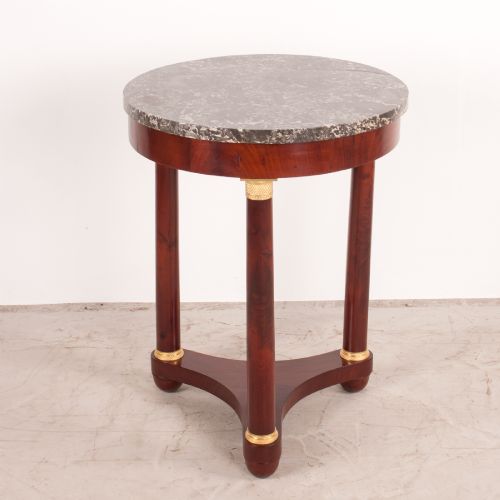
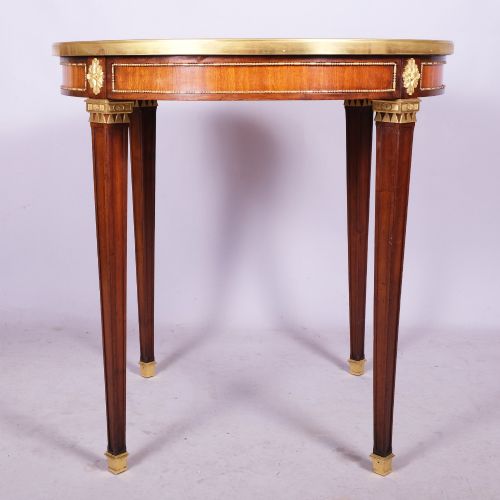
When you search for a round gilt table, you encounter a variety of forms designed for formal rooms, including French Empire gueridons, marble-topped bouillotte tables, and low coffee tables. The selection spans the nineteenth century through the mid-twentieth century, drawing heavily on French styles such as Louis XVI and Neoclassical revivals.
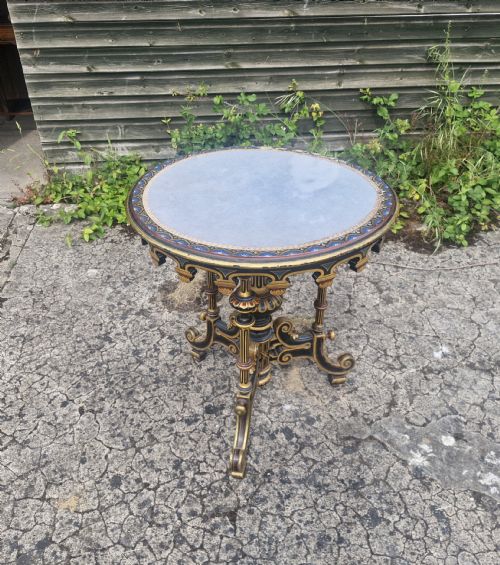
Occasional tables and centre tables dominate the forms, alongside smaller lamp tables, wine tables, and low coffee tables. Most examples feature circular wooden frames enhanced with giltwood, ormolu, or painted finishes, often paired with contrasting stone tops.
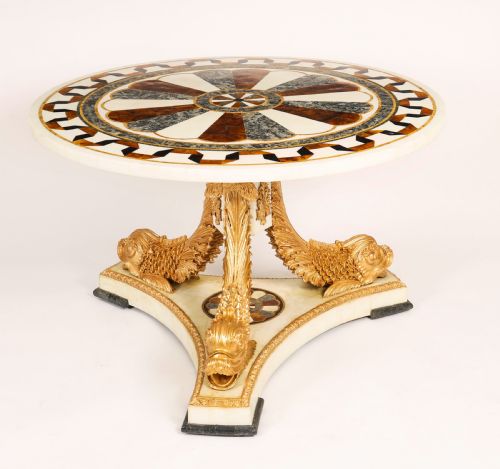
Origins stretch across France, England, Germany, and Spain, with nineteenth-century pieces showing strong neoclassical influences and later twentieth-century items offering simpler profiles. Buyers frequently meet pieces resting on columnar supports, tripod bases, or animal-form mounts like dolphins.
How they were made
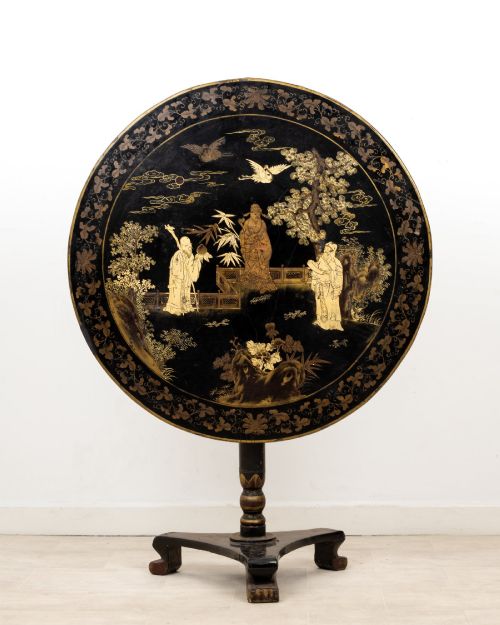
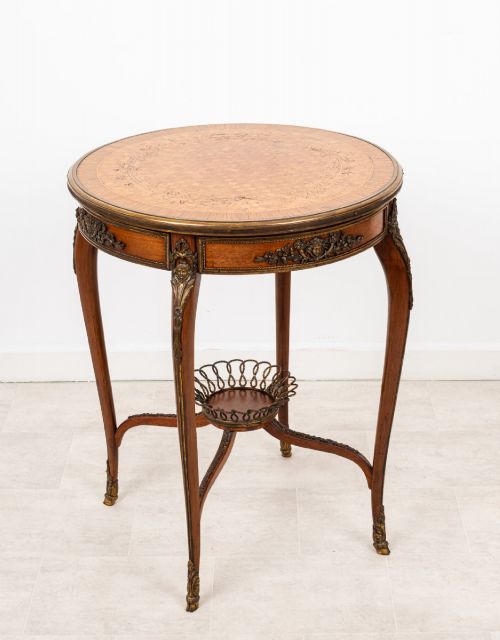
Cabinetmakers constructed the foundational frames from hardwoods such as mahogany, kingwood, walnut, and ebony, frequently applying intricate marquetry or painted decoration to the surfaces. Structural stability relied on traditional joinery adapted to circular formats, from tilt-top mechanisms to rigid pillar supports.
Gilding and metalwork define the aesthetic of these pieces, utilising gold leaf on wood alongside cast bronze and ormolu mounts. Tops frequently incorporate heavy materials such as white or porphyry marble, onyx, and inset leather, secured within the wooden or gilt-metal rims.
Round Gilt Table Retail Price Guide 2026
Typical asking prices for round gilt table among the pieces listed under this phrase on Sellingantiques today, from the lower quarter to the upper quarter. They describe what is for sale here now, not the wider market.
Forms range from bouillotte and gueridon tables to low coffee tables and specialised clock dials.
What varies in quality
The refinement of the cast bronze or ormolu mounts separates standard production from exceptional examples, with finer pieces displaying crisp chiselling and depth in the metal ornamentation. Hand-carved giltwood details and the precision of marquetry inlay further distinguish workshop output.
The choice of top material and its integration with the base dictate overall character, as solid marble slabs and matched veneers demand greater skill in balancing the structural load. The fluidity of the silhouette, particularly in revival styles following French models, governs the visual success of the piece.
François Linke·Jaeger Le Coultre
The Round Gilt Table Glossary
- Gueridon
- A small French table, typically circular, supported by a central pillar or a set of legs. These pieces originated in the seventeenth century and often served as candle stands or occasional tables.
- Bouillotte table
- A small French neoclassical side table featuring a raised gallery around the edge of the top to prevent items from sliding off. They frequently incorporate marble tops and candle arms.
- Ormolu
- Gilt bronze ornamentation applied to furniture, clocks, and decorative objects. The technique involves a mercury-gilding process on cast bronze, producing a rich metallic finish.
- Marquetry
- Decorative veneer work arranged in geometric or pictorial patterns across furniture surfaces. Craftsmen utilise thin slices of wood, shell, or metal to create contrasting designs.
- Tilt-top table
- A table equipped with a mechanism that allows the circular top to pivot to a vertical position when not in use. This design saved space in historical domestic interiors.
Round Gilt Table: Frequently Asked Questions
Where should a round gilt table sit?
These tables find natural placement as centre pieces in entrance halls, beside seating groups as lamp tables, or as functional coffee tables in drawing rooms. Their circular footprints allow them to anchor open spaces without awkward corners.
Because many feature reflective gilt surfaces or pale marble tops, placing them near a light source enhances their visual impact. Smaller wine and occasional versions suit tighter corners or empty wall spaces.
How do I care for marble and gilt surfaces?
Maintenance requires soft, dry cloths for dusting both giltwood frames and ormolu mounts to avoid abrasive wear on the finish. Moisture should be kept away from gilded surfaces to prevent flaking.
Marble tops benefit from pH-neutral cleaners and immediate wiping of liquid spills to protect the stone from staining. Avoiding harsh chemical polishes preserves the original patination on both metal and wood.
What distinguishes an Empire style piece?
Empire style furniture draws inspiration from classical antiquity, featuring strong architectural lines, dark woods, and prominent gilt-bronze mounts. Motifs often include columns, wreaths, and animal forms such as dolphins or sphinxes.
Proportions tend to be formal and monumental, even on smaller occasional tables, reflecting the taste of early nineteenth-century European courts. Gilt bronze contrasts sharply with dark mahogany or ebony bodies.
Are these tables suitable for daily use?
Solid construction and durable materials make most nineteenth and twentieth-century examples practical for everyday domestic tasks. Marble-topped versions offer resilient surfaces for daily placement of cups or books.
Care should be taken with delicate marquetry surfaces and water-sensitive gilt finishes, which warrant the use of coasters and mats. Proper placement away from direct heat sources protects the underlying wood from shrinking.