






Round Eagle Mirror
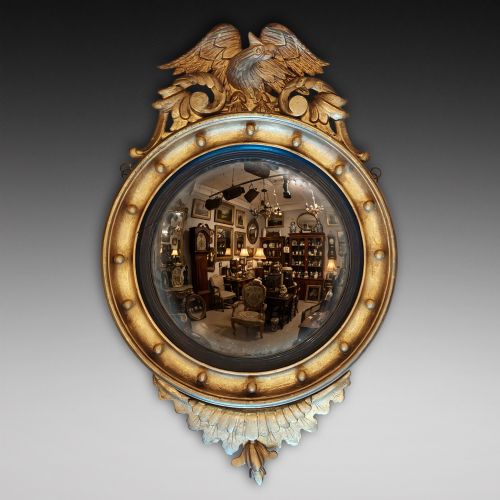
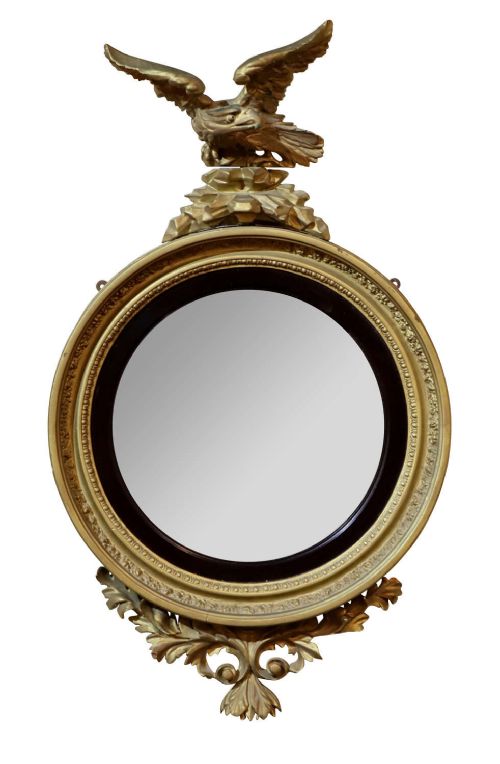
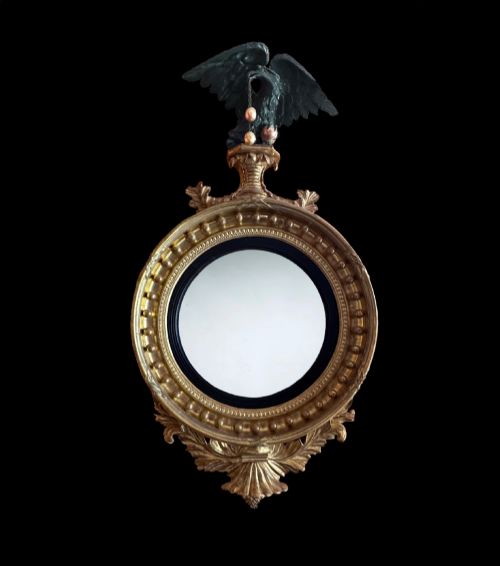
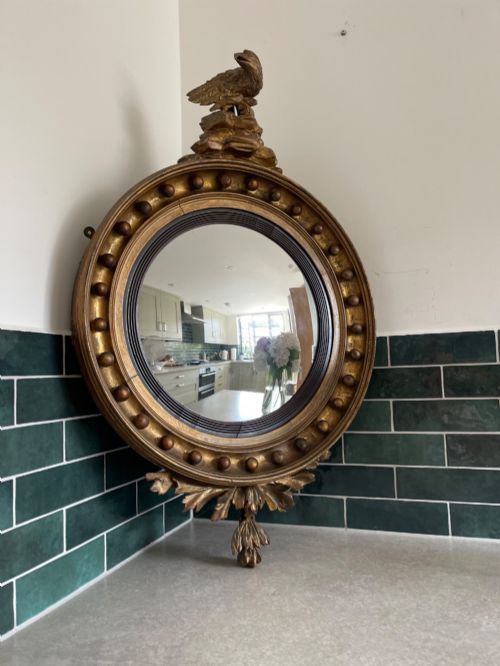
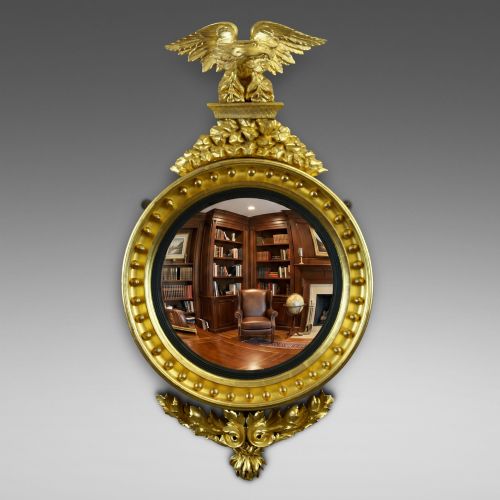
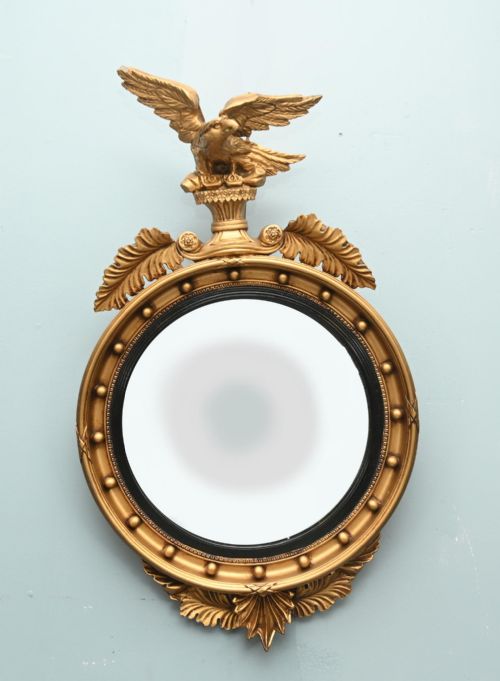
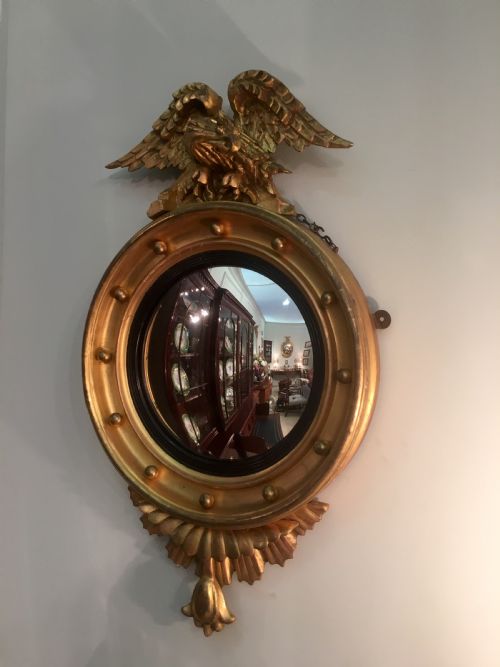
A round eagle mirror brings a commanding Regency presence to a room, catching the light in its curved glass and holding the eye with a carved bird surmount.
Round Eagle Mirror
A round eagle mirror is a circular wall hanging designed to draw light and attention into a space. These pieces most frequently date from the Regency period, though revival examples also appear.
The form relies on a convex glass plate set within a round frame, usually finished in giltwood and gesso. An eagle surmount perches at the top of the frame, giving the glass its traditional focal authority.
Buyers look for these wall mirrors to anchor a room with a strong historical silhouette. Most examples found here belong to the Regency and 19th Century periods, alongside occasional Victorian and later revival pieces.
How they were made
Makers shaped these frames from timber and pine, applying layers of gesso to build up the decorative details. Gilding was then applied to the prepared surface to create a bright metallic finish around the glass.
Mirrored glass was blown or cast to create the characteristic convex curve that distorts and widens the reflection of the room. Carved wooden elements, including the eagle surmount, were pinned or joined to the main circular frame.
Round Eagle Mirror Retail Price Guide 2026
Typical asking prices for round eagle mirror among the pieces listed under this phrase on Sellingantiques today, from the lower quarter to the upper quarter. They describe what is for sale here now, not the wider market.
The convex glass was originally designed so butlers could survey an entire dining room at a single glance without turning around.
What varies in quality
Quality rests in the crispness of the carved eagle surmount and the depth of the giltwood and gesso enrichment on the frame. Finer examples display sharp, well-defined plumage and balanced proportions that hold the composition together.
The condition of the mirrored glass and the integrity of the timber frame distinguish finer items from simpler ones. Hand-carved detail and traditional gilding techniques create a richer surface than later revival methods.
The Round Eagle Mirror Glossary
- Convex glass
- Mirrored glass curved outward to reflect a wide-angle, fish-eye view of the interior. This curved plate sits at the centre of the round frame.
- Giltwood
- Timber coated with gold leaf or gold paint over a prepared ground. It provides the bright reflective surface of the frame.
- Gesso
- A plaster mixture applied to wood frames to create a smooth base for carving and gilding. It allows for crisp decorative moulding.
- Surmount
- An ornamental feature placed at the very top of a mirror frame. The eagle serves this decorative function on these pieces.
- Girandole
- A branched candle holder attached to a mirror frame. Some large round mirrors incorporate these fittings for added illumination.
Round Eagle Mirror: Frequently Asked Questions
How do I hang a round eagle mirror safely?
These heavy frames require secure wall fixings anchored directly into masonry or solid studs. Due to the weight of the timber and gesso, standard picture hooks are unsuitable.
Use heavy-duty mirror brackets or a professional hanging system designed to support substantial wall ornaments.
Where should I place a round eagle mirror?
Hang the piece at eye level on a principal wall where it can reflect light from a window or opposite doorway. The convex glass disperses light widely across the space.
Avoid placing the mirror in direct, harsh sunlight that could degrade the antique giltwood surface over time.
How do I tell a Regency original from a revival?
Examine the construction of the timber frame, the composition of the gesso, and the ageing of the mirrored glass. Regency pieces show the natural wear and hand-tool marks of the early nineteenth century.
Revival pieces, such as those from the later nineteenth or twentieth centuries, often display cleaner machine finishes and different backing materials.