




Round Diamond Solitaire
When you seek a round diamond solitaire, you are looking at single-stone designs spanning Victorian to mid-century periods, predominantly mounted in platinum and gold.
Round Diamond Solitaire
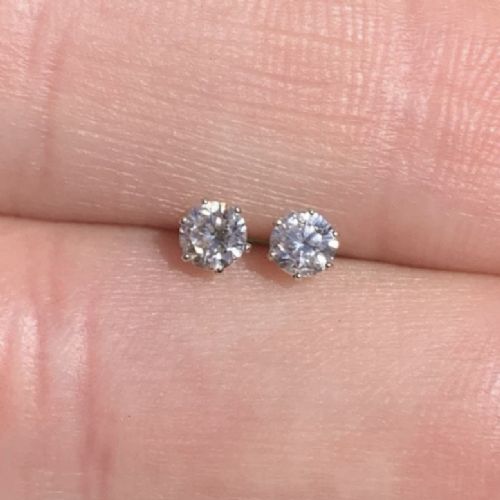
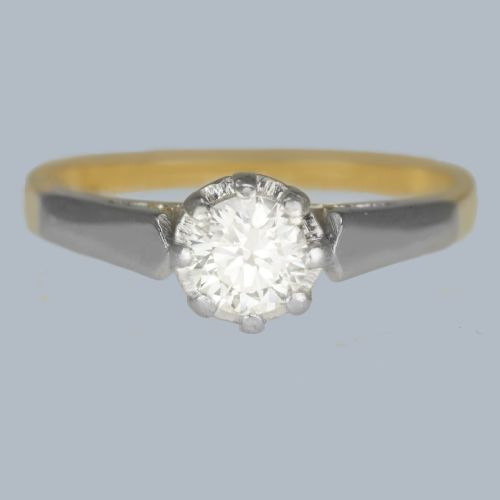
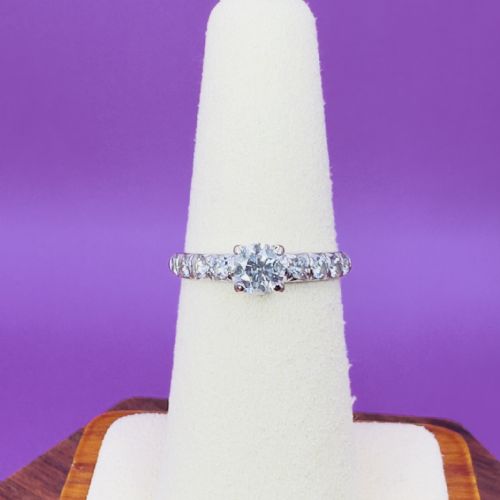
A round diamond solitaire focuses attention entirely upon a single principal stone, most frequently seen here as an engagement ring, pendant, or pair of stud earrings. The selection draws heavily from twentieth-century workshops, ranging through Edwardian delicacy and Art Deco geometry to mid-century modernism.
Engagement rings dominate the listings, paired with platinum settings or mixed 18ct gold and platinum combinations. Alongside rings, pendants and stud earrings offer alternative ways to wear the single-stone round diamond form across various decades.
The historical spread reaches from late Victorian examples up to pieces made later than 1960. Buyers encounter everything from delicate low-carat pendants to substantial multi-carat platinum rings originating from the 1920s and 1930s.
How they were made
Metals used in these mountings centre firmly on platinum and various karats of gold, including 18ct white gold, 18ct yellow gold, 9ct white gold, and occasional rose gold or 14k gold. Platinum gained favour during the Edwardian and Art Deco eras for its strength, allowing intricate, secure metalwork around the central stone without excessive bulk.
Diamond cutting techniques evolved across the periods represented, shifting from early European and old mine cuts toward the brilliant and transitional cuts seen in mid-century examples. Stones are secured using traditional claw settings, bezels, or integrated shoulders that sometimes feature smaller accent diamonds.
Some Edwardian stones have witnessed enough history to quietly outlive several owners while keeping their original fire intact.
What varies in quality
Quality differences lie in the optical performance and proportions of the central diamond, alongside the precision of the metal smithing. Older cut stones exhibit distinct hand-faceted geometries that interact with light differently than modern brilliant cuts.
The choice of mounting metal also influences the character of the piece, with heavier platinum settings providing durable structural integrity compared to lighter gold alternatives. Artisanal work from periods like Art Deco displays intricate detailing in the shoulders and setting galleries that separates standard production from finer creations.
The Round Diamond Solitaire Glossary
- Solitaire
- A piece of jewellery featuring a single mounted gemstone. This design style places complete visual emphasis on the central stone.
- Transitional Cut
- A diamond cut utilised roughly between 1920 and the mid-century, bridging the transition from old cuts to the modern round brilliant. These stones retain characteristic proportions from earlier cutting styles while moving towards modern symmetry.
- Bezel Setting
- A method of mounting where a thin collar of metal surrounds the gemstone, holding it securely in place by the rim. This technique offers a sleek outline and robust protection for the stone edge.
- Platinum
- A dense, durable, and naturally white precious metal widely used in antique and vintage mountings. Its strength permits delicate claw work and secure settings for large stones.
Round Diamond Solitaire: Frequently Asked Questions
What defines an old cut diamond?
Old cut diamonds are hand-faceted stones shaped before modern laser and computer-calculated proportions were established. They often display smaller tables and deeper pavilions.
These older stones produce a distinctive, softer candlelight sparkle rather than the sharp brilliance of modern cuts, reflecting the handcrafting methods of their period.
How do I care for a platinum setting?
Platinum is a durable and robust metal that resists wear well over decades of daily use. It develops a soft surface patina over time rather than losing material.
Cleaning requires only warm soapy water and a soft brush to remove oils from the diamond and restore the brightness of the mounting.
Are Art Deco rings suitable for daily wear?
Art Deco mountings in platinum and gold are generally robust, particularly those utilising heavy platinum bands. Consideration should be given to the height of the setting and the condition of the claws.
Regular inspection by a jeweller ensures the central diamond remains secure within its original period mounting during everyday use.
How do I tell Edwardian from mid-century styles?
Edwardian pieces often feature intricate openwork platinum frames, millegrain edges, and delicate wirework inspired by lace. They lean towards high-carat yellow gold or platinum combinations.
Mid-century designs shift towards cleaner architectural lines, heavier gold or platinum bands, and simpler settings that emphasise the standalone stone.