

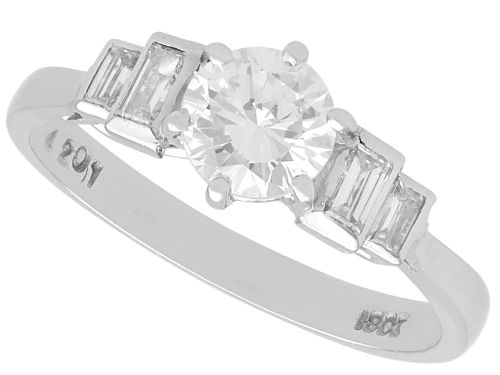
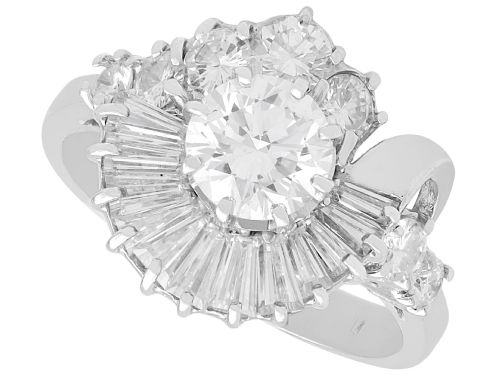
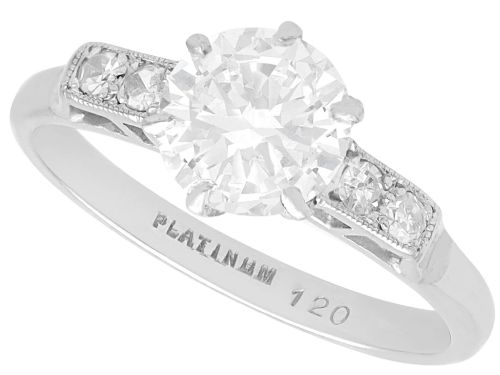
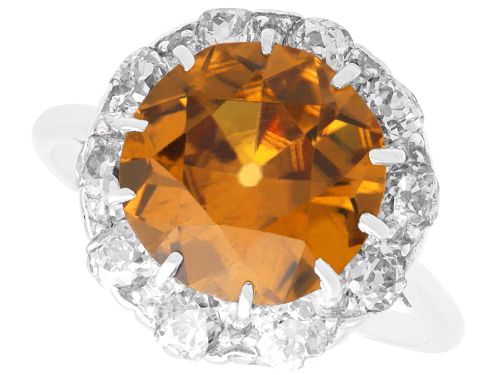
Round Diamond Engagement Ring
A round diamond engagement ring brings together enduring sparkle and historic character, offering an authentic piece of wearable heritage.
Round Diamond Engagement Ring
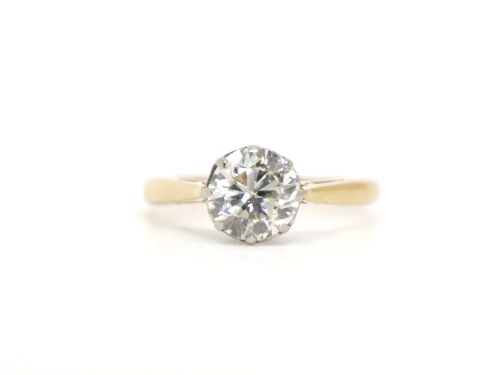
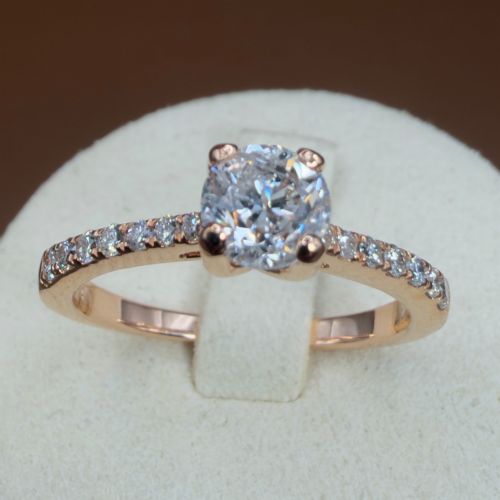
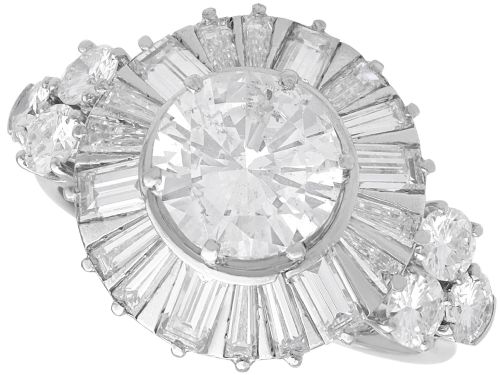
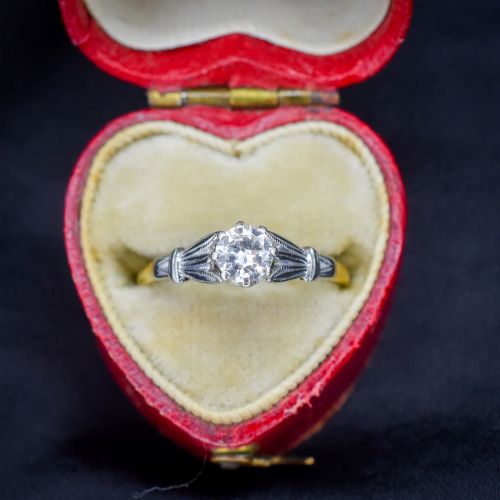
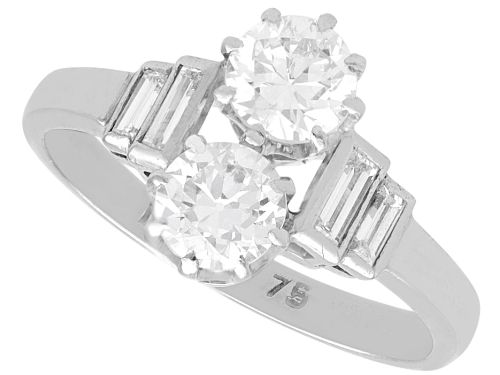
A round diamond engagement ring encompasses designs originating from the Edwardian era through to the mid-century period, including Victorian, Art Deco, and 1940s Retro examples.
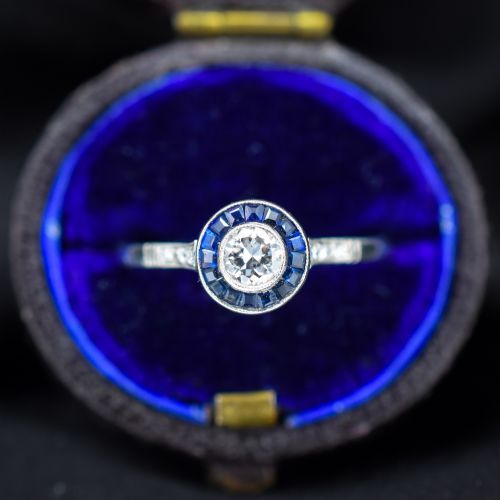
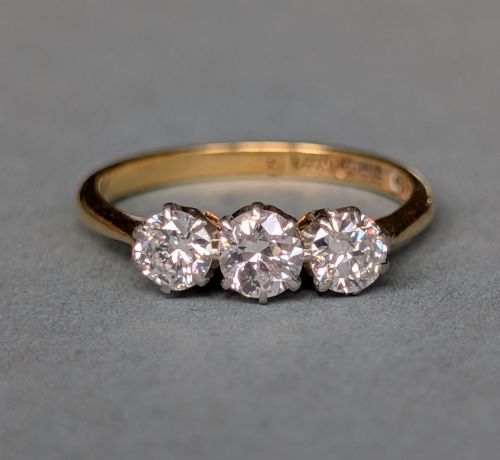
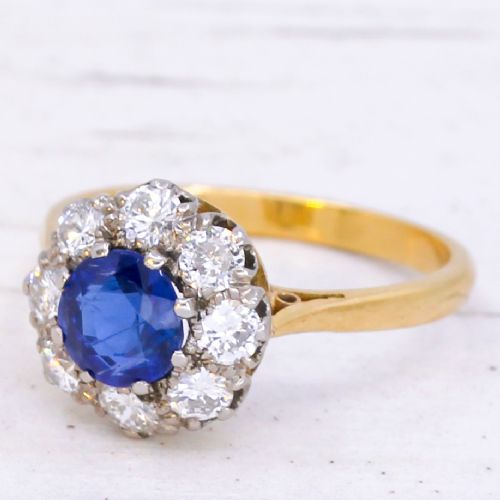
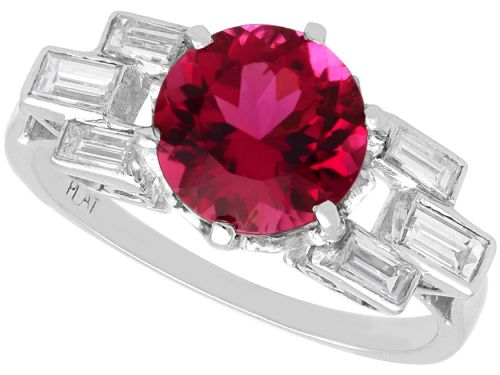
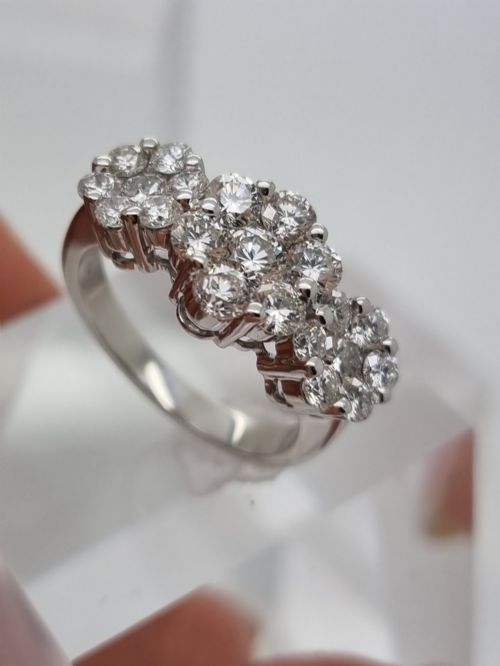
The selections span simple solitaire forms to complex cluster, trilogy, and flower configurations incorporating gemstones like sapphire, ruby, and opal alongside central diamonds.
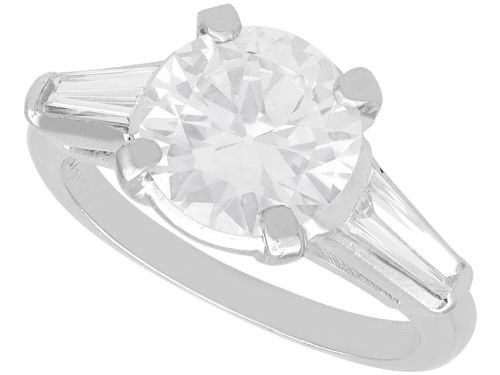
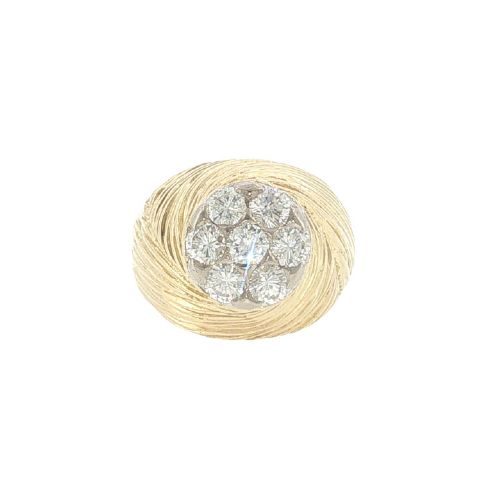
Buyers meet varied iterations ranging from delicate early twentieth-century platinum mounts to robust yellow and white gold settings from the 1950s and 1960s.
How they were made
Makers utilised precious metals such as platinum and 18ct gold in yellow, white, and rose varieties to securely house the stones.
Gems were shaped using historical cutting methods including old mine cuts, transitional cuts, and brilliant cuts, set carefully into metal bezels or delicate claws.
Round Diamond Engagement Ring Retail Price Guide 2026
Typical asking prices for round diamond engagement ring among the pieces listed under this phrase on Sellingantiques today, from the lower quarter to the upper quarter. They describe what is for sale here now, not the wider market.
Some vintage cluster rings arrange diamonds and coloured gems into miniature floral bouquets that bloom perpetually upon the finger.
What varies in quality
The harmony between the central diamond's cut and the surrounding metalwork dictates the visual impact and overall refinement of the piece.
The integrity of the original setting and the matching proportions of accent stones, whether rubies or shoulder diamonds, define the standard of execution.
The Round Diamond Engagement Ring Glossary
- Solitaire
- A ring featuring a single, prominent gemstone mounted on a metal band. This design focuses attention entirely on the central diamond.
- Cluster ring
- A ring style where a central stone is surrounded by a group of smaller gemstones. This arrangement creates a larger visual presence on the hand.
- Trilogy ring
- A three-stone ring representing the past, present, and future. It typically uses diamonds or a mix of diamonds and coloured gems.
- Old cut
- A historical diamond cutting style characterised by a smaller table, higher crown, and large culet. These stones display a distinctive, softer candlelight sparkle.
- Platinum
- A dense, strong, and naturally white precious metal widely used in antique settings. It allows for delicate claw work without sacrificing structural security.
Round Diamond Engagement Ring: Frequently Asked Questions
How do I care for my antique ring?
Clean your jewellery gently with warm water, mild soap, and a soft brush to remove everyday oils. Avoid harsh chemical cleaners that might harm softer side stones like opals.
Have a professional jeweller inspect the claw settings periodically to ensure the central diamond remains secure in its historic mount.
Can antique rings be resized?
Most gold and platinum bands can be adjusted by a skilled jeweller to fit comfortably. The feasibility depends on the band thickness and any intricate shoulder engraving.
Consult a specialist who understands period settings to ensure the structural integrity of the metalwork is preserved during adjustment.
What is the difference between old cut and brilliant cut diamonds?
Old cut stones were shaped by hand before modern machinery, resulting in unique facets and a charming, deep glow. Brilliant cut stones follow precise modern geometry designed to maximise white light return.
Both styles bring distinct historic character to engagement rings from different eras.
How do I identify the period of my ring?
Examine the mounting style, metal choices, and cutting techniques used for the diamonds and gemstones. Art Deco pieces show geometric lines, while Edwardian examples favour lacy platinum filigree.
Hallmarks stamped inside the band often provide official clues regarding the assay office and year of manufacture.