


Round Cut Engagement Ring
A round cut engagement ring carries the timeless geometry of past decades, uniting central diamonds with platinum and gold settings.
Round Cut Engagement Ring
A round cut engagement ring unites historic design traditions with central circular gemstones, covering styles from the late Victorian and Edwardian eras through the Art Deco period and mid-century decades.
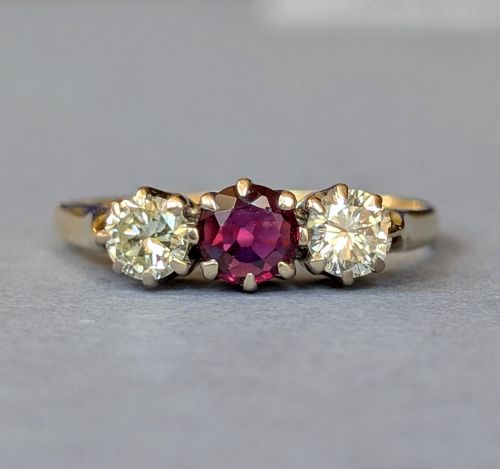
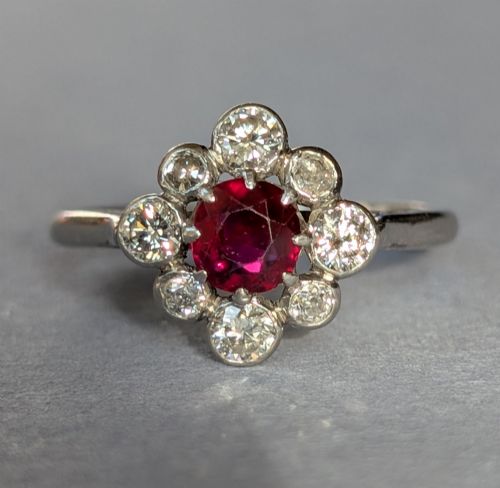
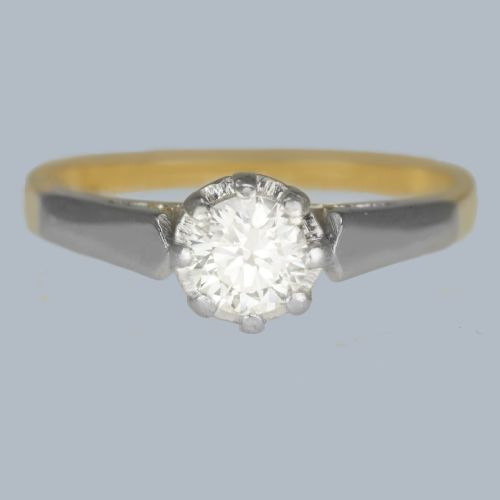
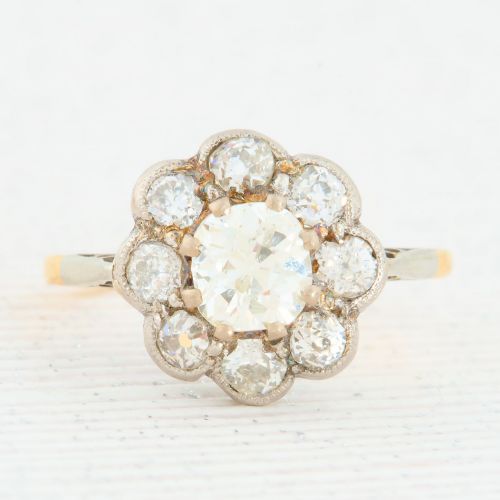
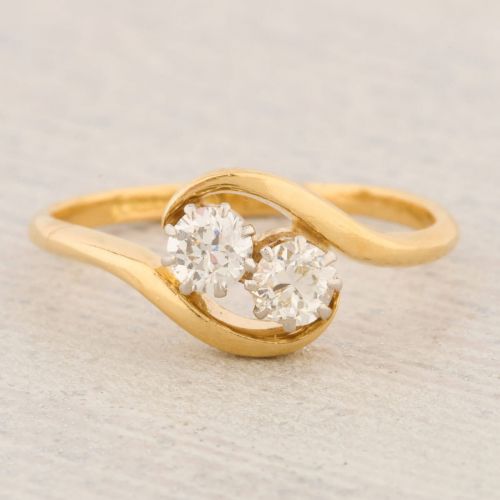
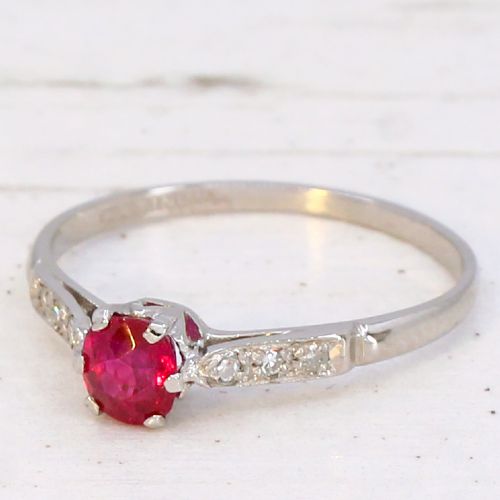
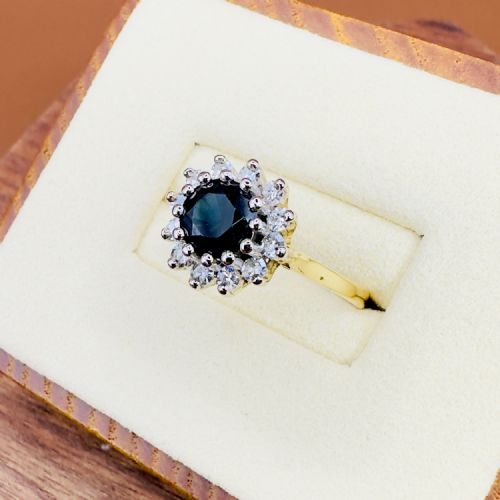
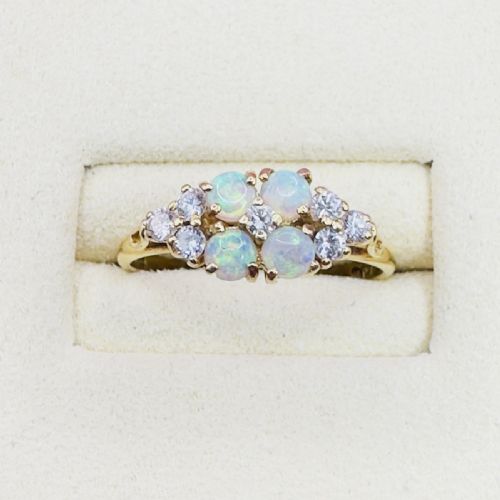
The selections on this page appear predominantly in platinum and various carats of gold, holding either single diamonds, multi-stone clusters, or combinations of diamonds with sapphires and rubies.
Solitary diamond mountings and geometric cluster arrangements dominate the available forms, reflecting the preference for symmetric brilliance established across the early and mid-twentieth century.
Materials and construction methods
Craftsmen utilised durable platinum alongside yellow, white, and rose gold in 18ct fineness to build secure settings for precious stones, frequently combining platinum heads with gold bands during the Art Deco period.
Gems within these rings display historical cutting styles such as old mine cuts, transitional cuts, rose cuts, and round brilliants, shaped by hand before the advent of modern laser standardisation.
The listings span from 1890 through the Edwardian era, Art Deco period, and 1950s, utilising diamond, sapphire, ruby, platinum, and gold.
Distinctions in craftsmanship and material
Quality differentiates by the precision of the stone cutting, the symmetry of the surrounding cluster work, and the original integrity of the metal settings holding the gems.
Pieces showing minimal wear to the delicate platinum claw work or delicate milgrain edges represent the higher end of surviving examples from the mid-century and earlier decades.
The Round Cut Engagement Ring Glossary
- Solitaire
- A ring featuring a single central gemstone, most commonly a diamond mounted in platinum or gold.
- Cluster ring
- A setting style where a central stone is encircled by a tight group of smaller accent stones, often forming floral or geometric patterns.
- Old mine cut
- An early form of diamond cutting characterised by a cushion outline, high crown, and a large open culet, typical of pieces predating the mid-twentieth century.
- Transitional cut
- A diamond cutting style used between the 1920s and 1940s that bridges the older mine cut and the modern brilliant cut.
- Platinum
- A dense, durable white metal utilised extensively in Edwardian and Art Deco fine jewellery for secure, delicate settings.
Round Cut Engagement Ring: Frequently Asked Questions
How do I date a round cut ring?
Dating relies on the specific cutting style of the central diamond, the metal combinations used in the shank, and the overall geometric design of the setting. Edwardian and Art Deco pieces often show distinct milgrain work and platinum mounts.
Later mid-century examples typically introduce different prong configurations and cleaner, heavier yellow or white gold shanks that reflect post-war manufacturing shifts.
Are these rings suitable for daily wear?
Most historic rings constructed from platinum and 18ct gold withstand regular daily wear when the settings remain secure and robust. Ensuring the claws holding the centre stone are thick and firm prevents stone loss.
Purchasing a piece with a solid band and inspected prongs guarantees longevity for everyday use.
What is a target ring?
A target ring is a specific cluster design where concentric circles of contrasting gemstones, such as sapphires and diamonds, surround a central diamond. This style gained immense popularity during the Art Deco period for its striking visual impact.
The concentric layout creates a bold, graphic frame around the main stone.
What is the difference between old cut and modern cut diamonds?
Older diamond cuts feature hand-faceted surfaces designed under candle or gaslight, resulting in softer, broader light reflection and smaller table facets. Modern brilliant cuts follow precise mathematical formulas developed to maximise direct white light return.
Old cuts often display distinct open culets visible through the bottom of the stone.