
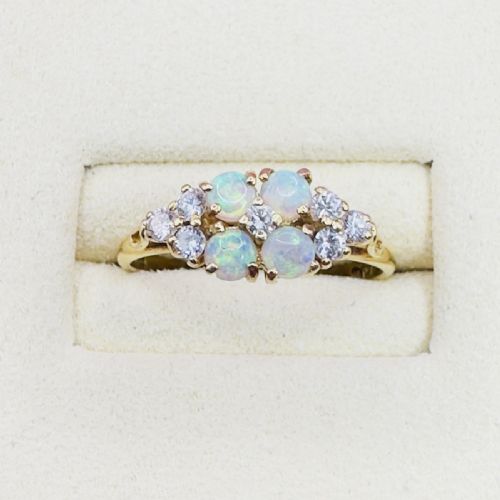


Round Cut Diamond Cluster
A round cut diamond cluster brings together a central stone encircled by smaller gems, offering a dense arrangement of brilliance.
Round Cut Diamond Cluster
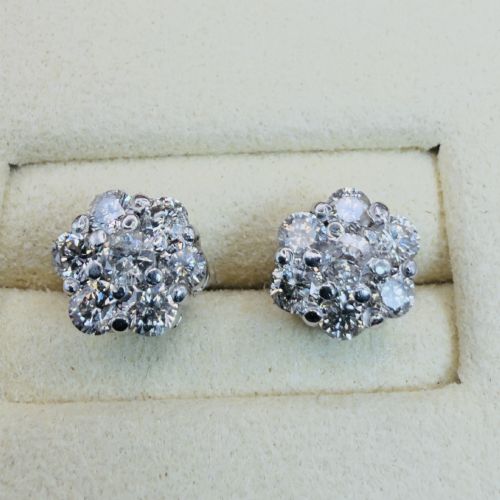
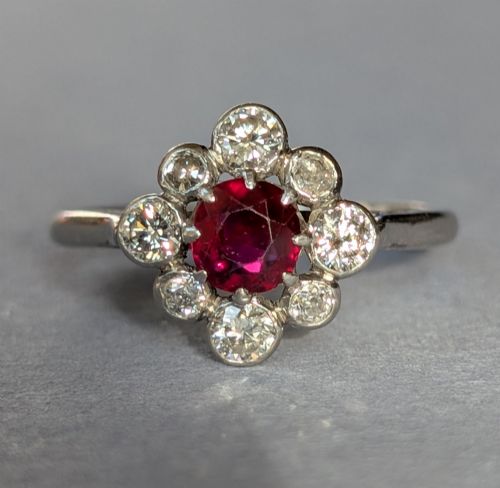
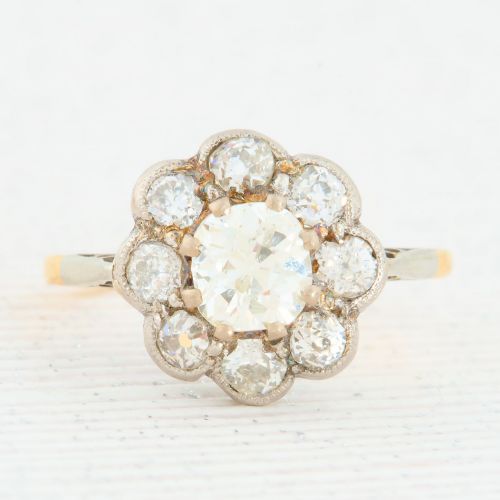
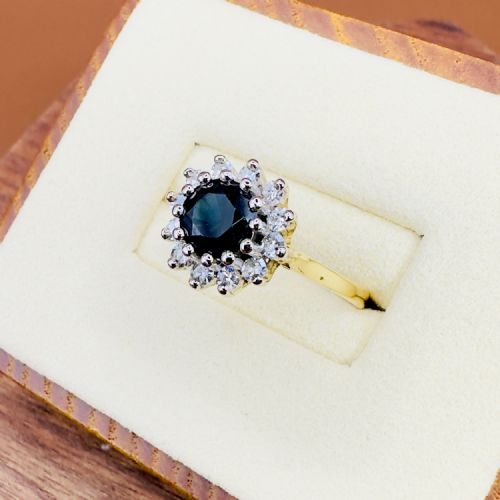
A round cut diamond cluster combines a central stone surrounded by smaller gems to create a concentrated focal point. This configuration appears frequently in rings and earrings across the selection.
The assortment spans multiple decades and stylistic movements, featuring Edwardian, Victorian, Art Deco, and Mid-Century periods. Rings dominate the offerings, alongside screw-back and stud earrings.
Materials extend beyond diamonds alone, incorporating sapphires, rubies, opals, and amethysts set in platinum, white gold, yellow gold, and 18ct gold.
How they were made
Goldsmiths utilised platinum and various carats of gold, including 18ct white gold and 18ct yellow gold, to construct secure settings for multiple stones. Platinum gained favour during the Edwardian and Art Deco periods for its strength and fine detail work.
Cut styles vary between old mined cuts, old cut diamonds, and round brilliant cuts, paired with surrounding stones like baguettes or marquise cuts. Setting techniques secure the central cluster tightly to maximise light return across the face of the piece.
Screw-back earrings ensured Victorian and mid-century dancers lost neither their sparkle nor their fastenings on the floor.
What varies in quality
The overall harmony of stone sizing and the precision of the cluster arrangement determine visual success. Balanced proportions between the central stone and the surrounding gems elevate the piece.
The choice of supporting materials, such as heavy platinum or solid 18ct gold, influences the substance and weight of the mounting. Period-specific craftsmanship, particularly intricate Art Deco geometric work or Edwardian fine wirework, separates standard examples from exceptional ones.
The Round Cut Diamond Cluster Glossary
- Cluster ring
- A ring featuring a central gemstone surrounded by a group of smaller stones. This layout maximises surface sparkle by packing multiple facets tightly together.
- Old cut diamond
- A hand-cut diamond shape typical of older periods, characterised by a smaller table, higher crown, and open culet. These stones catch candle or gas light differently than modern brilliants.
- Platinum
- A dense, durable, and naturally white precious metal favoured in jewellery making during the twentieth century. It allows for delicate settings that hold stones securely.
- Target ring
- A specific cluster design featuring concentric circles of contrasting gemstones around a central stone. The colour rings resemble a traditional archery target.
- Screw back earrings
- An earring fastening mechanism utilising a threaded post and a nut that screws down to secure the piece on the earlobe. This style provides added security for heavier cluster earrings.
Round Cut Diamond Cluster: Frequently Asked Questions
What is a round cut diamond cluster?
A round cut diamond cluster is a jewellery design featuring a central diamond encircled by a group of smaller stones. This arrangement creates the visual impact of a larger single stone through grouped brilliance.
Such pieces appear primarily as rings and earrings across various historical periods, incorporating metals like platinum and 18ct gold.
How do I date a cluster ring?
Dating a cluster ring involves examining the metal types, gemstone cuts, and overall design motifs. Platinum settings and geometric shapes often point toward the Art Deco era, while delicate lacy work suggests the Edwardian period.
Old cut diamonds and specific hallmarks stamped inside the band also help establish the era of manufacture.
Can I wear these every day?
Daily wear depends on the specific construction and age of the piece, particularly regarding antique settings. Robust platinum and 18ct gold mountings handle regular use well, though older claws require periodic checking.
Softer surrounding stones like opals need more careful handling than diamonds, sapphires, or rubies during everyday tasks.
What stones accompany the diamonds?
Many cluster designs incorporate coloured gemstones alongside diamonds to create contrast and pattern. Sapphires, rubies, opals, and amethysts frequently serve as either the central focus or the surrounding halo.
These coloured gems appear in various cuts, including round, marquise, and baguette shapes, matched with yellow gold, white gold, or platinum.