

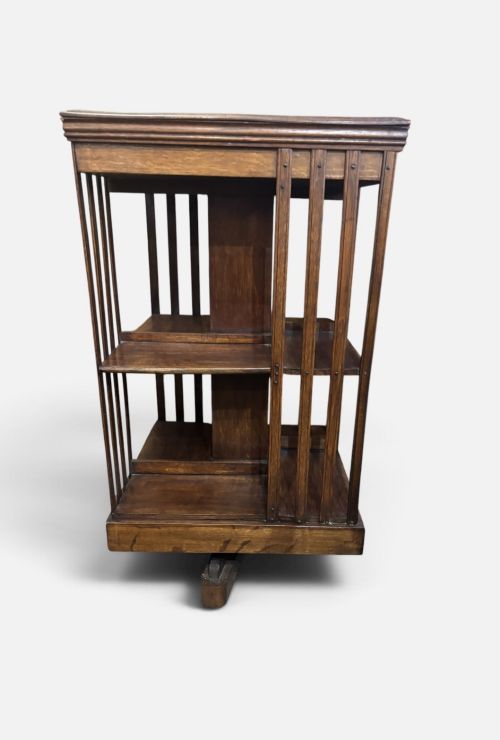
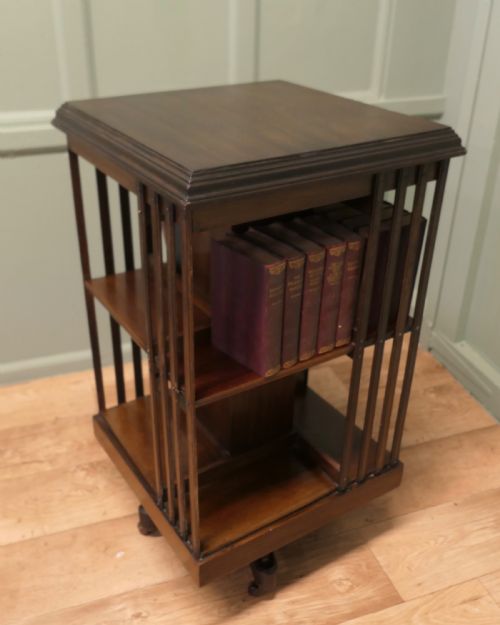
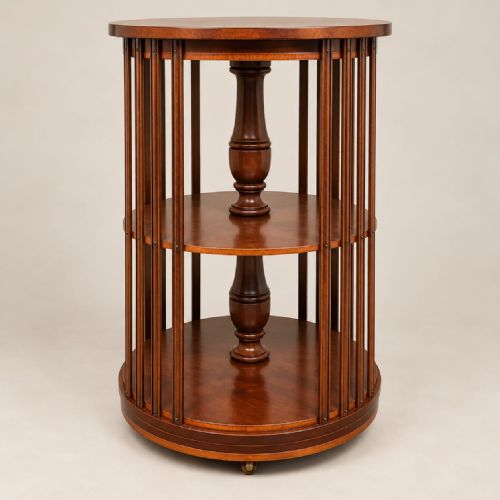
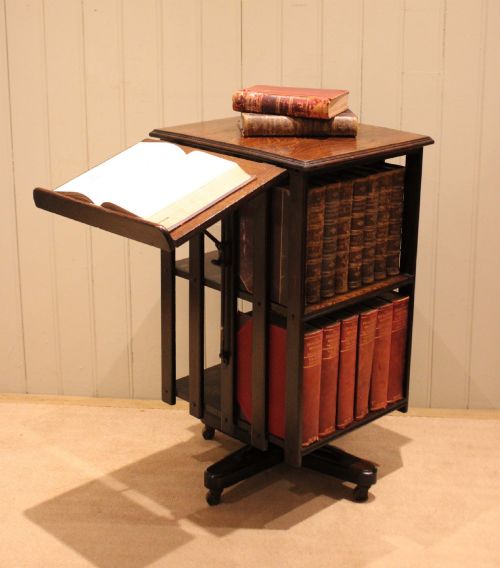
Rotating Table Stand
A rotating table stand brings revolving storage to any desk or surface, holding books and displays within reach.
Rotating Table Stand
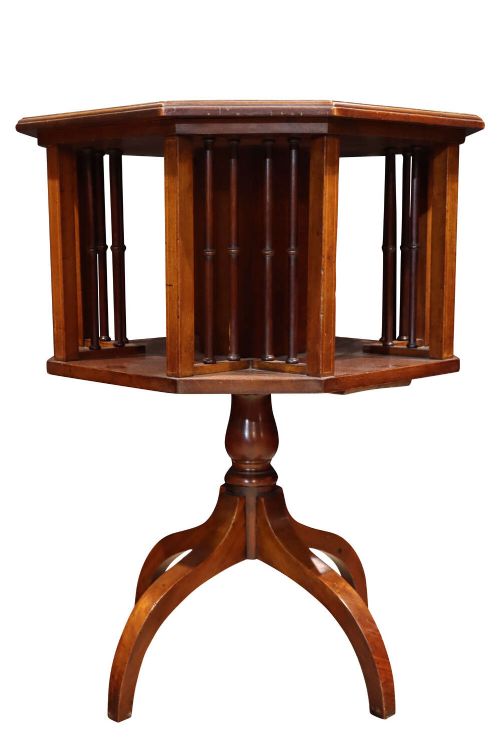
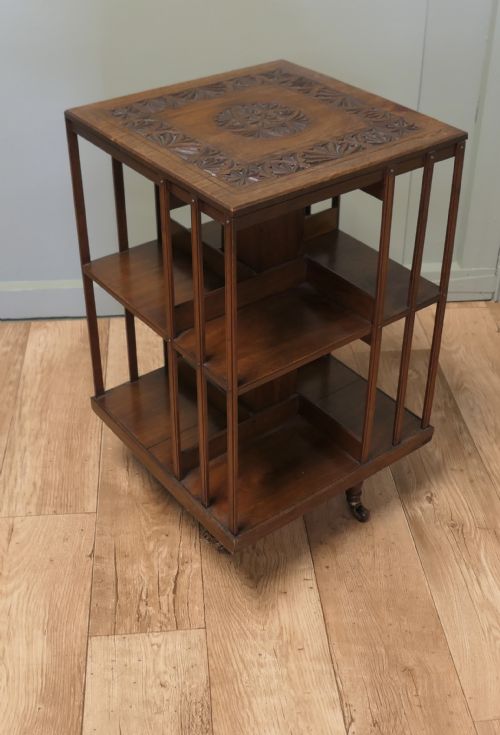
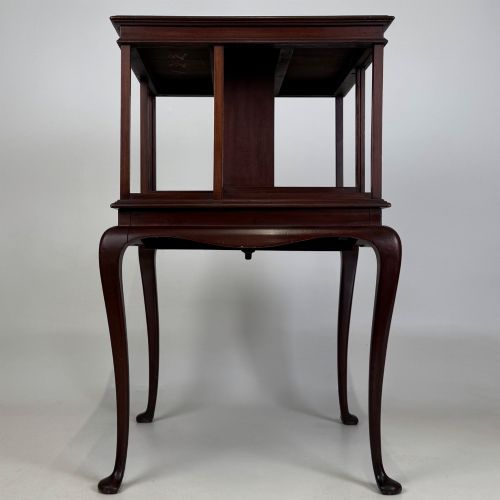
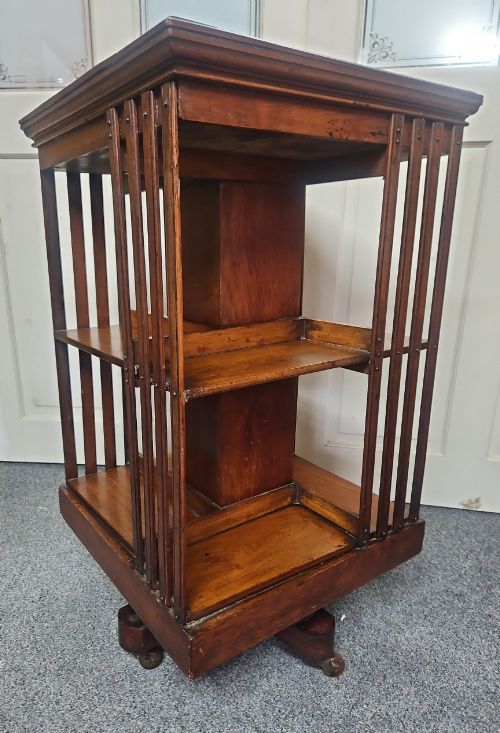
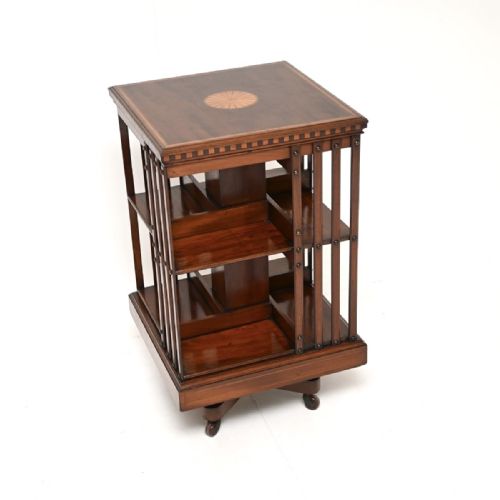
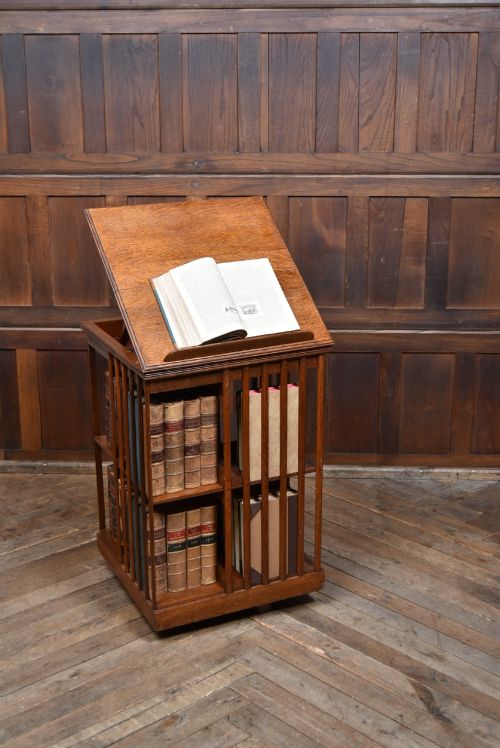
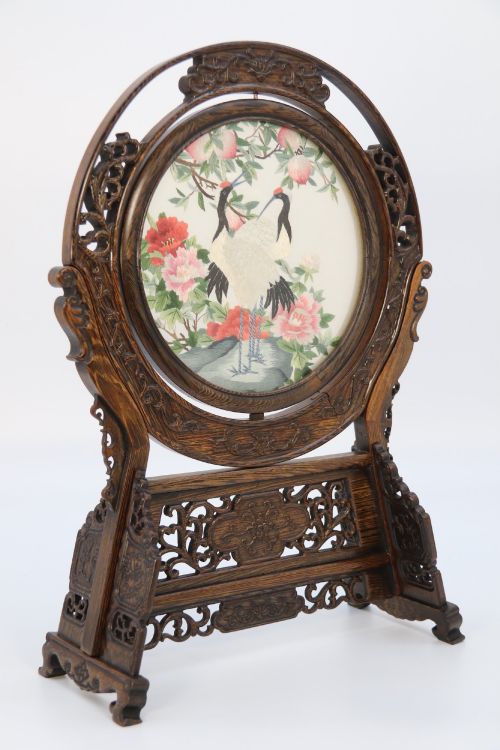
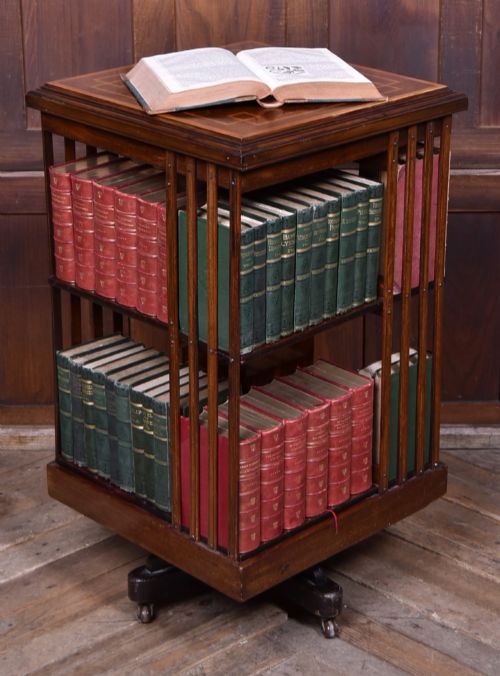
When you search for a rotating table stand, you enter a category dominated by revolving bookcases and small tabletop stands designed to turn smoothly on a central axis. These pieces take the form of compact library furniture, lazy susans, and display stands built for domestic use from the Georgian era through the Edwardian period and into the 1920s.
Materials and construction
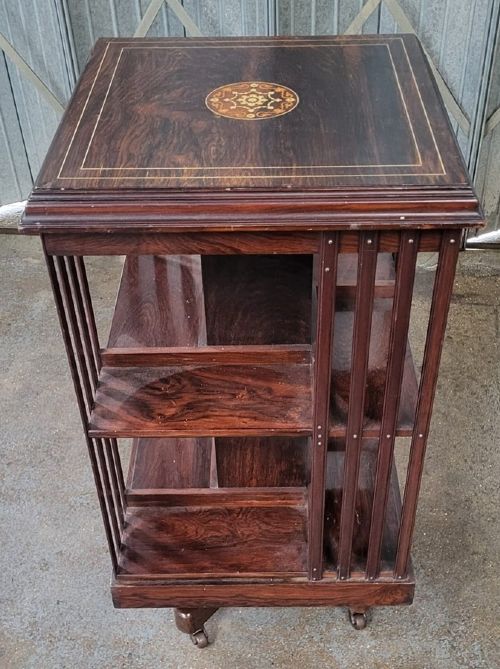
Makers constructed these pieces principally in solid mahogany and oak, frequently employing satinwood and brass for decorative inlay and structural fittings. Metal and cast iron components often lie concealed within the revolving mechanism to ensure smooth and durable rotation.
Joinery traditions of the nineteenth and early twentieth centuries dictated the sturdy framework required to bear the weight of books or displays while maintaining a balanced centre of gravity during rotation.
Rotating Table Stand Retail Price Guide 2026
Typical asking prices for rotating table stand among the pieces listed under this phrase on Sellingantiques today, from the lower quarter to the upper quarter. They describe what is for sale here now, not the wider market.
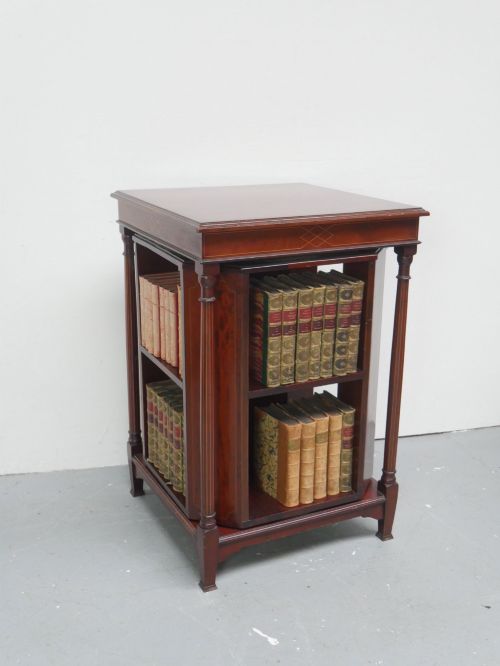
Some Edwardian bookstands are small enough for a desk yet sturdy enough to hold an entire shelf of heavy poetry.
Determining quality
The distinction between standard utility items and finer examples rests upon the selection of timber, such as figured mahogany or quarter-sawn oak, and the precision of any inlay work. Finer pieces display crisp carving, thoughtful proportions, and harmonious integration of brass hardware.
The engineering of the internal rotating mechanism governs the tactile experience of the piece, where superior examples turn without lateral wobble or friction, demonstrating the longevity of the original pivot design.
Maple & Co
The Rotating Table Stand Glossary
- Revolving bookcase
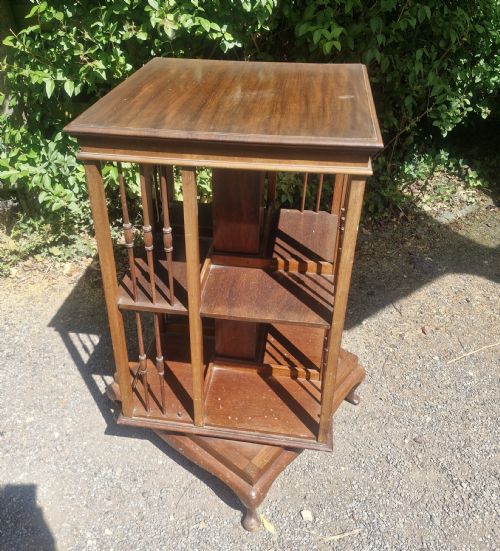
- A freestanding or table-standing unit designed to rotate on a central pivot for easy access to volumes from a stationary seat. Most examples found here date from the Victorian and Edwardian periods.
- Lazy susan
- A revolving tray or stand placed on a surface to facilitate the sharing of items. The listings include nineteenth-century oak examples alongside Edwardian pieces.
- Satinwood inlay
- A contrasting light wood used to create decorative borders and motifs on darker carcases like mahogany and rosewood. This technique appears frequently on Edwardian library pieces.
- Dumb waiter
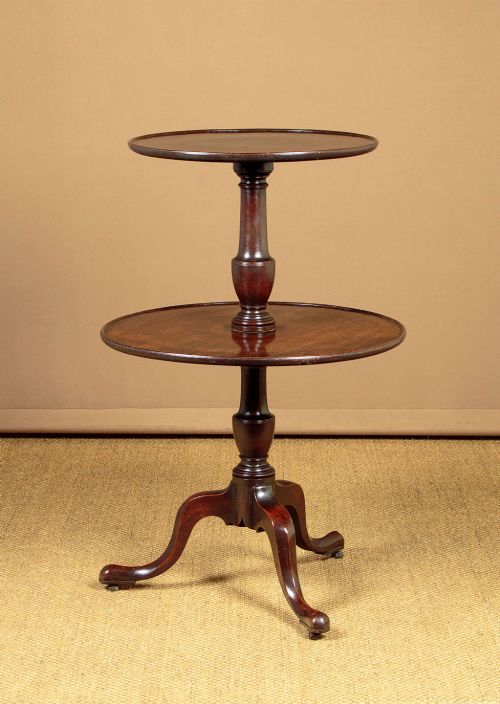
- A tiered piece of furniture with rotating or fixed circular shelves designed to hold tableware. Georgian and eighteenth-century examples represent the earlier forms of rotating stands.
Rotating Table Stand: Frequently Asked Questions
What is a rotating table stand used for?
These stands provide accessible storage for books, reference volumes, or display items on top of a desk, table, or sideboard. The rotating mechanism allows the user to browse titles or reach objects without shifting the entire piece.
Historically, smaller stands kept working libraries close at hand in studies and libraries, while table-top versions saved space in domestic rooms.
How do I date a revolving bookcase?
Dating relies on timber choice, decorative styles, and construction methods visible in the woodwork. Edwardian examples often feature mahogany with satinwood inlay or Arts and Crafts oak designs.
Earlier nineteenth-century pieces display heavier proportions and simpler joinery, while Georgian and eighteenth-century dumb waiters use distinct column supports and graduated tiers.
Are all rotating stands made of mahogany?
Mahogany is the predominant wood seen across the listings, particularly for Georgian, Victorian, and Edwardian items. Oak also appears frequently, especially in table-top and Arts and Crafts pieces.
Other materials include walnut, satinwood inlay, brass fittings, and occasional cast iron or metal components used within the internal pivot mechanism.
Can I place a heavy load on a table stand?
These stands were built to hold standard collections of books or tabletop items securely. The internal pivot and stable base are engineered to support the weight of volumes placed evenly within the compartments.
Ensuring balanced weight distribution during use helps maintain the smooth rotation of the central axis over time.