


Rotating Book Caddy
A rotating book caddy is a compact desk or table accessory designed for easy access to reference volumes.
Rotating Book Caddy
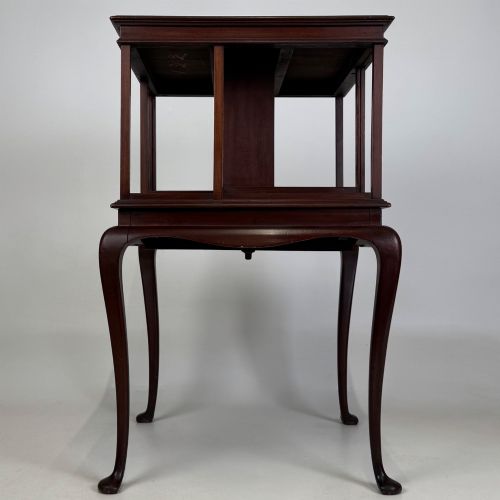
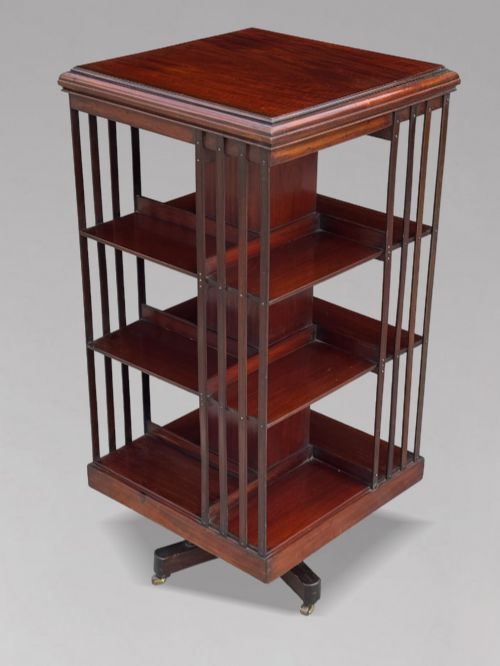
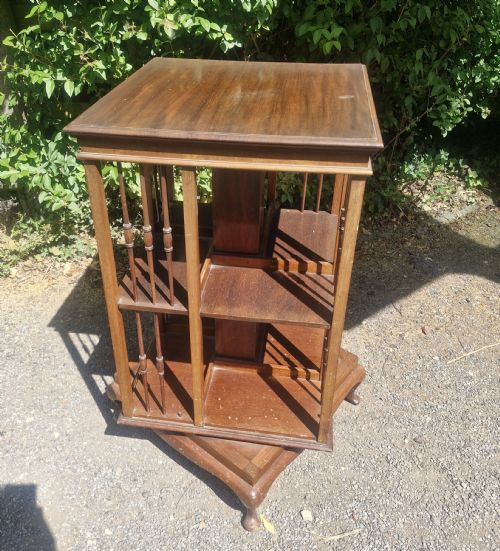
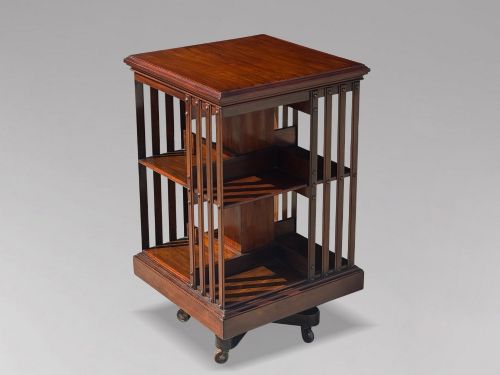
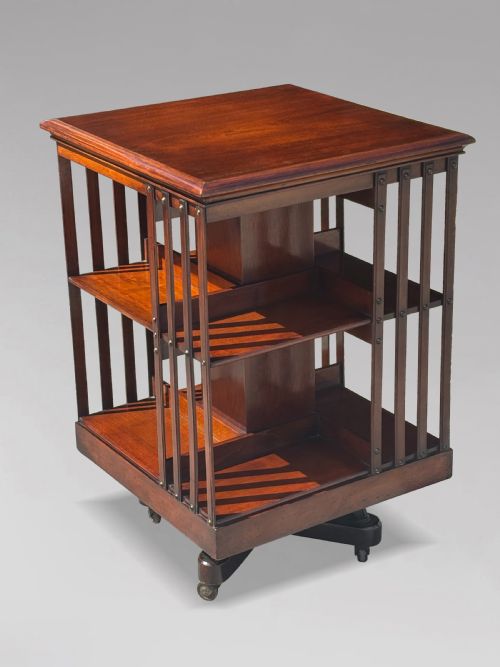
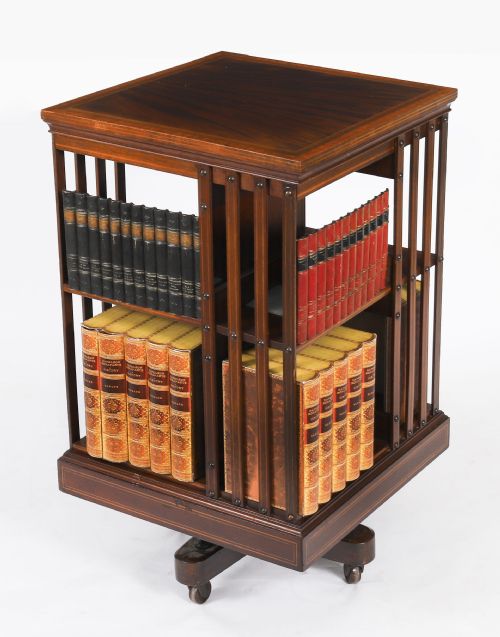
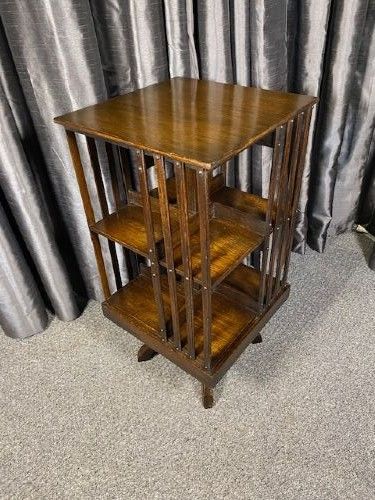
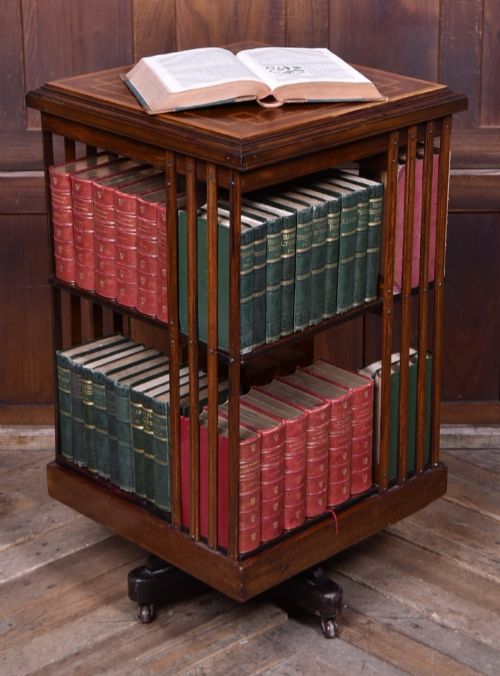
When buyers search for a rotating book caddy, they find compact desktop bookcases built to turn smoothly on a central pivot. The pieces seen here span the Victorian, Edwardian, and nineteen-thirties periods, taking forms that range from low table models to small desktop units.
Mahogany and oak dominate the selections on this page, often supplemented by satinwood inlay or brass fittings. Most examples emerge from the late nineteenth and early twentieth centuries, reflecting the domestic library habits of the period.
How they were made
Cabinetmakers constructed these rotating book caddy pieces using solid hardwoods like mahogany and oak, frequently employing flame mahogany veneers for richer grain patterns. Internal pivot mechanisms relied on iron and brass components to support the weight of heavy volumes while maintaining a smooth spin.
Decorative detailing on these examples includes satinwood inlay and stylistic elements drawn from the Arts and Crafts and Art Nouveau movements. Joinery methods of the Victorian and Edwardian eras ensured the vertical partitions remained stable under the pressure of stacked books.
Desktop book caddies were the ultimate Victorian tool for keeping several dictionaries close at hand during intense crosswords.
What varies in quality
The distinction between standard and finer examples rests upon the selection of timber and the execution of decorative veneers. Flame mahogany and crisp satinwood inlay elevate a piece beyond simple utilitarian joinery.
Quality also shows in the engineering of the rotating mechanism, where a balanced, stable spin distinguishes superior cabinetmaking from stiffer, heavier movement.
The Rotating Book Caddy Glossary
- Revolving bookcase
- A freestanding or desktop case fitted with a central pivot that allows the entire unit to turn. This design places multiple volumes within arm's reach without requiring the reader to move.
- Flame mahogany
- A veneer cut from the fork of a mahogany tree where the branches join the trunk. It creates a distinctive, fiery pattern prized in nineteenth-century cabinet work.
- Satinwood inlay
- A contrasting light-coloured timber inserted into recesses in a darker primary wood. It forms decorative borders and motifs on Edwardian pieces.
- Arts and Crafts
- A design movement prioritising traditional craftsmanship and simple forms. Pieces from this aesthetic often use plain oak with minimal ornament.
Rotating Book Caddy: Frequently Asked Questions
Where should I place a rotating book caddy?
These compact units suit tabletops, desks, or low corner surfaces where books need to be accessed frequently from multiple angles.
Because they rotate, they function well in small studies or reading corners where floor space is limited.
How do I care for the wood?
Dust the surfaces regularly with a dry, soft cloth and avoid placing the timber in direct sunlight. Maintaining stable room humidity prevents the wood veneers from drying out.
Occasional application of appropriate wax helps preserve the finish of older mahogany and oak.
How do I identify an Edwardian piece?
Edwardian examples often feature lighter timbers, subtle satinwood inlay, and influences from Art Nouveau or Arts and Crafts styles. They typically date from the turn of the twentieth century.
Cabinet work from this period leans towards refined proportions and decorative restraint compared to heavier Victorian designs.
How does the rotating mechanism work?
A concealed pivot beneath the base rests on ball bearings or a central spindle to distribute weight evenly. This allows the loaded bookcase to turn smoothly with minimal effort.
Metal components like iron and brass are usually hidden within the base construction.