

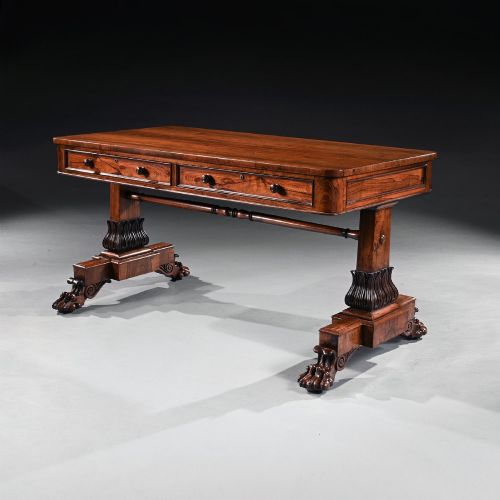
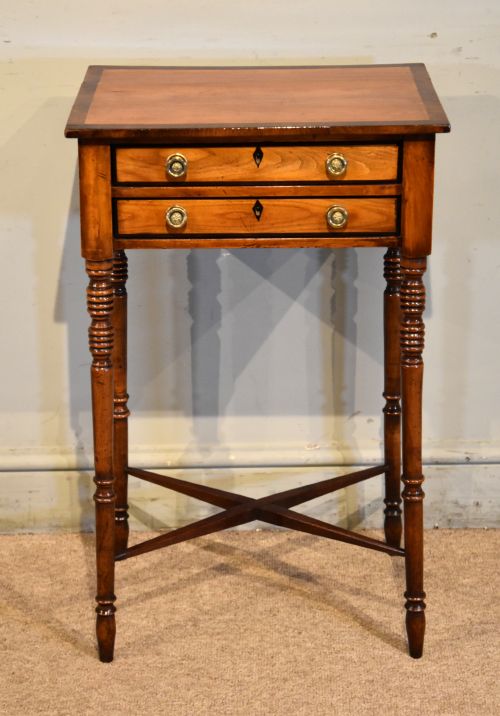
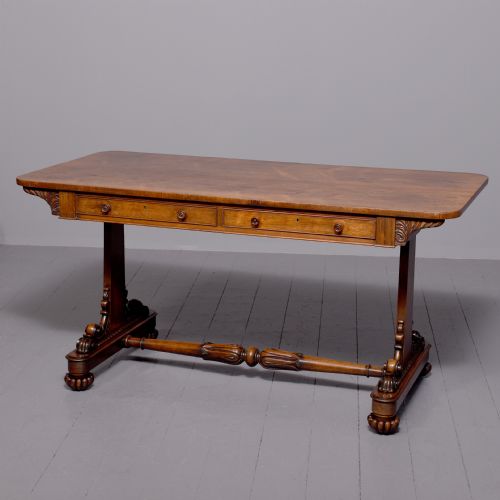


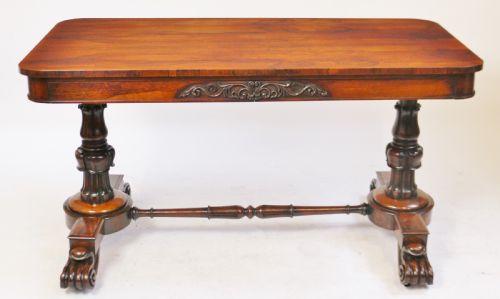


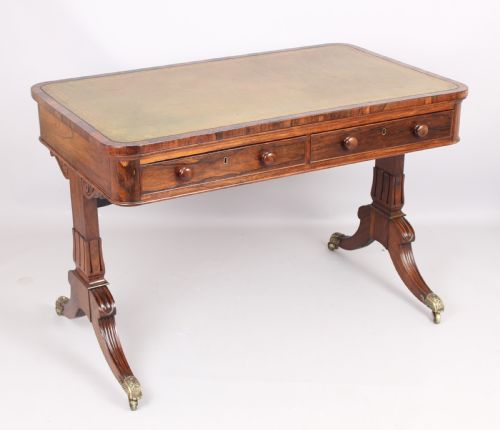

Rosewood Two Drawer Table
These rosewood two drawer table examples combine dense tropical timber with practical storage, offering distinct periods from Georgian to the early twentieth century.
Rosewood Two Drawer Table
A rosewood two drawer table provides functional surface space alongside twin compartments, appearing in forms such as sofa tables, library tables, writing desks, and bedside tables. When searching this phrase, buyers encounter varied functional designs ranging from freestanding library pieces to drop-leaf sofa tables with drawers.
The selection spans multiple design movements including Regency, William IV, Grand Regency, Victorian, and Louis XV Revival. Pieces emerge from the Georgian era, the nineteenth century, and approximately nineteen twenty, showing how makers adapted the form across decades.
Materials and Construction
Construction relies primarily on rosewood, often paired with wood veneer, fruitwood, and leather inserts. Structural and decorative details incorporate brass and gilt bronze fittings.
Makers utilised end supports and freestanding formats to balance the heavy timber. Drop leaves and fitted drawers required precise cabinet-making techniques to ensure smooth operation.
Rosewood Two Drawer Table Retail Price Guide 2026
Typical asking prices for rosewood two drawer table among the pieces listed under this phrase on Sellingantiques today, from the lower quarter to the upper quarter. They describe what is for sale here now, not the wider market.
Current listings span the Georgian, Regency, William IV, and Victorian periods, alongside early twentieth-century French examples.
Assessing Quality and Execution
Superior examples display crisp brass inlay, finely figured rosewood veneer, and robust timber framing that supports the weight of the drawers without sagging. Lower tiers show simpler secondary woods like fruitwood and less refined joinery.
Proportion and stylistic cohesion dictate the standing of a piece. Finer items integrate the two drawers seamlessly into the apron, maintaining the architectural lines intended by the period design.
Mein of Kelso
The Rosewood Two Drawer Table Glossary
- Rosewood
- A dense, heavily grained timber prized for its dark colour and rich polish. It forms the primary surface material for these tables.
- Sofa Table
- A long, narrow table designed to stand in front of a sofa, typically featuring drop leaves on either end and two drawers.
- Library Table
- A large freestanding table used for reading and writing, often finished on all sides with drawers integrated into the frieze.
- Veneer
- A thin layer of superior wood applied over a base of cheaper timber. This technique creates patterned grain surfaces across the table top.
Rosewood Two Drawer Table: Frequently Asked Questions
What is a rosewood two drawer table used for?
These tables function as writing desks, sofa companions, bedside storage, or freestanding centre tables. Their dual drawers provide enclosed space for small items while the top offers a display or working surface.
Historically placed in libraries, drawing rooms, and parlours, they adapted easily to changing domestic needs throughout the nineteenth and early twentieth centuries.
How do I identify a Regency period table?
Regency pieces often display classical proportions, brass inlay, and distinct architectural supports. The use of dark rosewood paired with contrasting metal details marks this aesthetic.
Later Victorian and nineteen twenty interpretations tend to soften these strict lines or introduce revival elements like Louis XV curves.
What is a sofa table?
A sofa table is a specific form featuring drop leaves on the short sides and two small drawers in the frieze. They were originally built to sit behind a sofa in the drawing room.
The hinged flaps allow the surface area to expand when needed for writing or needlework.
How should I care for rosewood furniture?
Keep rosewood tables away from direct sunlight and steady heat sources to prevent the wood veneer from drying out and cracking. Natural wax polishes applied sparingly help maintain the lustre of the grain.
Avoid excessive moisture on leather inserts and timber surfaces during routine cleaning.