


Rosewood Tallboy Cabinet
A rosewood tallboy cabinet brings rich grain and upright storage into a room, spanning periods from Regency to Art Deco.
Rosewood Tallboy Cabinet
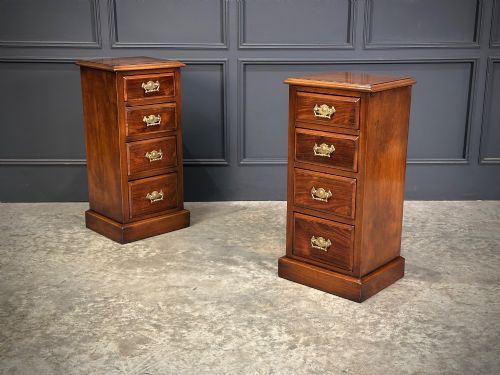
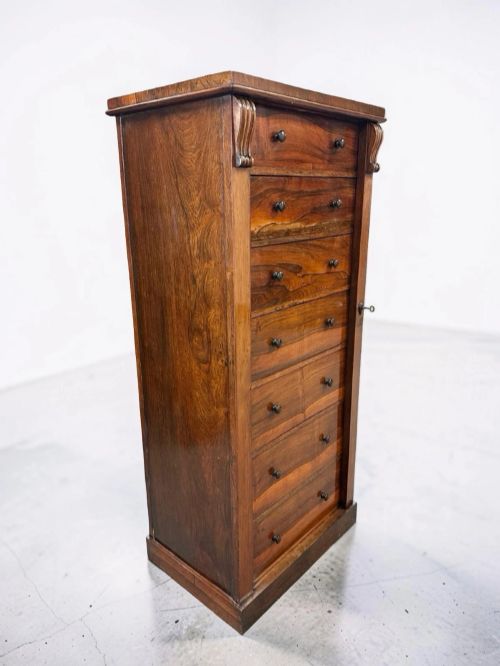
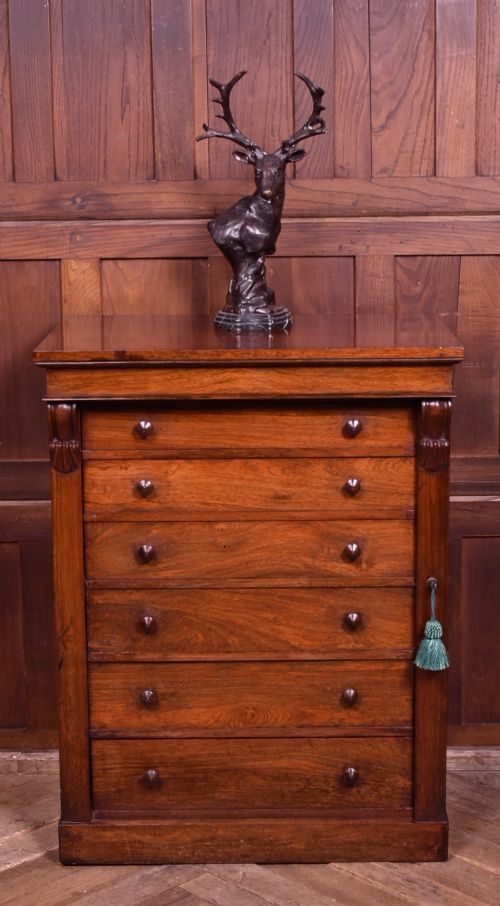
A rosewood tallboy cabinet is an upright storage piece, most frequently appearing here as a Wellington chest or a semainier equipped with multiple stacked drawers. These vertical chests of drawers and cabinets conserve floor space while providing deep storage across various periods.
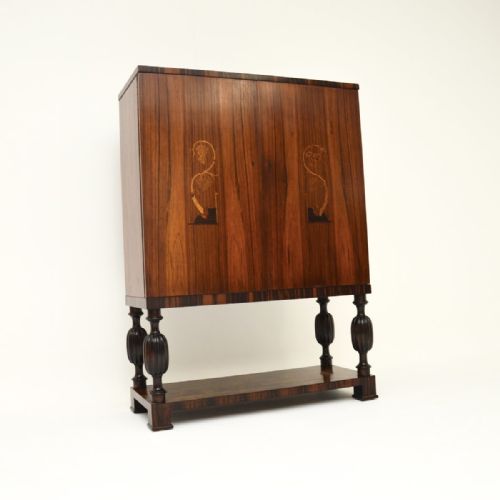
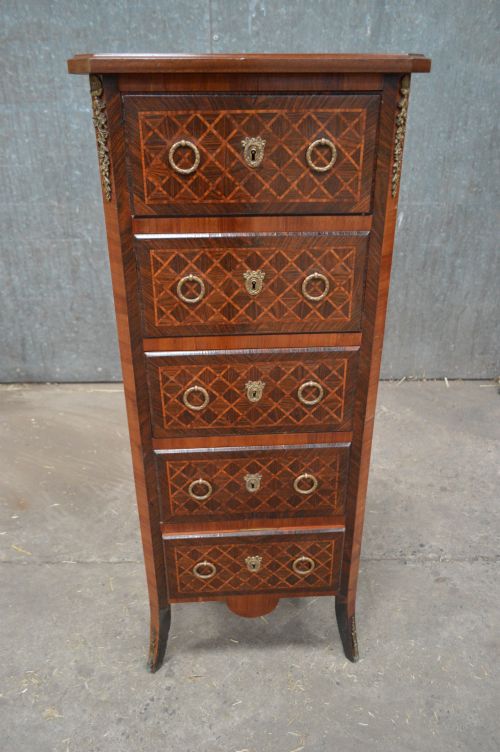
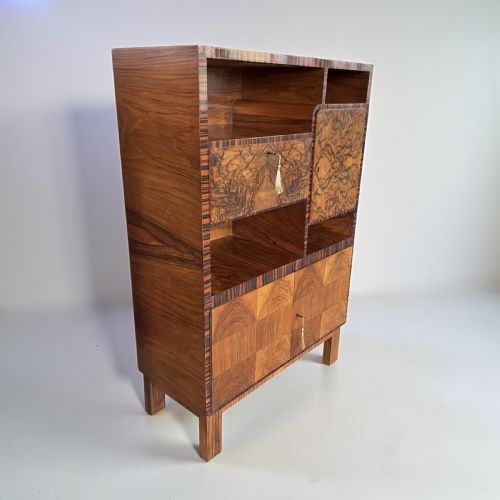
The selections span from Regency and George IV iterations to Victorian pieces and later twentieth-century Art Deco examples. Buyers will frequently encounter Victorian Wellington chests alongside French marquetry selections and inlaid bedside cabinets.
How they were made
Construction relies heavily on rosewood timbers, frequently enhanced by contrasting crossbanding and intricate parquetry or marquetry inlay in satinwood, kingwood, and walnut. Secondary woods like maple and mahogany provide internal structure for drawers and carcases.
Surface ornamentation incorporates detailed wood inlays alongside fitted marble tops on certain French examples, paired with brass hardware and occasionally leather writing inserts within secretaire drawers.
Listings incorporate rosewood alongside walnut, kingwood, and marble across Victorian, Regency, and Art Deco periods.
What varies in quality
Quality separates along the precision of the cabinetwork, particularly in the execution of the marquetry and the alignment of stacked drawer fronts. Finer examples display meticulous grain matching and sophisticated timber selection across the entire carcase.
The complexity of the internal mechanism, such as the locking stile characteristic of Wellington chests, and the integration of specialised writing compartments or marble tops distinguish standard production from superior pieces.
Maison Krieger
The Rosewood Tallboy Cabinet Glossary
- Wellington chest
- A tall, narrow chest of drawers featuring a hinged locking stile on one side that secures all the drawers when locked. This form originated in the nineteenth century for efficient paper and linen storage.
- Semainier
- A tall seven-drawer chest traditionally designed to hold one week of clothing. French makers frequently embellished these upright cabinets with elaborate marquetry.
- Marquetry
- Decorative veneer work arranged in pictorial or geometric patterns across the furniture surface. Craftsmen cut contrasting woods like satinwood and kingwood to create intricate designs.
- Crossbanding
- A border veneer applied around the edges of a panel or drawer front where the grain runs perpendicular to the central panel. This technique frames the primary wood figure.
- Secretaire
- A cabinet or chest incorporating a pull-down writing flap that conceals small drawers and pigeonholes. It combines upright storage with a compact desk function.
Rosewood Tallboy Cabinet: Frequently Asked Questions
What is a Wellington chest?
A Wellington chest is a tall, narrow cabinet featuring a locking side bar that secures every drawer simultaneously. It provides substantial vertical storage with a small footprint.
These pieces typically contain six or seven drawers and date predominantly from the nineteenth century.
How do I use a tallboy in a modern room?
A tallboy offers deep vertical storage that fits easily into bedrooms or hallways where floor space is limited. The upper surfaces can display decorative objects while the drawers hold clothing or linens.
Secretaire versions also provide a concealed fold-down surface for writing or laptop use.
What is the difference between a tallboy and a semainier?
A semainier is a specific French upright cabinet traditionally built with seven drawers, one for each day of the week. Tallboys generally refer to taller chests of drawers or cabinets of various proportions.
Both forms maximise storage capacity through vertical expansion rather than width.
How do I identify a Regency period piece?
Regency furniture reflects classical architectural influences, often featuring clean lines, dark rosewood or exotic timbers, and restrained brass mounts. These pieces date from the early nineteenth century.
Proportions remain balanced, focusing on the natural grain of the wood rather than heavy carving.