

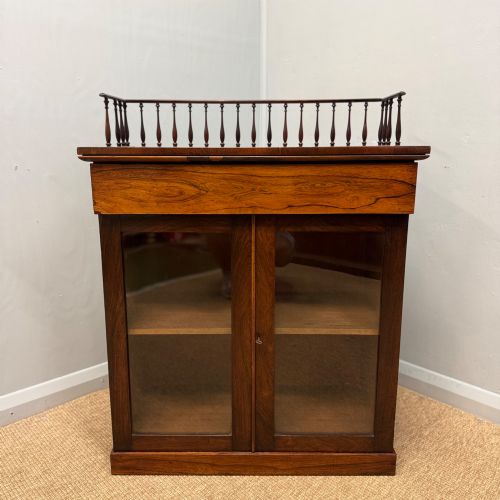
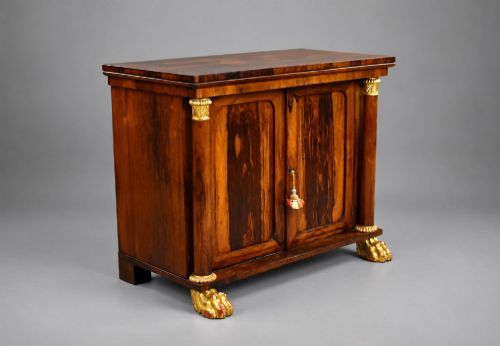
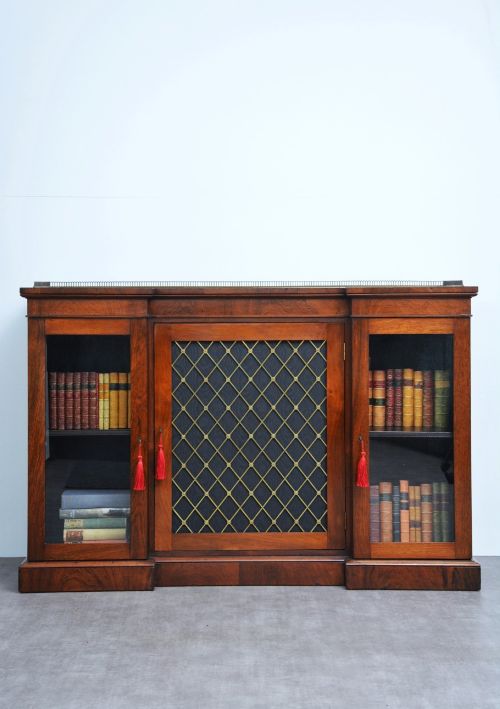
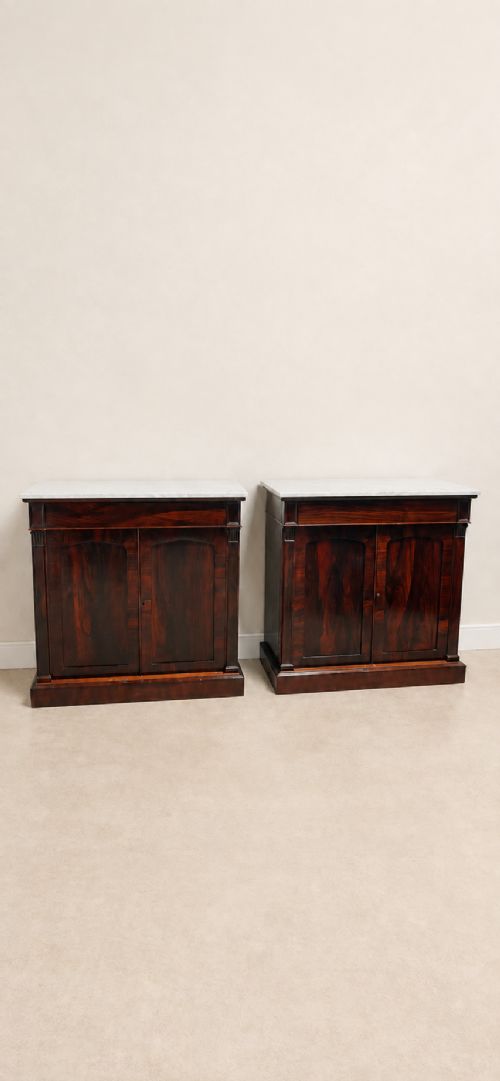

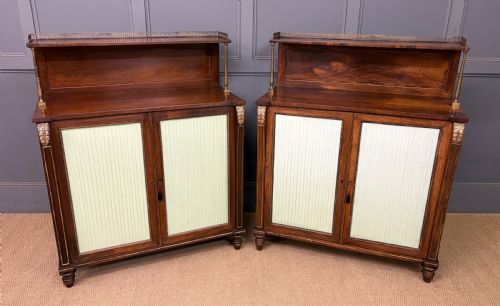

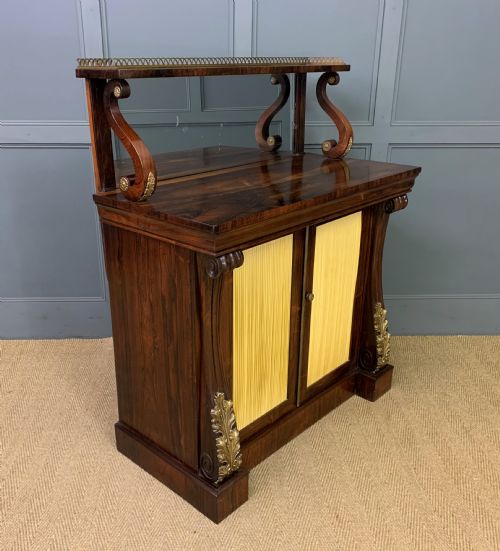
Rosewood Sideboard Cupboard
These rosewood sideboard cupboard designs combine rich cabinet timber with functional storage, offering a commanding presence for dining rooms and hallways.
Rosewood Sideboard Cupboard
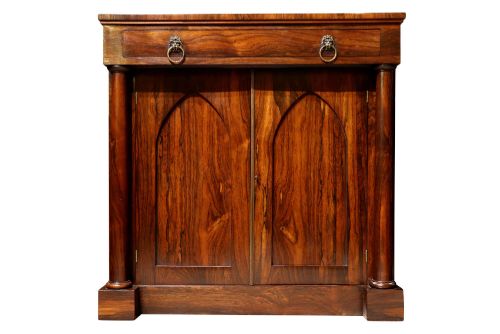
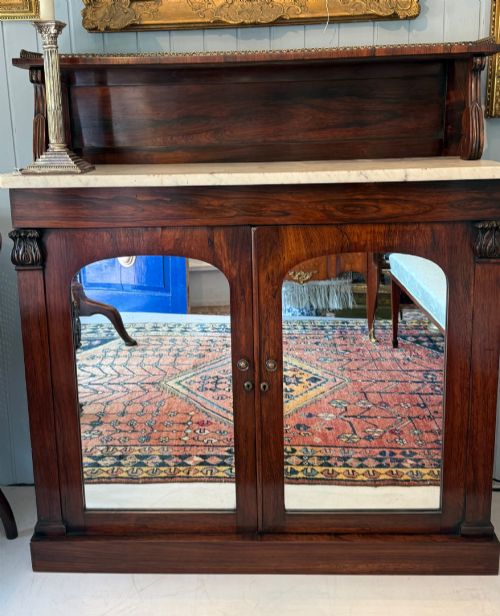
A rosewood sideboard cupboard brings substantial timber grain and enclosed shelving to a room, appearing in forms such as chiffoniers, side cabinets, and credenzas. These storage furniture items serve both utility and display.
The pieces on this page span the Regency, Victorian, and later periods, capturing distinct eras of British and continental design. Regency and William IV examples dominate the selection, alongside mid-nineteenth-century items.
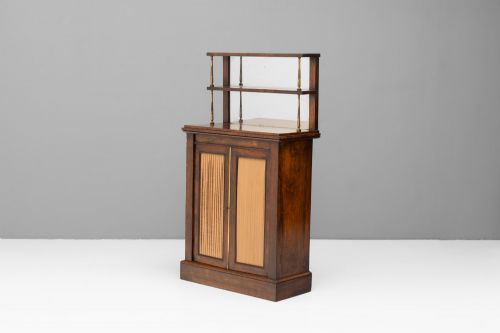
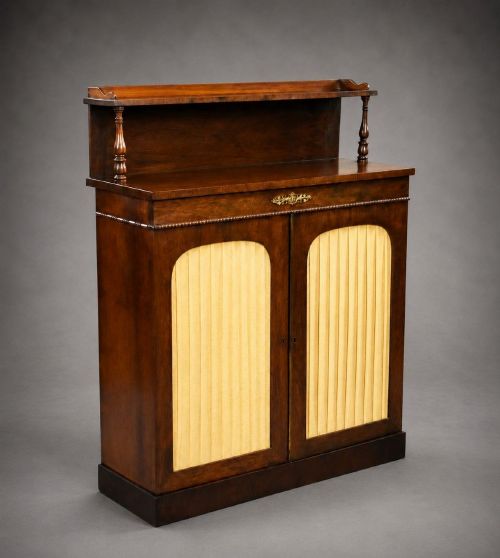
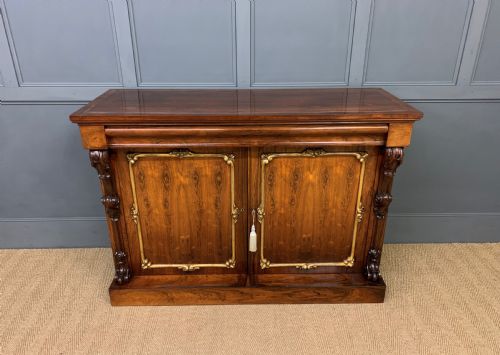
Makers utilised various formats, from compact chiffoniers with shelved upstands to grand breakfront side cabinets and low cupboards. Buyers encounter different scales, door configurations, and interior arrangements across these styles.
How they were made
Cabinet makers constructed carcass frames from solid woods and applied rosewood veneers to display striking grain patterns, often complemented by secondary timbers like pine. Surfaces were finished to highlight the deep reddish-brown tones of the timber.
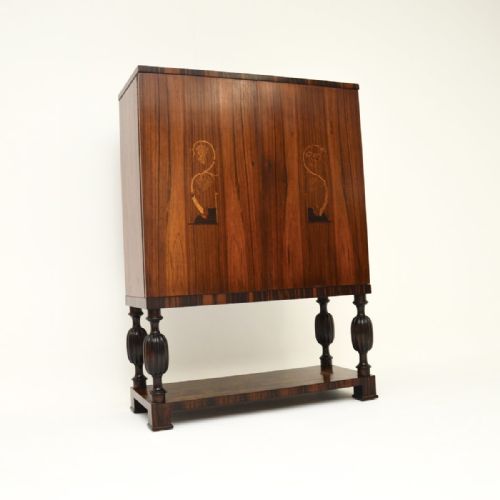
Decoration frequently involved brass inlay, ormolu mounts, marquetry, and carved details. Some regional or budget pieces employed simulated rosewood paint on pine surfaces to mimic the prized exotic wood.
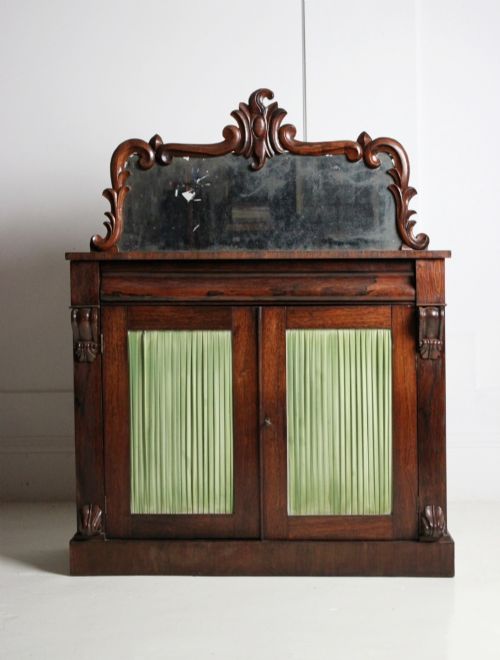
Interiors incorporated adjustable wooden shelving and enclosed cupboards, occasionally featuring fabric panels such as pleated silk behind glazed or open framework doors.
Rosewood Sideboard Cupboard Retail Price Guide 2026
Typical asking prices for rosewood sideboard cupboard among the pieces listed under this phrase on Sellingantiques today, from the lower quarter to the upper quarter. They describe what is for sale here now, not the wider market.
Listings span multiple eras, encompassing Regency, Victorian, and early twentieth-century designs alongside French Louis XVI and Anglo-Indian styles.
What varies in quality
The sophistication of the timber selection and veneer matching defines the visual impact of each rosewood sideboard cupboard. Superior examples exhibit continuous grain patterns across multiple doors and drawers.
Hardware and mounts separate standard utility items from high-end commissions. Precision in brass inlay, fire-gilt ormolu mounts, and original locking mechanisms indicate the skill of the original workshop.
Structural integrity depends on the stability of the carcass timbers and the preservation of the veneer. Pieces retaining original surface finishes and mounts command greater respect than heavily restored equivalents.
Holland & Sons
The Rosewood Sideboard Cupboard Glossary
- Chiffonier
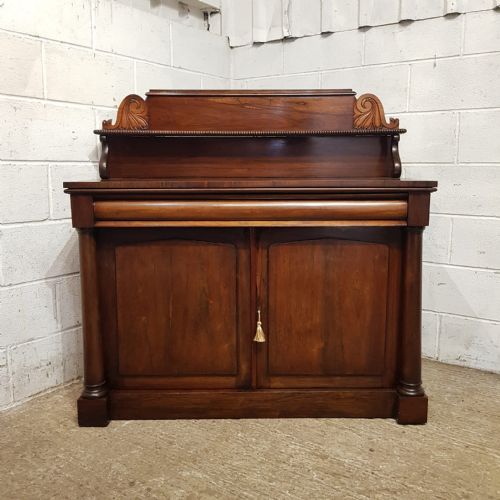
- A low sideboard or cabinet featuring an enclosed cupboard base, often surmounted by a raised shelf with a mirrored or panelled back.
- Credenza
- A decorative cabinet or sideboard, typically low to the ground and fitted with doors, originating in Italy and adopted widely in the Victorian era.
- Breakfront
- A piece of furniture where the central section projects forward from the flanking outer cabinets.
- Ormolu
- Gilded bronze mounts and decorative accents applied to cabinet furniture, particularly popular in French-influenced nineteenth-century designs.
- Marquetry
- Elaborate veneer patterns formed by fitting together small pieces of various coloured woods to create pictorial or geometric designs.
Rosewood Sideboard Cupboard: Frequently Asked Questions
What is a rosewood sideboard cupboard used for?
These items provide concealed storage for dining rooms, hallways, and reception rooms while offering a flat surface for display.
Historically, they held tableware, linens, and books, integrating domestic utility with formal interior decoration.
How do I date a rosewood chiffonier?
Dating relies on architectural proportions, secondary woods, and decorative motifs such as brass inlay or Gothic paneling. Regency and William IV pieces display distinct classical restraint compared to later Victorian ornamentation.
Examining internal construction methods and drawer linings further helps place the piece within the nineteenth century.
How do I care for antique rosewood furniture?
Keep the timber away from direct heat sources and strong sunlight to prevent the rosewood veneer from drying and cracking.
Apply a light microcrystalline wax periodically to nourish the surface and maintain the natural lustre of the polished wood.
What distinguishes simulated rosewood?
Simulated rosewood involves hand-painted graining applied over a less expensive base timber, usually pine, to mimic the appearance of exotic hardwood.
This technique offered a fashionable finish during the Regency period for buyers seeking the look of rosewood at a lower cost.