

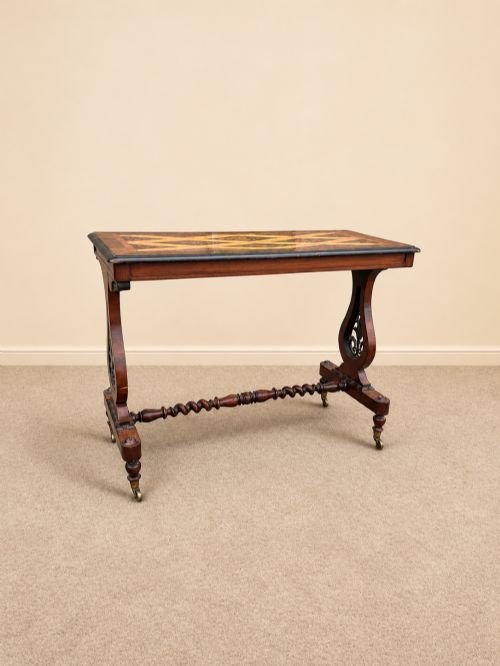
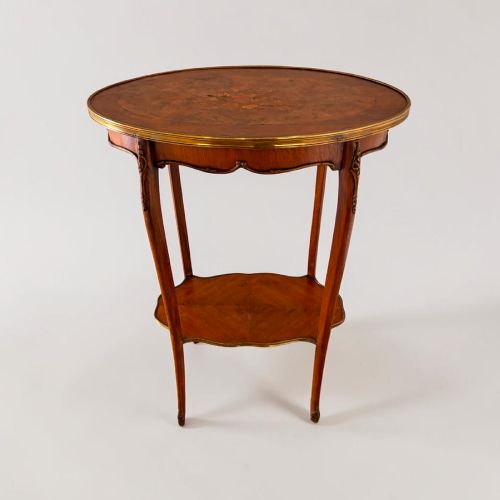
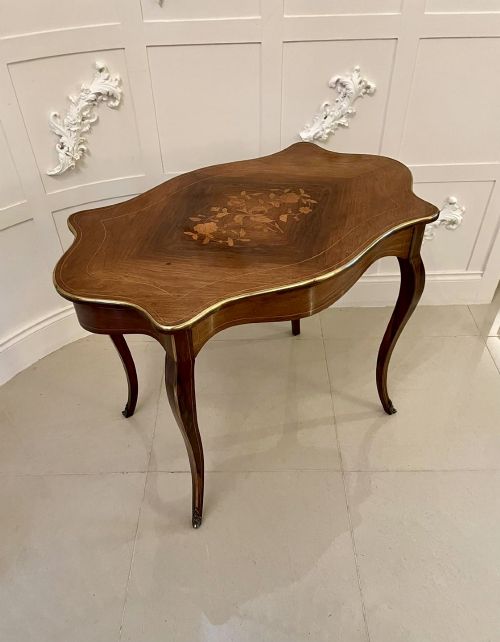


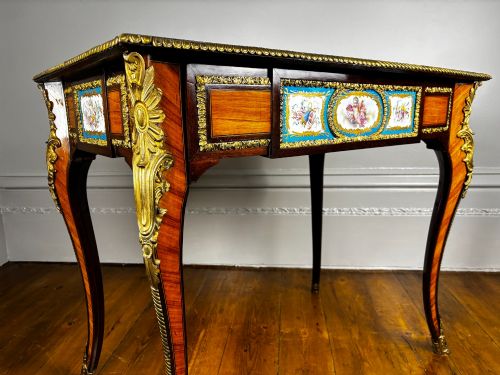
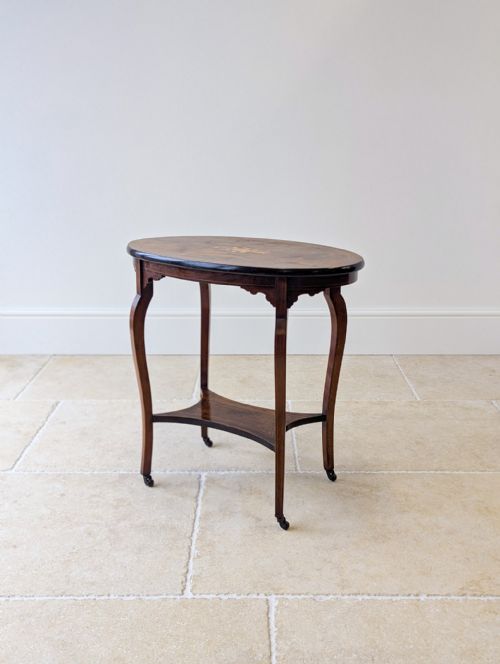
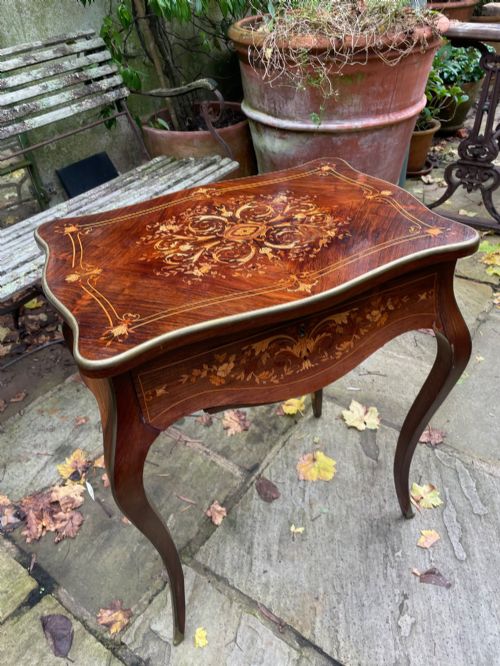
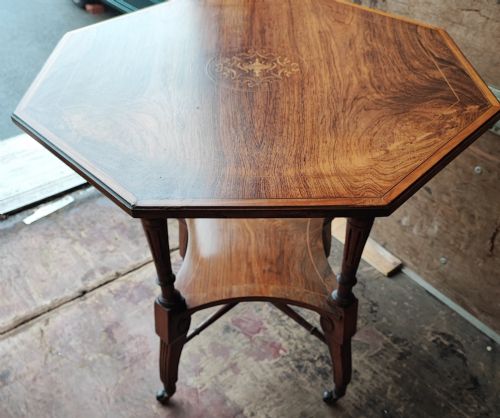
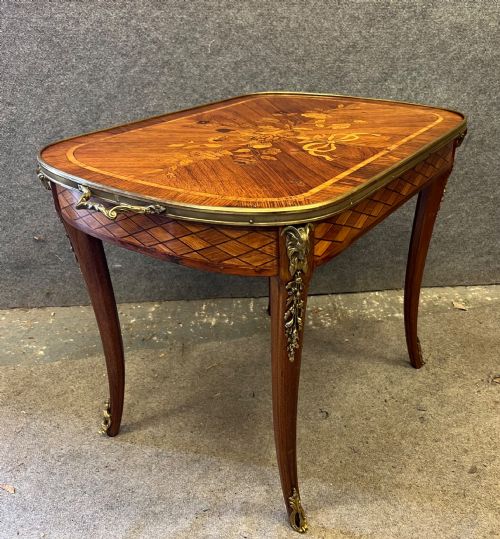
Rosewood Marquetry Side Table
A rosewood marquetry side table brings intricate floral veneers and deep timber tones into a room, offering both a functional surface and a decorative focal point.
Rosewood Marquetry Side Table
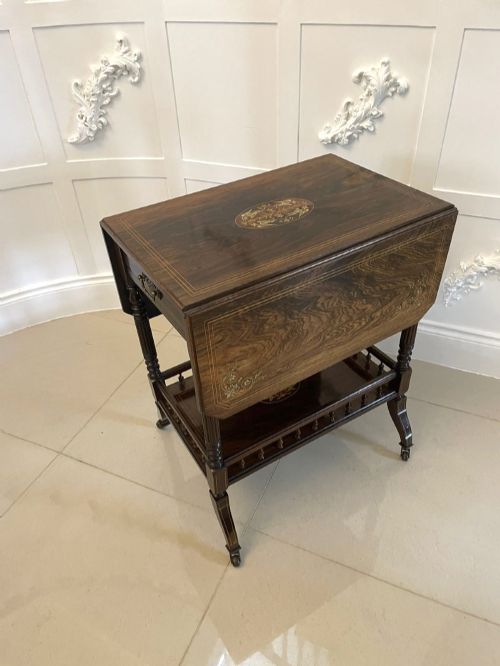
A rosewood marquetry side table encompasses various compact forms designed for occasional use, ranging from centre tables and lamp tables to work tables and drop-leaf designs.
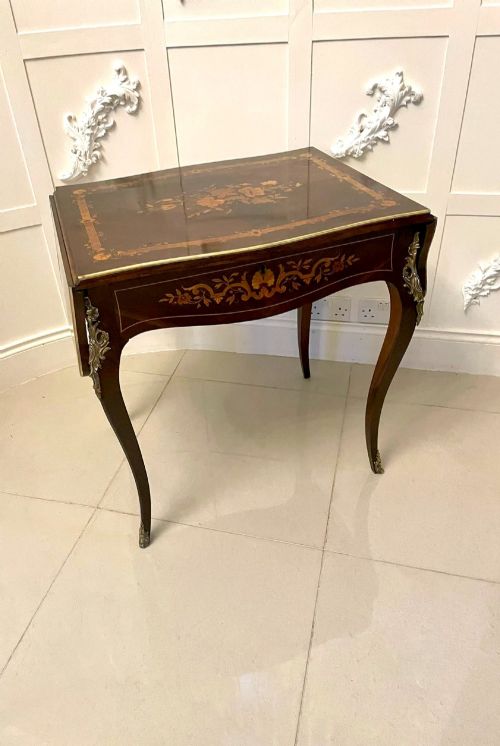
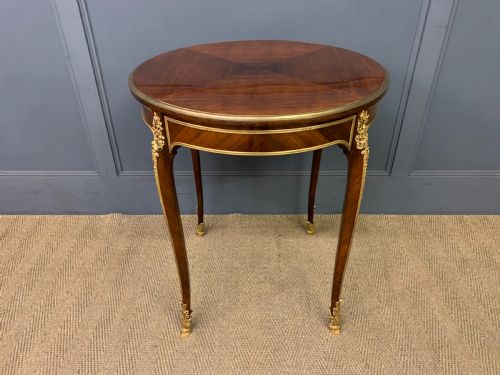
The pieces appearing most frequently originate from the nineteenth century, spanning the Victorian and Edwardian eras alongside French stylistic revivals such as Louis XV and Louis XVI.
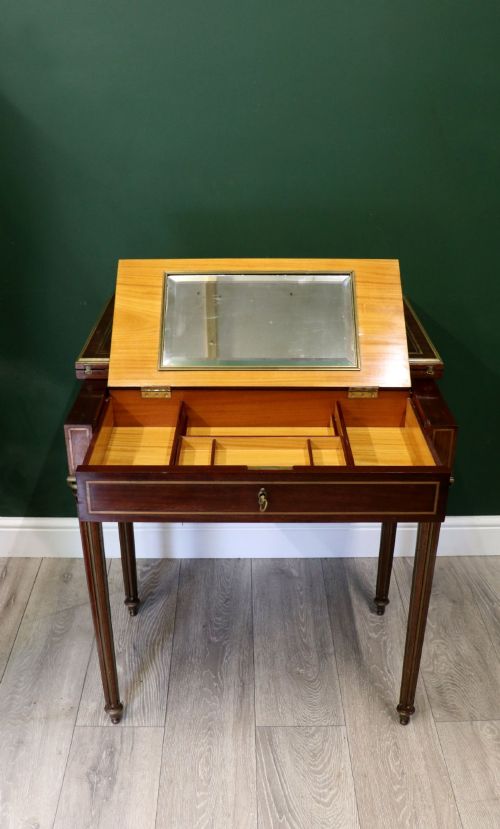
Makers utilised these versatile surfaces as writing desks, bedside cabinets, and display pieces, adapting the timber to both English domestic spaces and continental salons.
Materials and construction
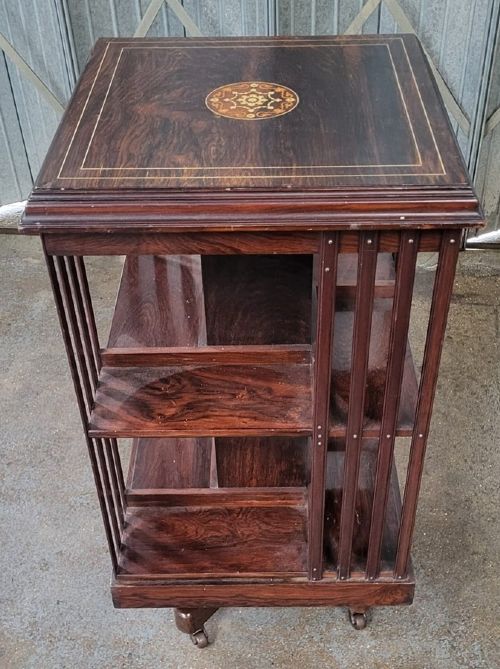
Cabinet makers built these tables using a solid foundation of denser woods, applying rich rosewood veneers to the visible exterior surfaces.
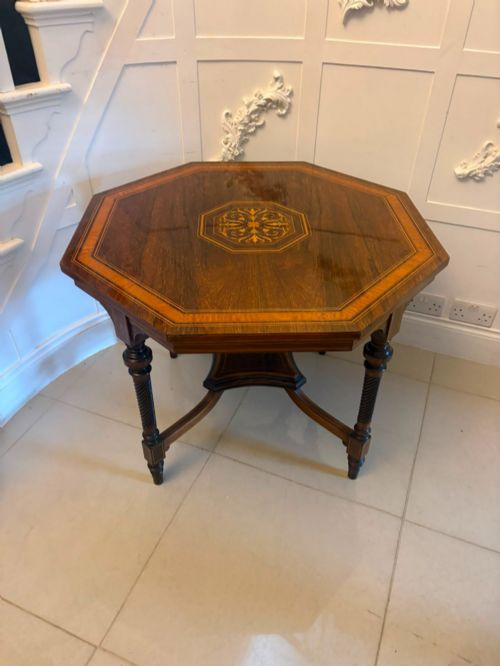
Marquetry and parquetry ornamentation incorporated contrasting light and dark timbers such as satinwood, boxwood, and kingwood to create geometric patterns and floral motifs.
More ornate examples include cast brass handles, ormolu mounts, and delicate pen-work detailing to accentuate the contours of the legs and aprons.
Rosewood Marquetry Side Table Retail Price Guide 2026
Typical asking prices for rosewood marquetry side table among the pieces listed under this phrase on Sellingantiques today, from the lower quarter to the upper quarter. They describe what is for sale here now, not the wider market.
Listings feature pieces from the Victorian and Edwardian eras, alongside French Louis XV and XVI revival styles executed in rosewood, kingwood, and ormolu.
Assessing craftsmanship
The distinction between standard commercial output and superior craftsmanship lies in the precision of the veneer work and the depth of the timber's grain.
Higher-tier pieces exhibit seamless integration of multiple contrasting woods within the marquetry panels, with crisp edges and minimal filler.
The structural integrity of the joints, the weight of any bronze or brass mounts, and the fidelity of the period style further separate basic items from exhibition-quality works.
Émile Gallé·Edwards & Roberts·Collingson & Lock·George Bullock·Zwiener
The Rosewood Marquetry Side Table Glossary
- Marquetry
- Decorative veneer applied to furniture in patterns and pictures using thin slices of wood. This technique allows artisans to compose elaborate floral or architectural scenes across the tabletop.
- Parquetry
- A geometric mosaic of wood pieces used for floors and tabletops. It relies on regular shapes like squares, triangles, and lozenges to create repeating patterns.
- Ormolu
- Gilded bronze used for decorative furniture mounts and ornaments. It adds metallic contrast to the dark grain of rosewood.
- Kingwood
- A dense, richly figured timber with dark violet-brown tones. Cabinet makers paired it with rosewood to provide sharp contrast in marquetry panels.
- Gueridon
- A small French table supported by one or more columns or figures. These serve as decorative occasional or side tables in period interiors.
Rosewood Marquetry Side Table: Frequently Asked Questions
What is a rosewood marquetry side table?
A small occasional table surfaced with decorative wood veneers arranged in pictorial or geometric patterns. These tables were designed for general domestic use in principal rooms.
They combine a functional wooden top with ornamental inlay work, utilising dense tropical hardwoods and contrasting lighter timbers.
How were these tables used originally?
Victorian and Edwardian households placed these tables beside seating or against walls to hold lamps, books, or decorative objects. Some variants served specialised purposes like needlework or writing.
Their portable nature allowed servants or residents to reposition them easily according to daily domestic requirements.
How do I care for rosewood furniture?
Keep the timber away from direct sunlight and steady heat sources to prevent the rosewood from drying out and the veneer from lifting. Dust gently with a dry or slightly damp cloth without using silicone polishes.
Applying traditional beeswax occasionally helps maintain the natural lustre of the polished surface.
How can I tell the period of a table?
Examine the construction methods beneath the tabletop, the secondary woods used for the carcase, and the style of the brass hardware or mounts. Victorian and Edwardian pieces often display heavier proportions or specific revival motifs.
French pieces from the nineteenth century frequently follow eighteenth-century royal court designs, incorporating distinct floral marquetry and curved cabriole legs.