

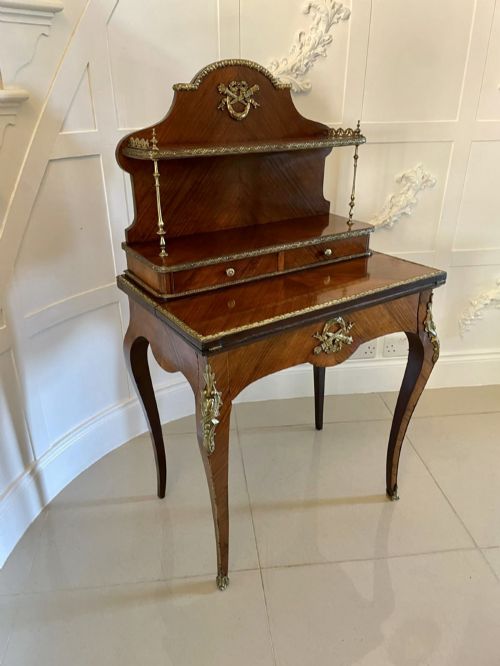
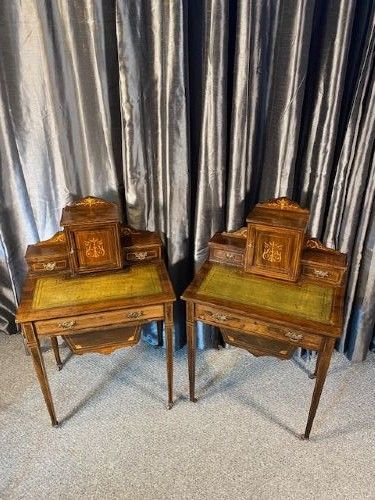
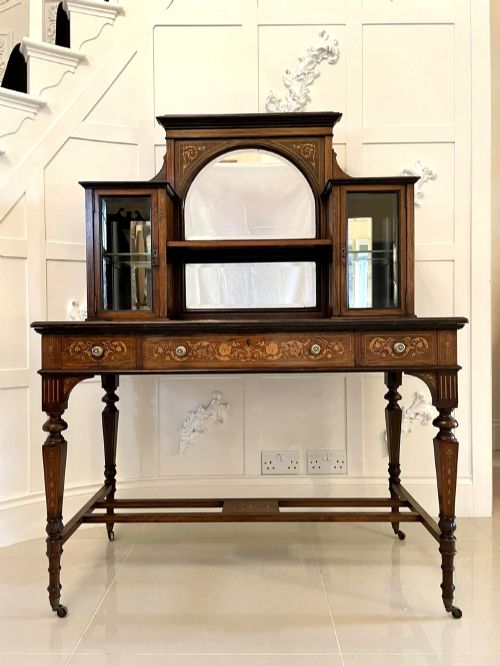
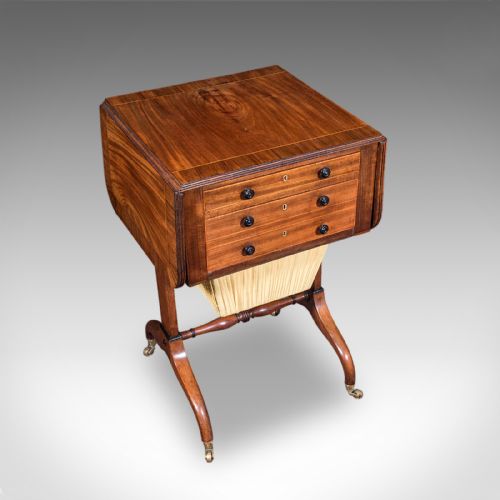



Rosewood Ladies Writing Desk
These compact writing surfaces bring refined rosewood ladies writing desk forms into domestic spaces with fitted interiors and delicate marquetry.
Rosewood Ladies Writing Desk
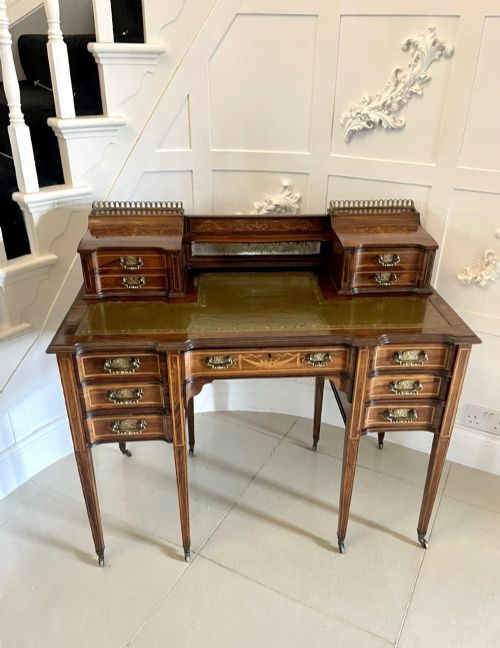
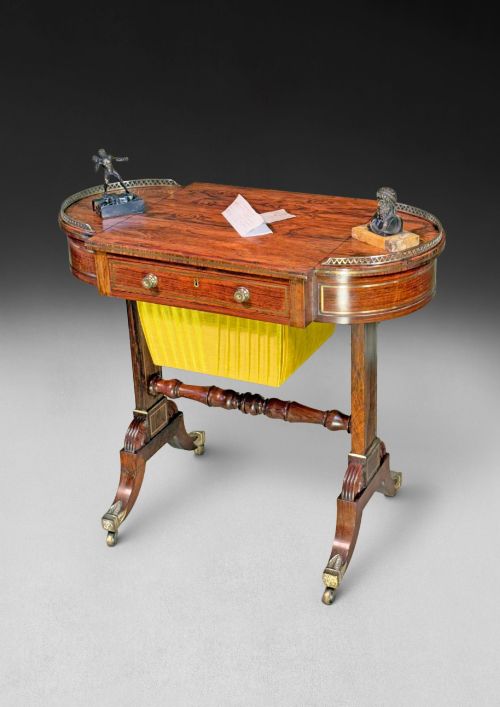
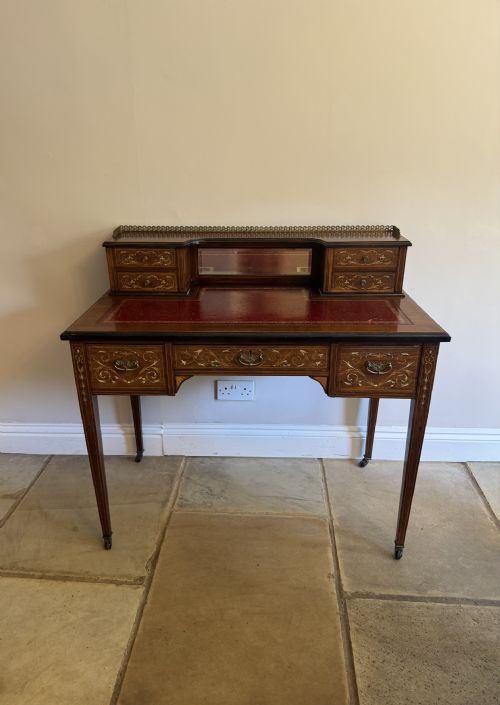
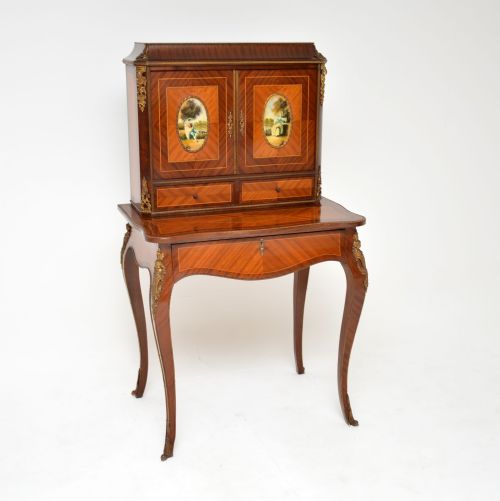
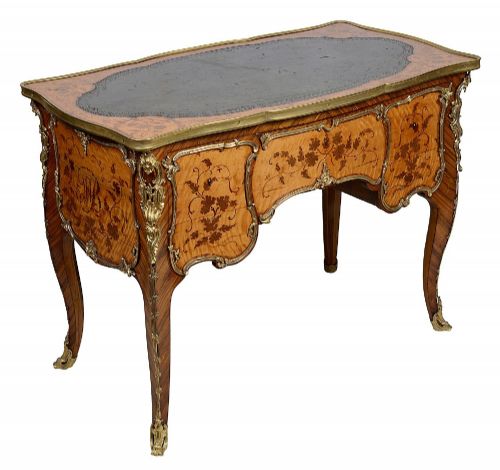
A rosewood ladies writing desk is a compact piece intended for correspondence, typically taking the form of a bonheur du jour, bureau de dame, or small writing table. These pieces emerge primarily across the Victorian and Edwardian eras, alongside Regency examples, reflecting a period when personal letter-writing demanded dedicated furniture.
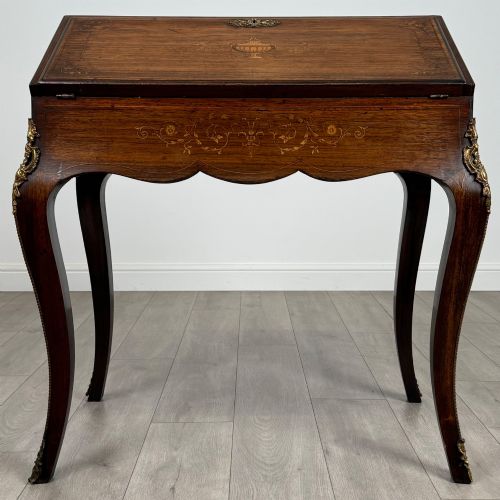
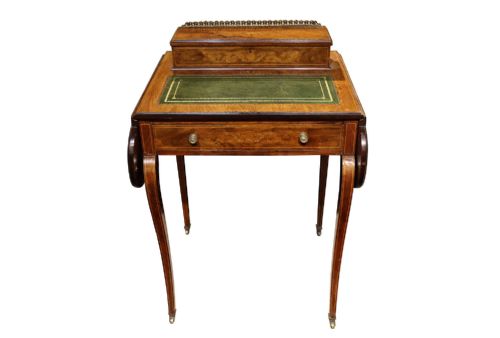
Most pieces on this page combine a small writing surface with compartmentalised superstructures, drawers, and fitted interiors for stationery. Styles span English cabinet-making and French revival influences such as Louis XV and Rococo, uniting delicate proportions with functional compartments.
Materials and Construction
Makers build these desks using dense rosewood as a primary timber, frequently enhanced with contrasting marquetry in satinwood, boxwood, and kingwood. Brass inlays, ormolu mounts, and delicate stringing define the decorative vocabulary across English and French workshops.
Internal elements often include leather writing inserts, small secret drawers, and glass or fitted stationery compartments. Structural integrity relies on traditional joinery adapted to smaller, lighter frames suited to domestic boudoirs and drawing rooms.
Rosewood Ladies Writing Desk Retail Price Guide 2026
Typical asking prices for rosewood ladies writing desk among the pieces listed under this phrase on Sellingantiques today, from the lower quarter to the upper quarter. They describe what is for sale here now, not the wider market.
Listings feature rosewood writing desks spanning the Regency, Victorian, and Edwardian periods, alongside French revival styles.
Evaluating Craftsmanship
Quality rests in the precision of the marquetry and the crispness of the brass or ormolu mounts. Finer examples show seamless inlay work and thoughtful integration of secondary timbers within the fitted interior.
The sophistication of the mechanism, such as pop-up compartments or lockable tambour doors, separates standard production from exceptional cabinet-making. Proportions remain balanced on superior pieces, with attention given to concealed drawers and finished backs for freestanding placement.
Maple and Co·Edwards and Roberts·Jas Shoolbred·John MaClean
The Rosewood Ladies Writing Desk Glossary
- Bonheur du jour
- A small lady's writing desk featuring a raised cabinet or set of shelves and drawers on the upper surface. This French form became popular during the nineteenth century for correspondence and display.
- Bureau de dame
- A lady's writing desk, often taking a slant-front or cylinder form with internal compartments. These pieces frequently display intricate marquetry and gilt-metal mounts.
- Marquetry
- Decorative veneer work forming pictorial or geometric patterns using various coloured woods. Craftsmen assemble thin slices of timber like satinwood and boxwood into the rosewood ground.
- Ormolu
- Gilt-bronze mounts applied to furniture for decorative accent. This technique appears frequently on French-influenced desks from the Victorian period.
- Davenport
- A small compact desk featuring a sloping writing surface above a pedestal of drawers. Some versions incorporate pop-up mechanisms for stationery storage.
Rosewood Ladies Writing Desk: Frequently Asked Questions
What is a bonheur du jour?
A bonheur du jour is a small, light writing desk featuring a set of drawers or a cabinet on top of the writing surface. These pieces were designed for domestic correspondence and light administrative tasks.
They gained popularity in nineteenth-century drawing rooms and boudoirs, often standing away from walls to display finished backs and detailed marquetry.
How were these desks used?
Owners used them primarily for writing letters, managing household accounts, and storing personal stationery. The fitted interiors and small drawers provided secure spaces for inkwells, paper, and correspondence.
Many examples include lockable compartments or secret drawers for confidential papers and jewellery, reflecting their private domestic role.
Where should I place a writing desk?
Because many of these pieces feature finished backs and detailed marquetry all round, they suit freestanding placement in a room rather than pushing against a wall. Their compact proportions allow them to fit into sitting rooms or studies without dominating the space.
Keep them away from direct sunlight and strong heat sources to protect the rosewood veneer and leather writing surfaces.
How do I tell Victorian from Edwardian pieces?
Victorian examples tend to feature deeper rosewood tones, heavier brass mounts, and robust marquetry influenced by French revival styles. They often incorporate elaborate kidney shapes or traditional bureau forms.
Edwardian pieces generally present lighter inlay work, sometimes combining satinwood and boxwood with delicate stringing on slender frames, reflecting a shift towards more refined proportions.