



Rosewood Fireplace Screen
These rosewood fireplace screen pieces shield a parlour from hearth heat while serving as decorative focal points.
Rosewood Fireplace Screen
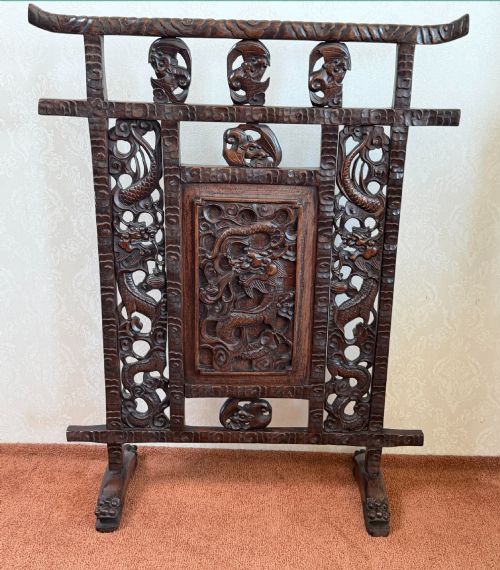
A rosewood fireplace screen is a functional piece of interior furniture designed to deflect the intense heat of an open fire away from those seated nearby. The listings here showcase variations primarily from the Victorian and Regency periods, alongside Chinese hardwood examples.
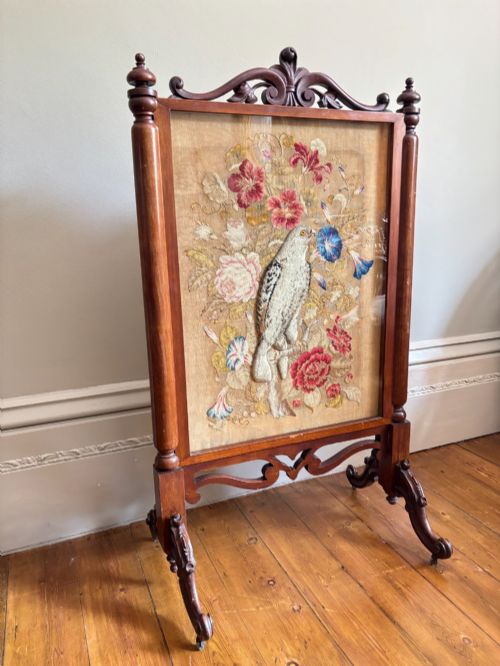
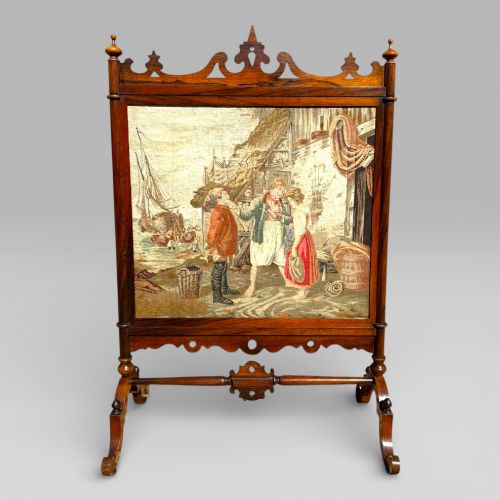
Buyers will encounter several distinct forms on this page, most notably pole screens with tripod bases and needlework panels, alongside larger cheval frames. These items utilise dense hardwoods to support intricate textile inserts worked in tapestry, wool, or silk.
The architectural styles span early Victorian and Grand Regency iterations, reflecting changing interior fashions across the nineteenth century. Many pieces incorporate adjustable panels, allowing occupants to raise or lower the textile shield as required.
Materials and construction methods
Makers utilised dense imported timbers such as rosewood, palisander, and goncalo alves to construct the upright frames and sturdy tripod bases. These woods were often carved with decorative motifs or inlaid to enhance the visual appeal of the stand.
The central panels feature textiles worked by hand, including wool, needlepoint, tapestry, and canvas embroidery. Silk is also present in specific Chinese hardwood variants, demonstrating diverse regional traditions of needlework and framing.
Rosewood Fireplace Screen Retail Price Guide 2026
Typical asking prices for rosewood fireplace screen among the pieces listed under this phrase on Sellingantiques today, from the lower quarter to the upper quarter. They describe what is for sale here now, not the wider market.
Some nineteenth-century screens include poker work panels, created by scorching designs into wood with a heated metal stylus.
Assessing quality in rosewood fireplace screen furniture
Quality rests in the crispness of the timber carving on the base and the complexity of the turned column work. Superior examples display balanced proportions and substantial weight, particularly in the tripod or pedestal supports.
The needlework panel dictates much of the visual standard, where fine, tightly executed tapestry or poker work demonstrates superior craftsmanship. Original adjustable mechanisms that function smoothly without slipping elevate the standing of the piece.
The Rosewood Fireplace Screen Glossary
- Pole screen
- A vertical stand featuring an adjustable sliding panel mounted on a central shaft. This design allowed occupants to position the textile shield precisely where heat protection was needed.
- Cheval screen
- A standing frame supported by two lateral feet rather than a central pole. These larger units offered a wider barrier against hearth drafts.
- Needlework
- General term for decorative stitching executed on canvas or fabric support. The medium includes wool and silk threads worked into pastoral or floral designs.
- Palisander
- A dense tropical hardwood related to rosewood, prized for rich dark figuring. Cabinetmakers utilised it for high-status nineteenth-century furnishings.
- Tripod base
- A three-legged support structure commonly found beneath pole screens. It provided stability on uneven wooden flooring.
Rosewood Fireplace Screen: Frequently Asked Questions
What is a rosewood fireplace screen?
A rosewood fireplace screen is a decorative piece of nineteenth-century furniture designed to shield people from the radiant heat of an open coal fire.
These items typically consist of a wooden stand supporting an adjustable panel made from embroidered textile, tapestry, or needlework.
How do pole screens work?
Pole screens operate via a sliding collar mechanism fitted to a central vertical wooden shaft. This allows the user to slide the textile panel up and down to block heat at seated height.
The stable tripod base keeps the tall stand upright on the floor while the panel is adjusted.
Where should I place a screen?
These screens sit comfortably near a fireplace, mantel, or in a reception room as a decorative focal point. They complement traditional interiors and provide height in empty corners.
Avoid placing them directly against a functioning hearth where intense heat or moisture might damage the antique timber and textiles.
How do I date a Victorian screen?
Dating relies upon stylistic markers such as the turned profile of the central column, the joinery methods used on the base, and the style of the needlework panel.
Victorian pieces often display heavier carving and floral tapestry work, whereas earlier Regency examples tend to feature more restrained classical lines.