





Rosewood Dining Furniture
Rosewood dining furniture brings deep, richly grained timbers and substantial nineteenth-century craftsmanship directly to the interior.
Rosewood Dining Furniture
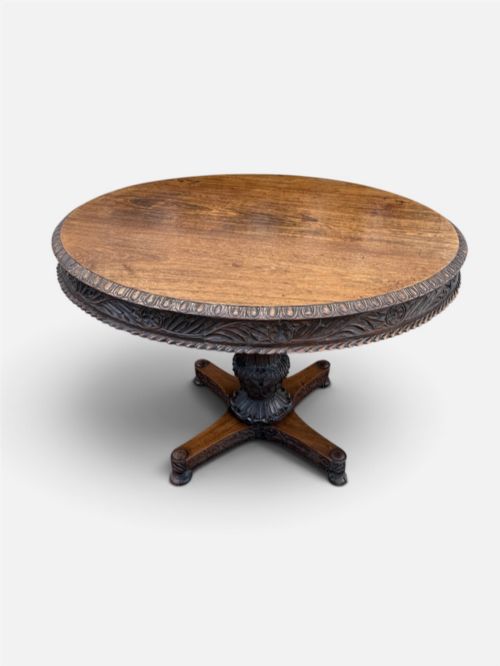
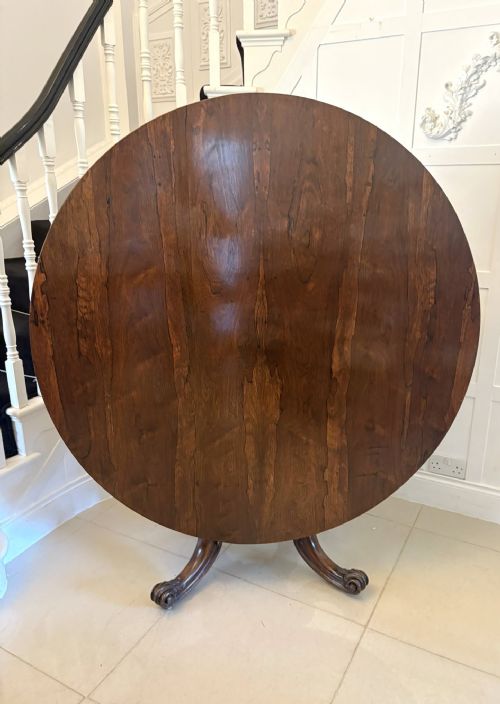
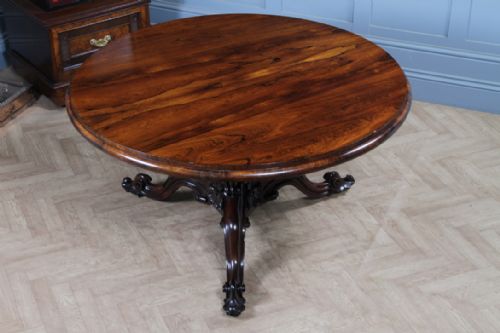
Rosewood dining furniture encompasses sturdy centre tables, extending dining tables, and sets of dining chairs originating primarily from the nineteenth century. Buyers searching this phrase typically encounter robust Regency, William IV, and Victorian pieces designed for formal dining spaces.
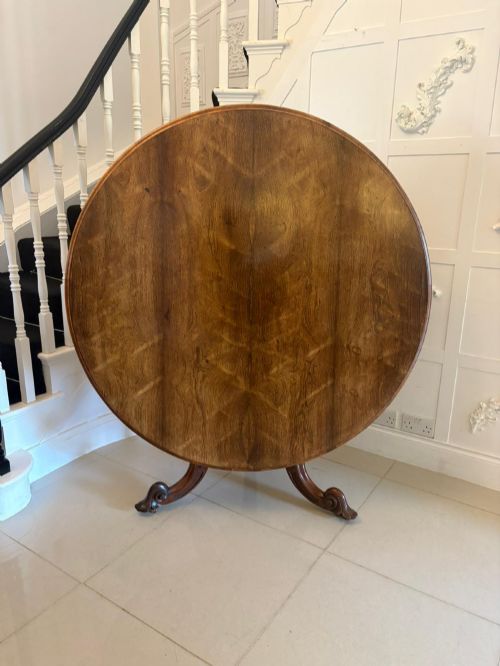
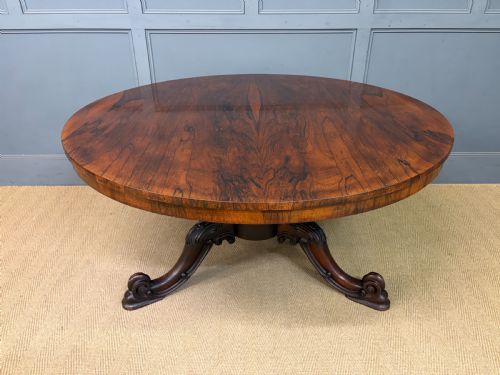
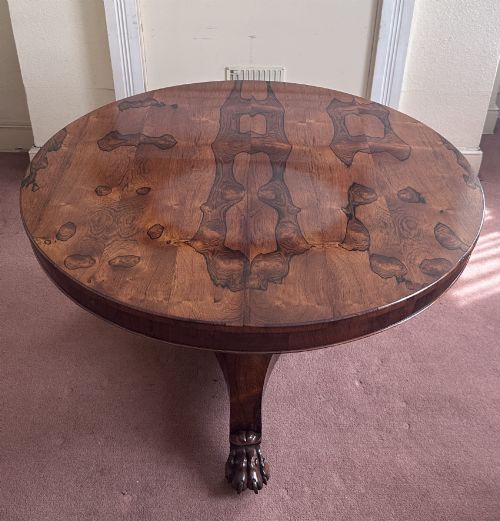
Form follows function closely across these examples, with pedestal bases supporting heavy circular tops and sturdy frames built to withstand daily communal use. Tables frequently double as centre or breakfast tables depending on the scale of the room.
Materials and Construction Methods
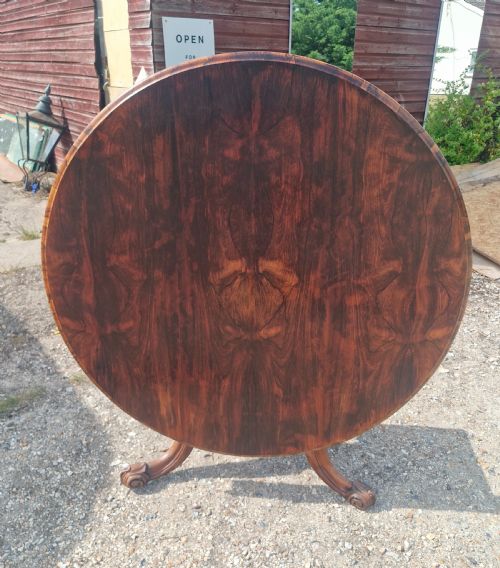
Cabinet makers utilised dense rosewood veneers laid over secondary timbers to achieve striking grain patterns across large table tops and chair rails. Solid rosewood was selected for structural members, legs, and carved details requiring high tensile strength.
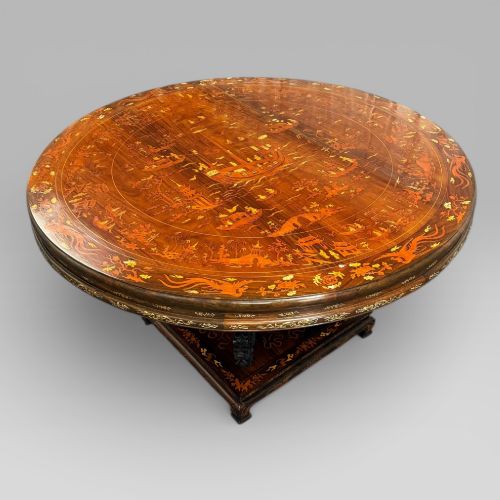
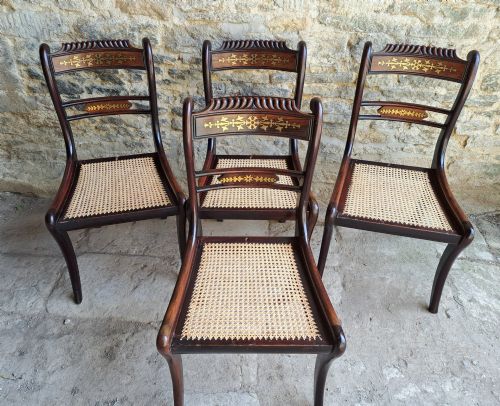
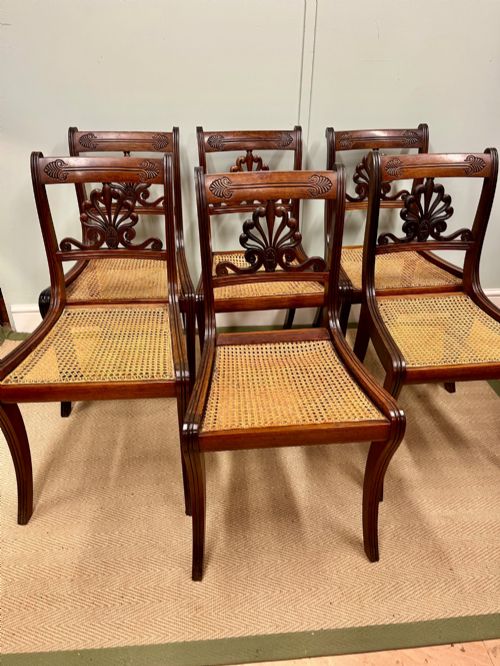
Brass inlay and parcel gilding frequently highlight the dark timber on Regency examples, contrasting sharply with the deep brown and purple hues of the wood. Upholstered elements rely on traditional stuffing techniques paired with velvet, fabric, or cane inserts.
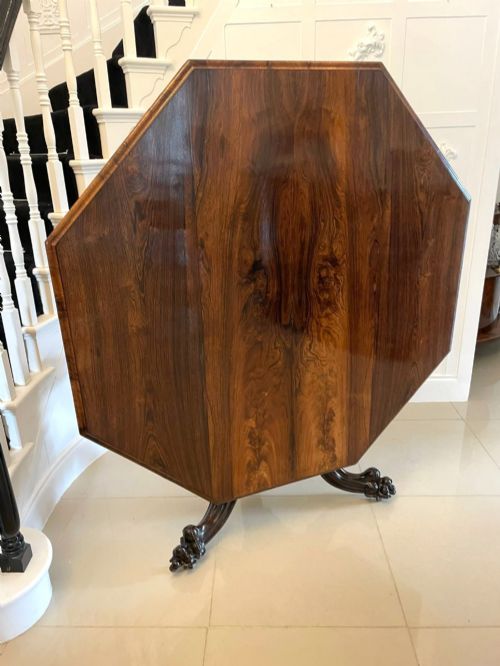
Tilt-top mechanisms on tables depend on pivoting brass catches and sturdy timber blocks designed to secure the heavy top firmly in position. Chair joints utilise mortise and tenon construction, ensuring stability across sets spanning six or eight pieces.
Rosewood Dining Furniture Retail Price Guide 2026
Typical asking prices for rosewood dining furniture among the pieces listed under this phrase on Sellingantiques today, from the lower quarter to the upper quarter. They describe what is for sale here now, not the wider market.
Listings span the Regency, William IV, Victorian, and Edwardian eras, predominantly featuring rosewood, brass, and velvet.
Distinctions in Quality
The depth of figure and consistency of the rosewood grain across extended surfaces separates standard production pieces from workshop masterpieces. Superior examples display symmetrical figuring that enhances the visual weight of large circular tables.
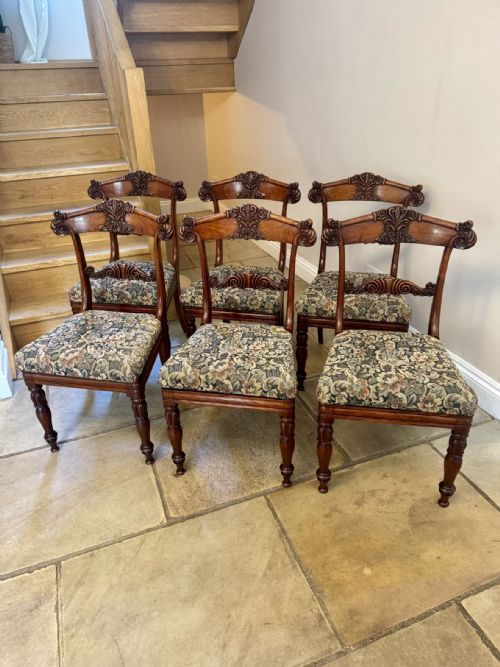
The precision of brass inlay work and the crispness of hand-carved foliage indicate the skill level of the original cabinet maker. Finer dining chairs maintain tight joinery and retain matching design details across complete sets of four, six, or eight.
Makers identified by signature stamps or distinctive construction methods command greater attention, demonstrating documented provenance from established workshops such as Gillows or Edwards & Roberts.
Gillows·Edwards & Roberts·Peters of Genoa
The Rosewood Dining Furniture Glossary
- Rosewood
- A dense, heavily grained tropical timber prized for deep purple and brown coloration. It takes a high polish and forms the primary visual element of these dining pieces.
- Tilt-top
- A table construction allowing the top to pivot to a vertical position for storage or movement. This mechanism appears frequently on nineteenth-century breakfast and centre tables.
- Balloon back
- A chair design featuring an oval or curved open backrest resembling a blown balloon. This style dominates Victorian dining chair production.
- Centre table
- A freestanding table finished on all sides for placement in the middle of a room. Many examples function equally well for dining or as breakfast tables.
- Parcel gilt
- A decorative technique applying thin gold leaf or paint to specific carved portions of timber. It highlights architectural details against the dark rosewood background.
Rosewood Dining Furniture: Frequently Asked Questions
How do I date a rosewood dining table?
Dating relies on stylistic markers such as pedestal shapes, leg profiles, and the presence of brass inlay. Regency and William IV pieces tend to show heavier pillar supports and classical motifs.
Later Victorian examples often incorporate balloon back chairs or more ornate carved borders around circular top edges. Comparing the construction methods underneath provides further chronological context.
Can I use a centre table for daily dining?
Many nineteenth-century centre tables were constructed with substantial timber frames and heavy rosewood tops suitable for regular use. Their robust pedestal bases offer ample leg clearance around the perimeter.
Buyers should check the height clearance beneath the apron to ensure standard dining chairs fit comfortably underneath. Tilt-top mechanisms must lock securely before setting heavy tableware in place.
What is the difference between Regency and Victorian rosewood furniture?
Regency pieces typically display neoclassical restraint, featuring clean geometric lines, brass stringing, and parcel gilding. The timber selection emphasises rich, dark grain patterns paired with classical brass mounts.
Victorian furniture introduces heavier carving, elaborate floral motifs, and balloon-backed chair forms. Proportions tend to be more robust, reflecting mid-nineteenth-century interior tastes.
How do I care for antique rosewood surfaces?
Maintain rosewood surfaces by dusting regularly with a soft, dry cloth and avoiding placement near direct heat sources or strong sunlight. Excessive warmth dries out the dense timber and causes historical veneers to lift.
Periodic application of appropriate wax polish helps preserve the natural lustre of the polish without building up greasy residue. Protect the top from moisture and hot dishes using suitable mats.