



Rosewood Breakfront Credenza
A rosewood breakfront credenza is a substantial nineteenth-century low cabinet built for display and storage, bringing rich grain and dark timber tones to a formal room.
Rosewood Breakfront Credenza
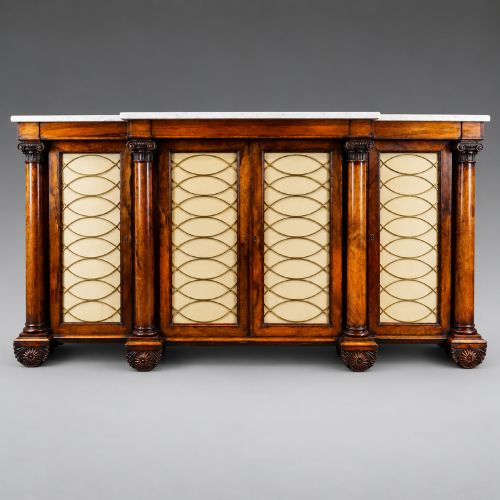
When searching for a rosewood breakfront credenza, a buyer encounters low-profile timber cabinetry designed primarily for the principal rooms of nineteenth-century houses. These pieces span periods from the Regency era through the Victorian epoch, incorporating related forms such as chiffoniers, side cabinets and low bookcases.
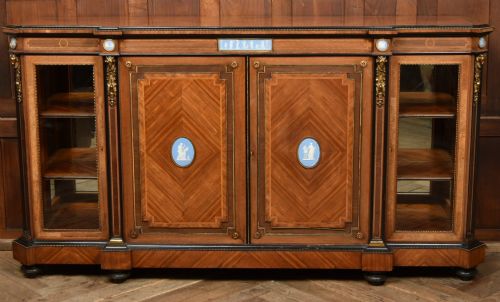
Origins represented on this page range from English workshops to French cabinet-makers working in revival styles like Louis XVI and Napoleon III. Pieces appear with brass inlays, marquetry decoration, marble tops and porcelain plaques.
How They Were Made
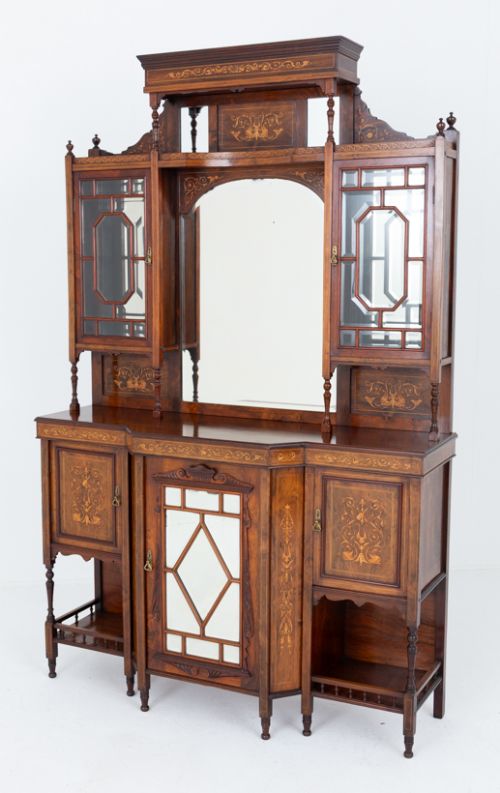
Cabinet-makers built these carcasses using dense tropical rosewood timber, often applied as fine veneers over stable secondary woods to showcase rich figuration and deep dark tones. Workshops enhanced these surfaces with contrasting boxwood stringing, marquetry motifs and cast brass mounts.
Structural embellishments relied on traditional joinery combined with decorative metalwork, parcel gilding and turned elements like barley twist columns. Many items integrate specialised components such as inset leather panels, mirrored backs, marble slabs and Sevres porcelain plaques.
Rosewood Breakfront Credenza Retail Price Guide 2026
Typical asking prices for rosewood breakfront credenza among the pieces listed under this phrase on Sellingantiques today, from the lower quarter to the upper quarter. They describe what is for sale here now, not the wider market.
Several Regency cabinets include clever leather dummy books designed to conceal compartment interiors, proving that nineteenth-century practical jokes reached even the formal sideboard.
What Varies in Quality
The distinction between standard production and exceptional craftsmanship rests in the handling of the rosewood veneers and the precision of the brass inlay or marquetry. Superior examples display continuous, carefully matched grain patterns across the breakfront doors and refined proportions in the overall architectural silhouette.
Secondary materials and internal fittings also divide the range, from plain wooden shelves to silk-backed display interiors and heavy Carrara marble tops. The finesse of applied ormolu mounts, parcel gilding and structural turned columns separates ordinary commercial output from bespoke cabinet work.
Collinson and Lock·Gillow·Howard and Sons
The Rosewood Breakfront Credenza Glossary
- Breakfront
- A piece of furniture whose central section projects forward from the flanking wings. This architectural arrangement creates depth and shadow across the front elevation of large cabinets and sideboards.
- Credenza
- A low-standing side cabinet originating in Italy and adapted by British and continental makers during the nineteenth century. It frequently incorporates central cupboards flanked by curved or straight glazed end cabinets.
- Marquetry
- The art of forming decorative patterns using thin veneers of wood, shell or metal applied to a solid timber structure. Master craftsmen cut contrasting timbers to create floral or geometric designs.
- Ormolu
- Gilded bronze used for decorative mounts, feet and gallery rails on nineteenth-century cabinetry. The technique involves applying a mercury-gold amalgam to cast bronze before firing.
Rosewood Breakfront Credenza: Frequently Asked Questions
What rooms suit a rosewood breakfront credenza?
These low cabinets fit naturally into principal living spaces, dining rooms and wide hallways where their horizontal proportions anchor the wall. Their shallow depth allows them to sit comfortably without dominating the floor area.
Surface tops provide adequate space for lamps, decorative ceramics or books, while internal shelves accommodate dining ware or collections. The dark timber tones pair effectively with both traditional neutral walls and bolder interior colour schemes.
How do Regency and Victorian credenzas differ?
Regency pieces tend to display architectural restraint, clean linear forms and classical brass inlay inspired by antique precedents. They frequently utilise simulated rosewood or precise brass grilles in place of clear glass.
Victorian examples lean toward more ornate decoration, incorporating marquetry panels, carved barley twist columns and curved glass doors. These later cabinets often reflect revival styles such as Louis XVI or Napoleon III with heavy ormolu mounts and marble tops.
Can I use a credenza for media storage?
Many nineteenth-century low cabinets offer internal dimensions deep and wide enough to house modern entertainment equipment. Solid or wood-panelled doors conceal electronic items while maintaining the formal appearance of the room.
Buyers planning this use should verify internal shelf clearances and check for rear access points for cables. Glass-fronted display versions allow remote control signals to pass through more easily than solid timber doors.
How should I care for antique rosewood?
Maintaining nineteenth-century rosewood requires keeping furniture away from direct sunlight and strong heat sources that can dry out the timber and veneers. Regular dusting with a soft, dry cloth prevents particulate build-up on polished surfaces.
Occasional application of appropriate natural wax feeds the wood and preserves the depth of the grain without creating a synthetic film. Avoid liquid polishes containing silicone, which can penetrate old finishes and prove difficult to remove.