





Rosewood Accent Stool
A rosewood accent stool offers compact surface space and seating, grounding a room with dense timber grain and period character.
Rosewood Accent Stool
A rosewood accent stool combines the utility of a small seat with the presence of a decorative table, often taking the form of low stands, plant holders, and occasional seating. Buyers seeking a rosewood accent stool will encounter items spanning the nineteenth century, including Victorian domestic pieces and Asian export furniture.
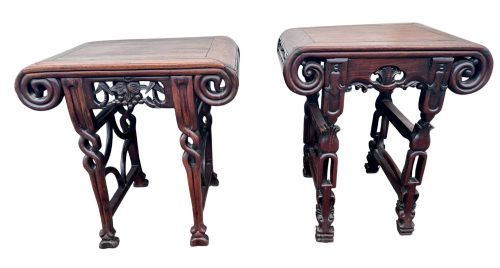
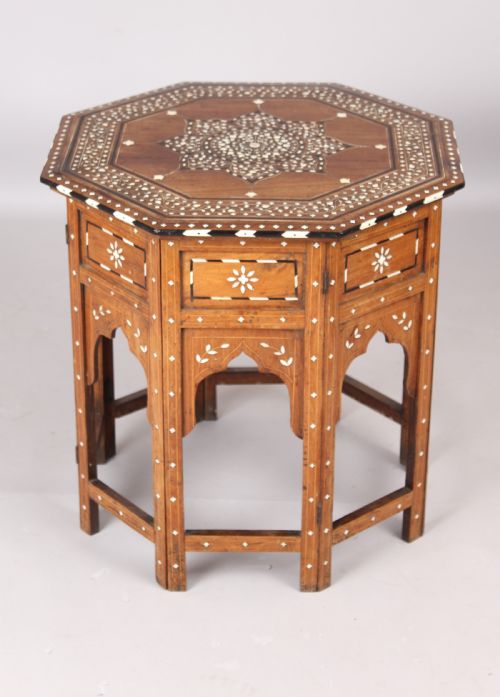
The selection here encompasses diverse regional traditions, ranging from Victorian Rococo Revival and Gothic designs to Anglo-Indian productions and Chinese Qing Dynasty hongmu stands. While some pieces function strictly as stools, others serve equally well as side tables or plant stands.
Origins heavily influence the aesthetic, with Chinese hardwood and hongmu examples sitting alongside British stylistic interpretations. Buyers frequently find paired pieces alongside single items, offering flexibility for interior arrangements.
How they were made
Maker construction relies heavily on dense rosewood and general hardwood timbers, chosen for strength and rich colouration. Artisans shaped these resistant materials using traditional joinery and detailed hand carving.
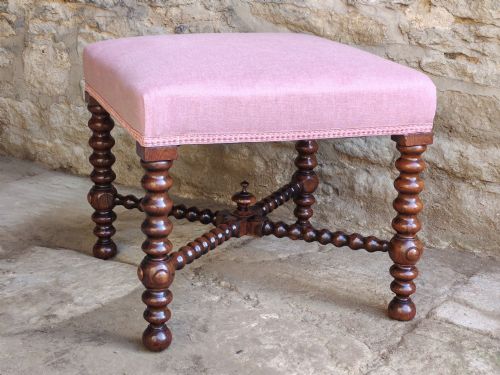
Surface enrichment often incorporates contrasting media, utilising marble inserts, brass accents, and intricate inlay work in mother-of-pearl and bone. Bobbin-turned legs and cabriole forms demonstrate the distinct turning and moulding techniques of the nineteenth century.
Some nineteenth-century makers decided a simple seat needed bone inlay just to keep things interesting.
What varies in quality
Quality rests in the crispness of the carving and the natural figuring of the timber. Exemplary pieces display deep, uniform colour in the rosewood and precise execution in ornamental details such as bone inlay or marble fitting.
Proportion and structural integrity distinguish finer examples from standard workshop output. The harmony between decorative elements, such as brass mounts or turned bobbin legs, and the core frame determines the piece's overall success.
The Rosewood Accent Stool Glossary
- Hongmu
- A traditional Chinese term for dense hardwoods, often translated as red wood. It encompasses several heavy timber species prized for furniture making.
- Prie Dieu
- A devotional chair featuring a low seat and a tall, narrow back designed for kneeling and prayer. Victorian examples frequently utilise rosewood and upholstered elements.
- Bobbin leg
- A style of furniture leg turned on a lathe to resemble a series of rounded spheres or bobbins. This decorative turning became popular during the nineteenth century.
- Cabriole leg
- A furniture leg featuring a double curve, stepping outward at the knee and tapering inward at the foot. It draws inspiration from animal limbs and typifies revival styles.
Rosewood Accent Stool: Frequently Asked Questions
What is a rosewood accent stool used for?
These pieces serve multiple domestic functions beyond simple seating. They frequently act as plant stands, lamp tables, or flexible occasional surfaces in compact spaces.
Their decorative presence also allows them to function purely as sculptural accents within a room's layout.
How do I identify a Victorian piece?
Victorian examples often display specific stylistic markers such as Gothic Revival motifs or Rococo Revival curves. The use of dense rosewood combined with distinct upholstery or carved frames points directly to mid-nineteenth-century British production.
Examining the construction methods and secondary timbers provides further confirmation of the period.
Are these items stable enough for daily seating?
Most of these pieces were built to support weight, but nineteenth-century frames require mindful handling. Stools with delicate inlay or slender bobbin legs are better suited for light use or display purposes.
Checking the rigidity of the joints helps determine the practical capacity of each individual item.
What distinguishes Asian export pieces from British ones?
Asian examples often utilise Chinese Qing Dynasty traditions, featuring hongmu or carved hardwood without European stylistic overlays. British pieces typically incorporate domestic revival styles like Gothic or Victorian Rococo.
The carving motifs and joinery techniques clearly reflect their respective geographic and cultural origins.