



Rose Gold Medal
A rose gold medal brings together warm nineteenth-century metalwork and detailed devotional or commemorative engraving in a compact pendant format.
Rose Gold Medal
When you search for a rose gold medal, you encounter small personal ornaments designed to be worn on chains or watch fobs. The examples seen here span from the late nineteenth century through the mid twentieth century, with a strong representation of French religious pieces.
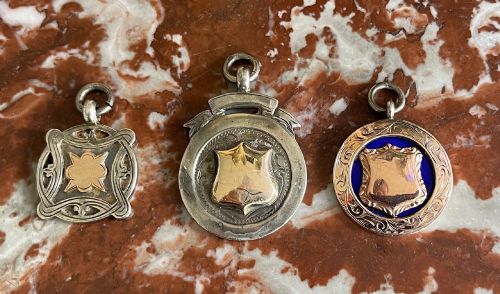
The forms vary from simple shields and monogram discs to intricate floral wreaths and figural representations of the Virgin Mary, saints, and communion chalices. Many pieces combine rose gold with yellow gold, white gold, or enamel accents to highlight specific decorative elements.
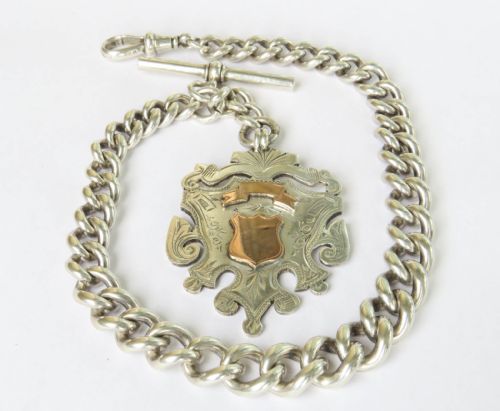
Originating predominantly from France alongside a small number of British watch fobs, these objects served as personal mementos, devotional tokens, or presentation awards. Collectors find them used both as pendants and as charms on chatelaines or chains.
Materials and Technique
The construction relies heavily on 18K gold and 18ct yellow or rose gold, alongside occasional sterling silver and 9ct rose gold components. Metalworkers shaped these alloys by casting, stamping, and hand-engraving to achieve distinct surface textures and relief profiles.
Enamel work appears on select pieces, utilising techniques such as plique-à-jour to let light pass through translucent coloured glass sections. Artisans also integrated pearls and multi-coloured gold treatments, combining rose and yellow hues within a single design.
Rose Gold Medal Retail Price Guide 2026
Typical asking prices for rose gold medal among the pieces listed under this phrase on Sellingantiques today, from the lower quarter to the upper quarter. They describe what is for sale here now, not the wider market.
Several pieces preserve the exact date of a French child's first communion, frozen in gold from the year nineteen hundred.
Distinctions in Quality
Material combination and structural integrity also influence standard. Pieces that successfully integrate multiple gold colours, delicate openwork frames, or intact enamel panels demand greater technical proficiency than standard solid discs.
E. Dropsy
The Rose Gold Medal Glossary
- Plique-à-jour
- An enamelling technique where enamel is applied in cells without a backing, resembling miniature stained glass. This method allows light to shine directly through the translucent coloured material.
- Watch fob
- A short strap, ribbon, or chain attached to a pocket watch, often adorned with a decorative medal at the end. These items were widely used during the Victorian and Edwardian eras.
- Hallmark
- An official stamp applied to precious metals to indicate purity and origin. British and French pieces carry distinct punches denoting gold standard and workshop identity.
- Chalice
- A ritual cup depicted frequently on first communion medals. It symbolises the eucharist in Christian iconography.
- Brocade
- A rich shuttle-woven fabric often referenced in textile descriptions, though in the context of metalwork it relates to textured background engraving that mimics woven cloth.
Rose Gold Medal: Frequently Asked Questions
How were watch fobs used?
Watch fobs hung from the pockets of waistcoats attached to pocket watches, serving both a decorative and a practical function to pull the watch free.
Over time, many of these fob medals were removed from their chains and converted into pendant necklaces for daily wear.
How do I identify French gold medals?
French gold pieces frequently carry eagle head punch marks denoting the standard for eighteen-karat gold used during the nineteenth and twentieth centuries.
Stylistic cues such as Belle Epoque floral motifs, French inscriptions, and specific maker marks also point to their origin.
What does plique-à-jour mean?
Plique-à-jour is an enamelling method where translucent enamel fills open metal cells without a solid backing plate.
When held to the light, the design glows much like miniature stained glass windows.
Are these medals religious?
Many examples are religious, depicting the Virgin Mary, saints, communion chalices, and biblical scenes intended for personal devotion.
Others are secular, featuring floral wreaths, monograms, or presentation inscriptions for achievements.