

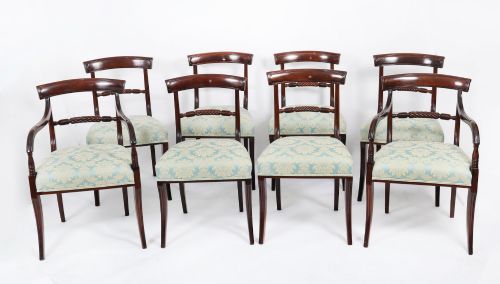


Rope Twist Mahogany Chairs
Rope twist mahogany chairs bring tactile carved grain and elegant curved backs to the dining table.
Rope Twist Mahogany Chairs
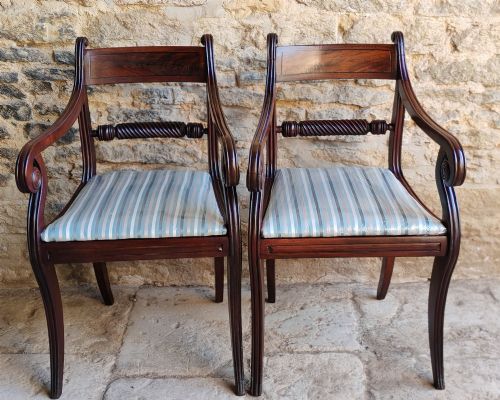
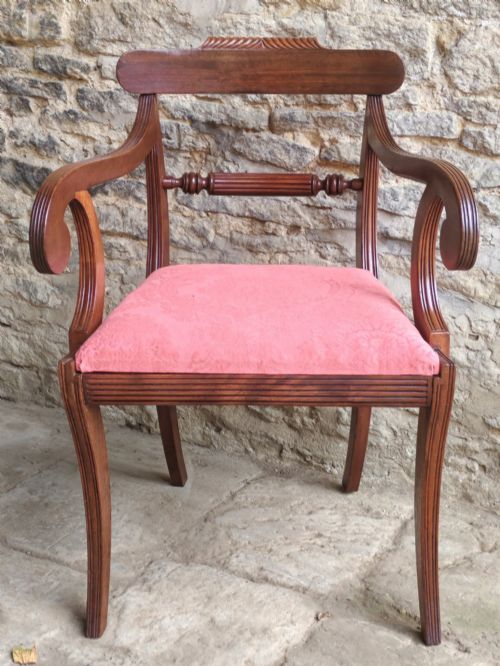
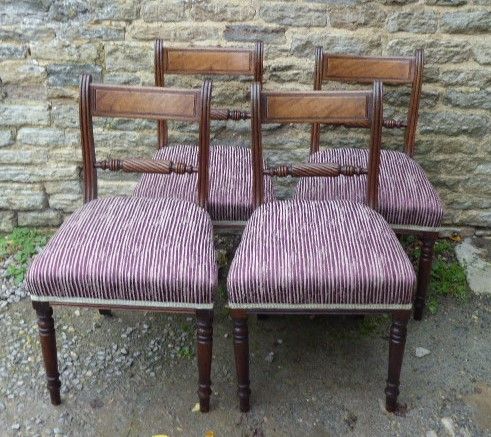
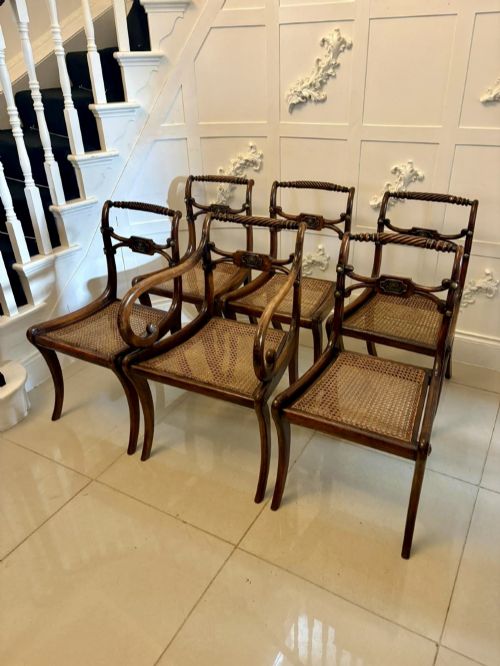
Rope twist mahogany chairs are seating pieces defined by their distinct carved top rails and uprights resembling braided cord, appearing mostly in dining sets, carvers, and armchairs. Buyers searching for rope twist mahogany chairs encounter forms dating from the Georgian and Regency periods, alongside later 19th-century interpretations and occasional 1920s decorative variations.
The pieces on offer span single chairs, pairs, and matching sets ranging from four to ten items, frequently combining standard dining chairs with an accompanying carver or elbow chair. Origin styles stretch from standard English workshop production to Scottish regional pieces and Chinese export variations.
Dining chairs and armchairs dominate the selection, though hall chairs and faux birdseye maple decorative variants also appear. Most surviving examples rely on mahogany timber, paired with drop-in upholstered seats, fabric, velvet, or woven cane.
What varies in quality
Quality in these chairs rests upon the crispness and depth of the hand-carved rope twist detail on the back rails, where sharper execution denotes superior craftsmanship. The choice and density of the mahogany timber also influence the stature of the piece, alongside the integrity of original joinery in the legs and uprights.
Set uniformity dictates value when multiple chairs survive together, separating assembled collections from unified sets produced in a single workshop. The preservation of original seating materials, whether cane inserts or drop-in upholstered pads, further distinguishes standard examples from finer productions.
Rope Twist Mahogany Chairs Retail Price Guide 2026
Typical asking prices for rope twist mahogany chairs among the pieces listed under this phrase on Sellingantiques today, from the lower quarter to the upper quarter. They describe what is for sale here now, not the wider market.
Listings feature mahogany, cane, and velvet across Georgian and Regency periods.
The Rope Twist Mahogany Chairs Glossary
- Carver chair
- An armchair designed specifically for the head of a dining table, featuring supportive armrests that match the dining chairs. These pieces often accompanied sets of single chairs.
- Cane seat
- A seating surface formed by weaving natural plant material in an open mesh pattern across the chair frame. This technique provided lightweight and resilient support in period seating.
- Drop-in seat
- A removable wooden frame upholstered in fabric or velvet that drops into a rebate within the chair seat rails. It allowed easier reupholstery without dismantling the main chair structure.
- Regency
- A design period spanning the early 19th century, characterised by classical revival motifs and refined proportions. Furniture from this era often incorporates subtle carved details like rope twists.
Rope Twist Mahogany Chairs: Frequently Asked Questions
What is a rope twist chair?
A rope twist chair is a seating form featuring a carved wooden rail shaped to resemble a twisted length of rope. These details typically appear on the horizontal top rail of dining chairs and carvers from the Georgian and Regency eras.
Craftsmen carved the motif directly into the mahogany timber to add texture and classical elegance to dining furniture. They remain sought after for traditional and eclectic dining spaces alike.
Were these chairs made in sets?
Makers frequently produced these chairs in matched sets for formal dining rooms, often combining six or eight single chairs with one or two matching carvers. Finding original large sets remains a notable aspect of collecting period dining furniture.
Many surviving listings offer groups of four, six, or eight chairs that have stayed together over the centuries. Sets occasionally mix single chairs and carvers to accommodate the head of the table.
What is a carver chair?
A carver chair is an armchair with integrated armrests designed to sit at the ends of a dining table. They share the decorative motifs, such as rope twist rails, of the smaller single chairs in the set.
In period dining arrangements, the host sat in the carver while guests occupied the armless dining chairs. Pairs of carvers also appear independently as decorative seating in hallways or parlours.