

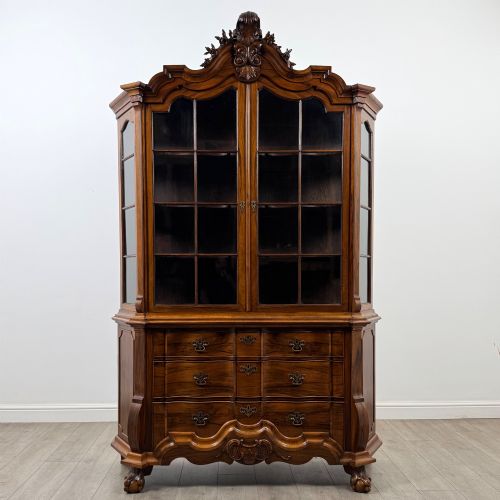
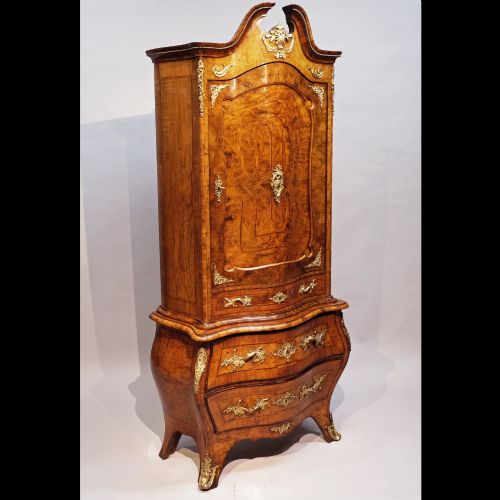


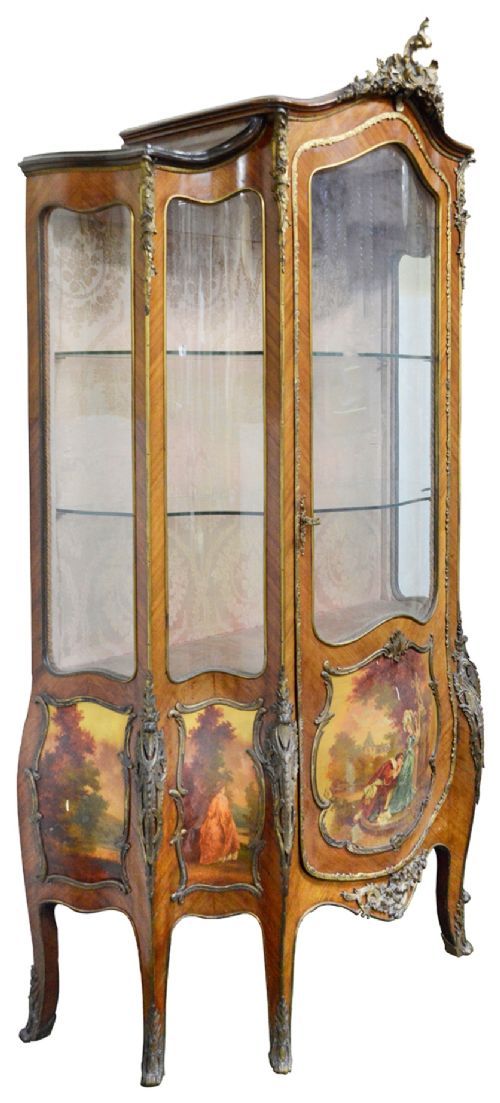


Rococo Walnut Display Cabinet
A rococo walnut display cabinet brings serpentine lines and figured timber together to house treasured porcelain and silver.
Rococo Walnut Display Cabinet
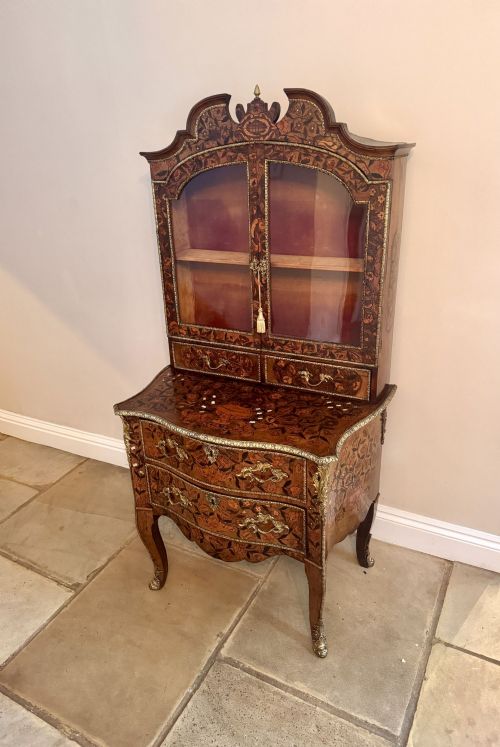
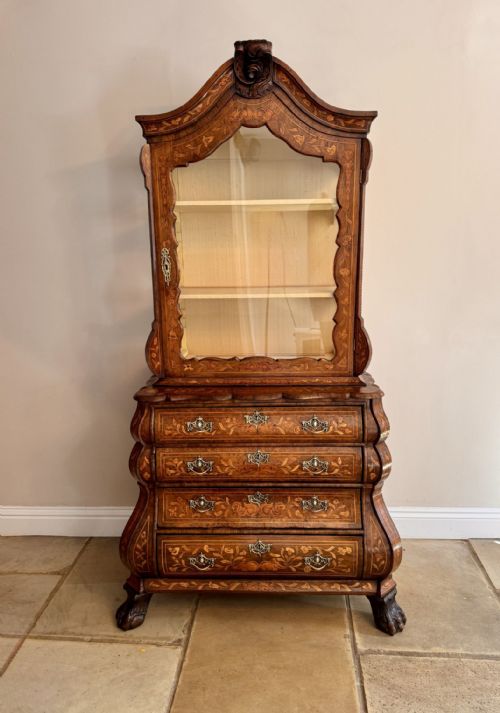
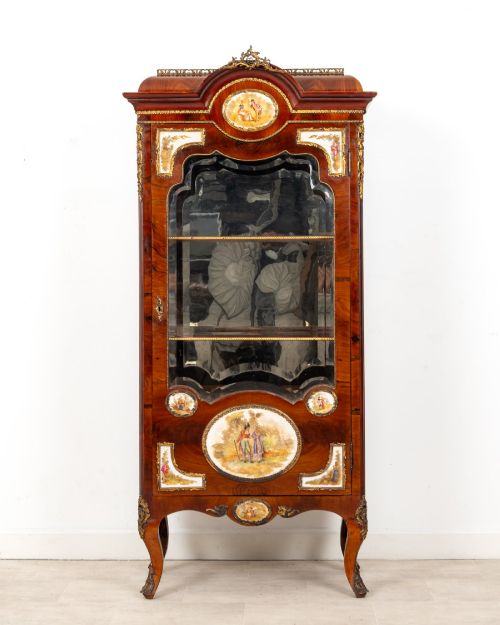
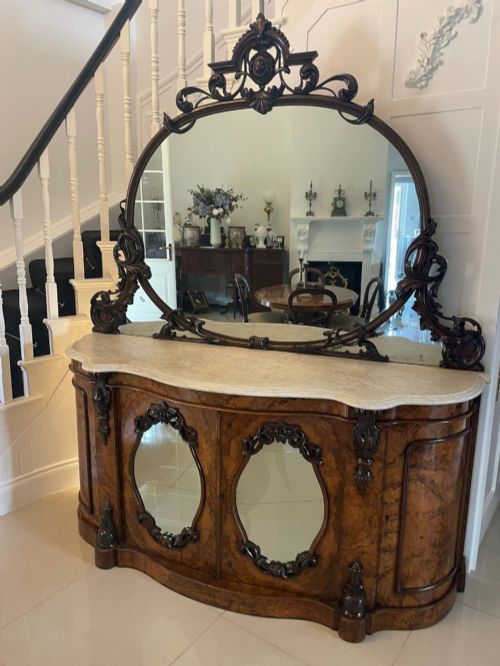
A rococo walnut display cabinet unites curvilinear frames with rich timber surfaces designed to show off collections. Buyers searching for a rococo walnut display cabinet encounter forms ranging from Dutch bombe marquetry vitrines to French Louis XV revival cabinets and Victorian mirror back credenzas. These pieces emerge across periods spanning the eighteenth, nineteenth, and early twentieth centuries, encompassing Edwardian and 1930s interpretations alongside Victorian and earlier examples.
The objects take various functional shapes, including tall vitrines, side cabinets, cabinets on chests, and credenzas equipped with glass panels. Walnut and burr walnut dominate the timber palette, often complemented by kingwood, marble tops, ormolu mounts, and intricate marquetry inlay. Cabinets frequently feature serpentine fronts, porcelain plaques, or mirrored backs to enhance the internal display space.
What varies in quality
Quality reveals itself in the choice and matching of burr walnut veneers, where symmetrical grain placement creates rich visual depth across serpentine surfaces. The crispness of hand-carving along the frames and the weight and finish of cast ormolu mounts distinguish finer workshops from standard production.
Construction standards appear in the precision of door seating, the integration of marquetry details, and the quality of internal mirror glass and shelving. Pieces attributed to notable makers demonstrate superior joinery and more ambitious bombé or serpentine proportions.
Rococo Walnut Display Cabinet Retail Price Guide 2026
Typical asking prices for rococo walnut display cabinet among the pieces listed under this phrase on Sellingantiques today, from the lower quarter to the upper quarter. They describe what is for sale here now, not the wider market.
Current listings feature walnut and burr walnut across Victorian, Edwardian, and eighteenth-century periods.
Gillows
The Rococo Walnut Display Cabinet Glossary
- Vitrine
- A glass-fronted display cabinet designed specifically for exhibiting porcelain, curiosities, and fine objects. These pieces often feature glazed side panels to maximise light entry.
- Bombe
- A swelling or outwardly curving convex shape prevalent in Dutch and French furniture design. This profile requires advanced woodworking skill to execute across burr walnut veneers.
- Ormolu
- Gilded bronze mounts cast and chased with rococo scrollwork and foliage. These metal ornaments are fixed to the corners and feet of cabinets.
- Marquetry
- The art of applying pieces of veneer to a structure to form decorative patterns and pictorial scenes. Craftsmen utilise various exotic timbers to achieve tonal contrast.
- Credenza
- A low cabinet or sideboard, frequently featuring mirrored backs and glazed central doors. Victorian examples often incorporate carved walnut framing.
Rococo Walnut Display Cabinet: Frequently Asked Questions
What is a rococo walnut display cabinet?
A rococo walnut display cabinet is a glazed storage piece defined by curved serpentine lines, asymmetrical ornamentation, and figured walnut timbers.
These cabinets were built to showcase precious collections behind glass while displaying ornate woodwork and metal mounts on the exterior.
How do I date a walnut vitrine?
Dating relies on examining construction techniques, timber preparation, and stylistic revival markers from the eighteenth to early twentieth centuries.
Victorian, Edwardian, and earlier revival pieces incorporate period-specific hardware, backboards, and glass manufacturing characteristics that indicate their era of production.
Where were these cabinets made?
The evidence points to distinct regional traditions, particularly French cabinetmaking and Dutch marquetry workshops.
English Victorian makers also produced substantial walnut credenzas and display furniture influenced by continental styles.
How should I care for burr walnut?
Burr walnut surfaces require stable indoor humidity levels away from direct sunlight to prevent veneer drying or lifting.
Regular dusting with a soft, dry cloth preserves the polished finish without introducing moisture or chemical buildup.