





Rococo Style Vanity Desk
A rococo style vanity desk brings together undulating curves and ornate flourish, offering a practical surface with theatrical elegance.
Rococo Style Vanity Desk
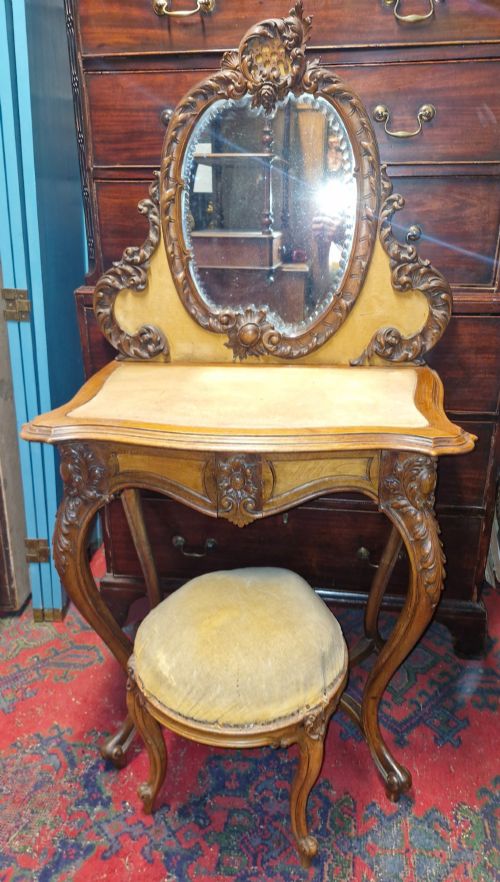
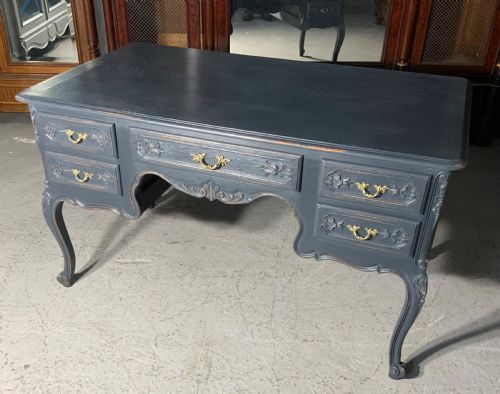
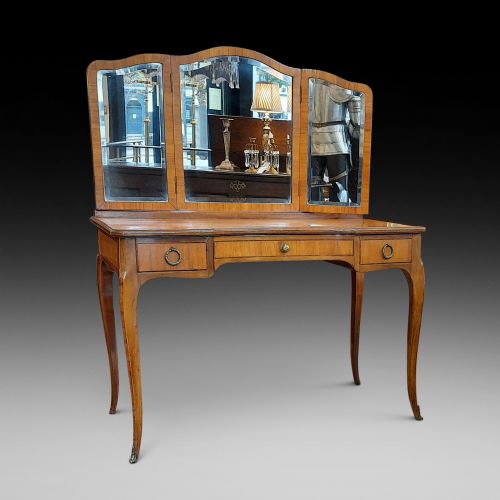
A rococo style vanity desk combines the function of a writing surface or dressing table with the exuberant, curved vocabulary of revival design. These pieces span the Victorian era into the early twentieth century, drawing heavily on French aesthetic traditions.
The forms on this page include dressing tables, writing desks, and vanity mirrors, often accompanied by matching stools or occasional chairs. Most examples lean towards French Rococo Revival or Louis XV Revival aesthetics, characterised by asymmetrical lines and delicate proportions.
Makers of these items utilised established revival periods, producing dressing tables and writing desks in walnut, burr walnut, oak, and mahogany. Buyers encounter forms ranging from kidney-shaped desks to pieces mounted with ormolu and porcelain.
Materials and construction
Craftsmen shaped these items using woods such as burr walnut, oak, mahogany, kingwood, and rosewood, often applying crossbanding to accentuate curved outlines. Brass mounts and ormolu add metallic contrast to the wooden carcases.
Carving provides the characteristic scroll arms and foliage motifs seen on frames, while paint and leather inserts finish writing surfaces and structural elements. Glass appears in associated vanity mirrors and dressing table attachments.
Several items come paired with matching stools or occasional chairs designed specifically to tuck beneath curved kneeholes.
Assessing quality in revival furniture
Quality reveals itself in the fluency of the carved woodwork and the depth of timber figure, particularly in burr walnut and crossbanded veneers. The integration of bronze or ormolu mounts and porcelain plaques separates standard production from finer cabinet work.
Structural integrity depends on how cleanly the curved legs and scroll arms join the main body of the desk or table. Refined proportions and the crispness of applied decorative details dictate the standing of an individual piece.
The Rococo Style Vanity Desk Glossary
- Ormolu
- Gilded bronze ornamentation applied to furniture mounts and decorative hardware. It provides a bright metallic accent against dark wood.
- Burr Walnut
- Timber taken from a walnut tree growth, showing intricate swirling grain patterns. Cabinet makers prized it for decorative veneering.
- Crossbanding
- A narrow strip of veneer laid perpendicular to the main grain along the edge of a surface. This technique frames the top of a desk or table.
- Bonheur du Jour
- A small light lady's writing desk featuring a tiered superstructure with shelves and drawers above the main writing surface. It originated in France.
Rococo Style Vanity Desk: Frequently Asked Questions
What is a rococo style vanity desk?
A rococo style vanity desk is a revival piece designed for writing or grooming, featuring the curving lines and ornate flourishes associated with eighteenth-century French design.
These items usually date from the Victorian period through the early twentieth century and employ woods like burr walnut, oak, and mahogany.
How do I date these desks?
Dating relies on timber selection, construction methods, and stylistic markers recorded across the Victorian era and the early twentieth century. Pieces from the nineteenth century often feature heavy walnut or mahogany carcases.
Later items into the nineteen-twenties and thirties display modified French revival characteristics, sometimes incorporating painted finishes or oak.
Where were these pieces used?
These items belonged in private chambers, boudoirs, and withdrawing rooms where personal correspondence and grooming took place. Their decorative forms suited domestic interiors influenced by French taste.
Matching chairs and mirrors often accompanied the primary table to form a cohesive dressing area.
How do I care for wood and ormolu?
Maintenance involves keeping wooden surfaces away from direct heat sources and moisture to protect veneers like burr walnut and kingwood. Gentle dusting preserves the finish without damaging delicate carvings.
Ormolu mounts require soft cloths to avoid scratching the gilded bronze detailing.