


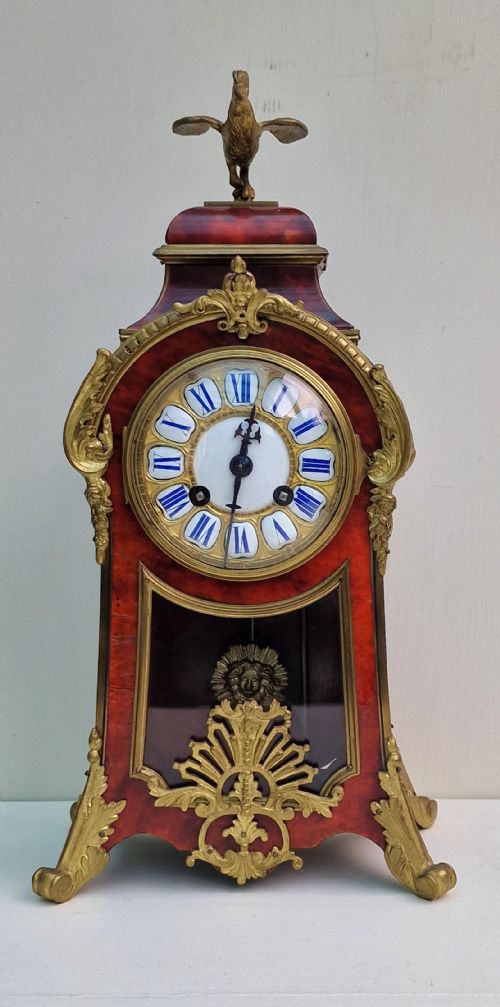


Rococo Style Pendulum Clock
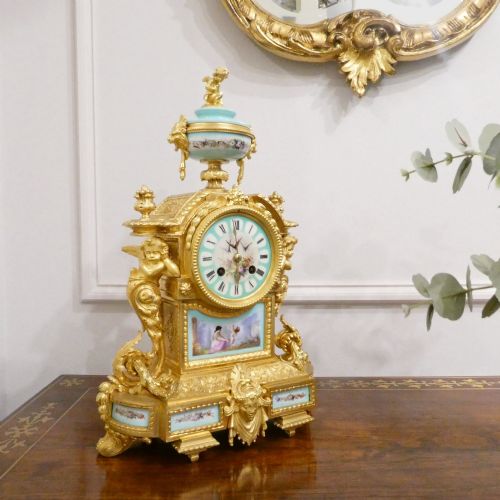
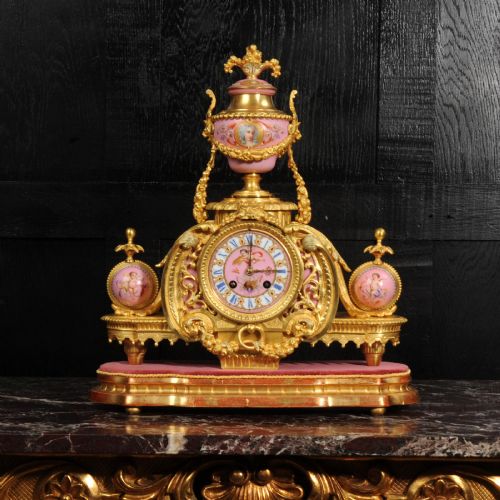
A rococo style pendulum clock brings asymmetrical gilt bronze curves and porcelain dials into an interior.
Rococo Style Pendulum Clock
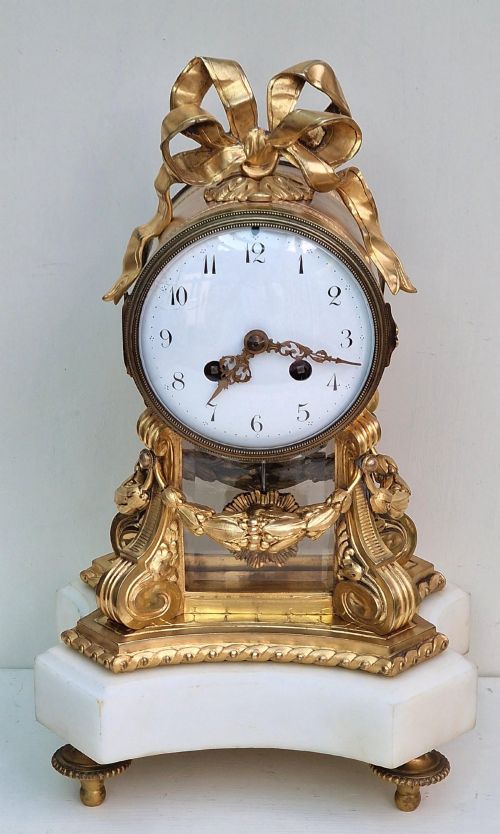
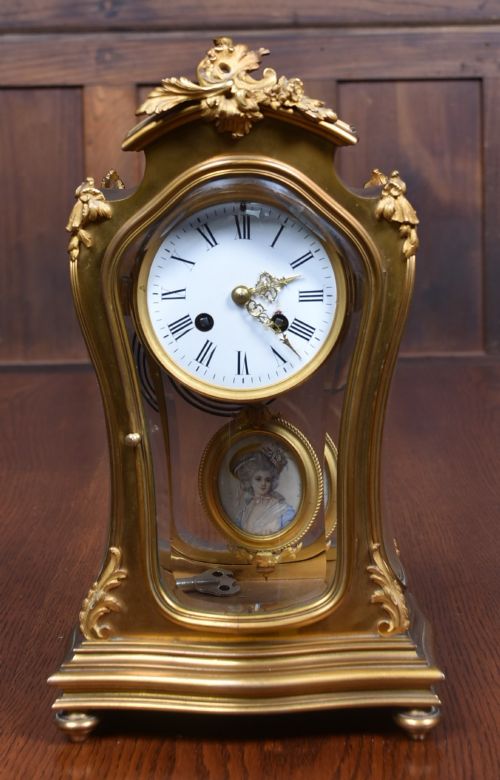
A rococo style pendulum clock is typically a French mantel or wall timepiece from the nineteenth century, housing an eight-day movement behind an ornamental case. You will most frequently encounter gilt bronze, ormolu, and brass examples exhibiting the exuberant scrolls and naturalistic motifs characteristic of the revival periods.
The selection ranges from substantial mantel pieces featuring marble and enamel to wall-hung cartel clocks and larger grandfather or longcase formats. Makers such as Achille Brocot, Japy Frères, and Samuel Marti signed movements that sit within these decorative housings.
Materials and construction
Casings combine cast gilt bronze, ormolu, and brass, frequently mounted with Sèvres porcelain panels, white marble, or tortoiseshell inlaid with cut brass in the manner of Boulle. Gilding techniques applied to the bronze create the bright metallic surfaces that define the style.
Dials are typically constructed from enamel on copper with painted numerals, protected behind glass bezels and powered by pendulum-regulated mechanical movements housed inside the heavy metal and stone structures.
What separates the tiers
The distinction lies in the crispness of the bronze casting and the depth of the chasing, where superior examples exhibit sharp, undercut foliage and scrolls rather than soft, rounded edges. The presence of a signed movement by a known maker elevates the piece above anonymous workshop production.
Material selection also dictates standing, with genuine tortoiseshell inlay, high-grade marble bases, and hand-painted porcelain plaques representing more ambitious manufacturing than plain gilt metal housings.
Achille Brocot·Japy Frères·Samuel Marti·Le Roy et Fils
The Rococo Style Pendulum Clock Glossary
- Ormolu
- Gilded bronze produced by applying a mercury-gilt amalgam to cast bronze. This finish gives the metal its characteristic warm, golden lustre.
- Cartel clock
- A wall-mounted clock featuring an ornate frame matching the materials of the dial surround. These pieces hang directly from wall fixings.
- Boulle
- A marquetry technique using tortoiseshell and brass inlay developed in France. It appears on sophisticated clock cases from the period.
- Enamel
- Fused glass powder applied to metal dial plates and fired at high temperatures. It provides a smooth, white background for painted clock numerals.
Rococo Style Pendulum Clock: Frequently Asked Questions
How do I wind the clock?
Most of these mechanical clocks require a winding key inserted into the dial holes to tension the springs every eight days. Care must be taken not to overwind the movement.
Regulating the pendulum via the small square nut on the suspension spring ensures the timekeeping remains accurate.
Where should I place a cartel clock?
Cartel wall clocks require a secure fixing point directly into masonry or wall studs to support the substantial weight of the bronze and brass case. Hanging them at eye level allows the detailed casting to be appreciated.
Avoid placing them on damp walls or in direct sunlight that could discolour delicate tortoiseshell panels.
How do I identify a Louis XV style case?
Louis XV style cases feature asymmetrical C-scrolls, floral garlands, and naturalistic shell motifs without the rigid symmetry found in earlier periods. The bronze mounts curve organically around marble or porcelain bodies.
Movement backplates often bear the stamp of nineteenth-century French makers who revived these eighteenth-century aesthetics.
What maintenance do the movements need?
Mechanical pendulum movements benefit from professional cleaning and lubrication every few years to prevent wear on the brass gear trains. Keeping the clock level on its mantel or wall bracket ensures the pendulum swings evenly.
Moving the clock requires securing or removing the pendulum bob to avoid damaging the suspension spring.