




Rococo Style Bronze Putti
These rococo style bronze putti bring animated charm and classic French revival character to any mantelpiece or table.
Rococo Style Bronze Putti
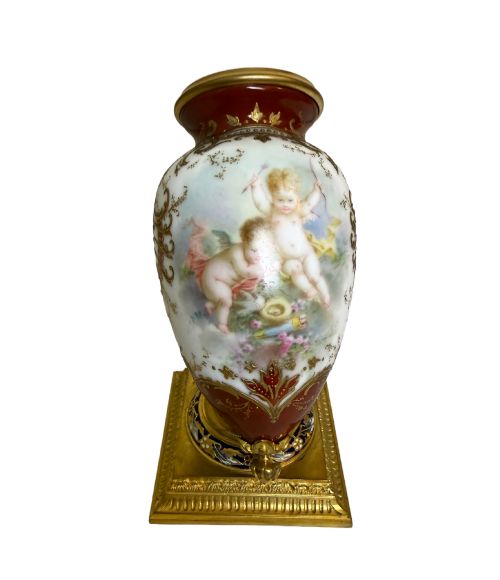
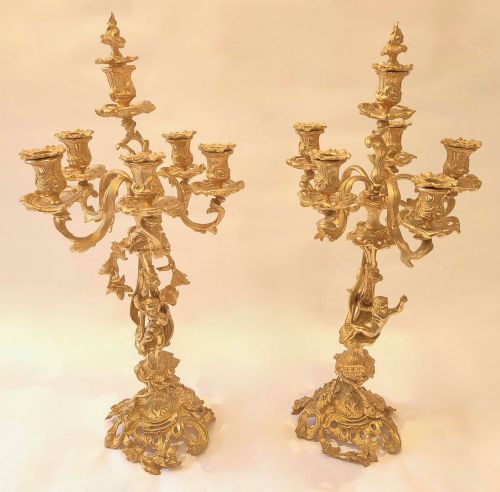
When you search for rococo style bronze putti, you encounter decorative objects populated by winged infant figures derived from classical mythology. These pieces take the form of mantel clocks, candelabra, table lamps, wall sconces and chenets created during the nineteenth and early twentieth centuries. The aesthetic draws heavily on French Rococo Revival and Louis XV design principles, emphasising asymmetry, scrollwork and organic movement.
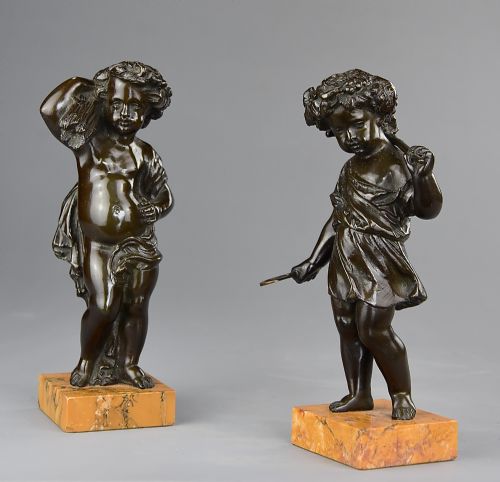
The versions most commonly met on this page are pairs of cast bronze figures mounted on marble bases, or integrated into functional items such as lamps and clock cases. Many pieces lean into themes of harvest or allegorical play, reflecting the enduring popularity of models after sculptors like Clodion. They function as sculptural accents that anchor a room with period detail.
Materials and Construction Techniques
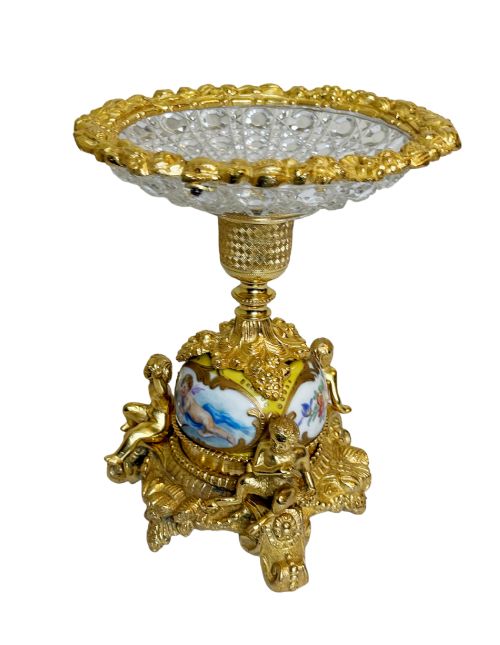
The foundational material across these listings is bronze, frequently paired with ormolu, which involves applying a fine layer of gold amalgam to the bronze surface for a rich, luminous finish. Workshops also utilised gilt metal and brass to achieve similar decorative effects on light fittings and hardware. Marble serves as a heavy, stable plinth for many candelabra and figural lamp bases, providing a contrasting texture to the cast metal.
Listings demonstrate a strong concentration of nineteenth-century French Rococo Revival pieces, incorporating materials such as Sevres porcelain and white marble.
Distinctions in Quality and Execution
The distinction between ordinary and exceptional examples lies primarily in the crispness of the chasing and the depth of the casting. Superior pieces retain sharp definition in the feathers, hair and facial expressions of the putti, whereas lesser castings appear soft and blurred from worn moulds. The weight and thickness of the bronze also signal grade, with finer items offering a substantial feel and carefully finished backs or undersides.
Integration of materials dictates upper-tier status. Better clocks and candelabra feature well-fitted marble mounts without excessive gaps, alongside high-grade fire-gilding that retains its warm, metallic lustre rather than flat modern paint. The presence of signed movements or maker signatures further elevates an object through documented provenance.
Leon Message·Jollet et Cie·Phillipe H. Mourey·John Bennett Cheapside London·Japy Freres
The Rococo Style Bronze Putti Glossary
- Ormolu
- Gilt bronze produced by applying a mercury-gilding mixture to cast bronze before firing, creating a durable golden surface. This technique was widely practiced by French metalworkers during the eighteenth and nineteenth centuries.
- Putti
- Plural of putto, representing plump, winged infant figures derived from classical art. They appear frequently in Renaissance and Rococo design as playful attendants.
- Chenet
- A French term for firedogs or fireplace irons placed inside a hearth to support logs. Elaborate revival examples often feature cast putti or rococo scrollwork on the visible front feet.
- Cartel clock
- A wall-mounted clock housed in an ornate, asymmetrical frame made of gilt bronze or ormolu. These pieces became prominent decorative elements in French domestic interiors during the rococo period.
- Candelabra
- Branched lighting fixtures designed to hold multiple candles upright. In nineteenth-century revival pieces, these branches frequently emerge from sculptural groups of cherubs or putti.
Rococo Style Bronze Putti: Frequently Asked Questions
What is the difference between ormolu and gilt bronze?
Ormolu specifically refers to historic pieces finished with a mercury-gilding process that fuses gold to a bronze substrate. Gilt bronze is a broader term that can encompass various methods of applying gold colour to a bronze base.
In practical terms, genuine ormolu exhibits a distinctive matte and burnished golden lustre that resists tarnishing differently than modern electroplating. Both terms are often used interchangeably in antique markets to describe gilded metalwork.
How do I care for antique bronze putti?
Maintenance requires only gentle dusting with a soft, dry brush to prevent dirt accumulation in the crevices of the casting. Avoid liquid cleaners, chemical polishes or abrasive cloths, which can strip away historic gilding and patination.
If the piece incorporates marble bases, wipe them carefully with a damp cloth and dry immediately. Keeping objects away from direct heat sources and excessive moisture preserves the integrity of both the metal and any underlying joins.
Were these pieces originally wired for electricity?
Most figural lamps and chandeliers listed here began life as oil lamps, gas fixtures, or purely decorative sculptural objects before later conversion. Converting bronze cherub statuettes into table lamps was a common practice during the twentieth century to suit modern domestic lighting needs.
Buyers should examine the wiring and fittings to ensure they meet current safety standards, as many conversions date back several decades. Original non-electrified items such as candelabra retain their initial configuration.
How do I identify a nineteenth-century French reproduction?
Nineteenth-century French revival pieces display hand-chased surface details, heavy sand-cast bronze construction, and patination consistent with age. Look for construction clues such as threaded bolts, hand-cut screws, and genuine wear patterns on high-touch surfaces.
Examining the underside of marble bases and the interior mechanics of clock movements often reveals the assembly methods characteristic of the period. Maker marks or stamps on the bronze can also confirm origin.