


Rococo Study Desk
A rococo study desk brings sweeping curves and gilt mounts to a room, offering a functional workspace rooted in eighteenth-century French taste.
Rococo Study Desk
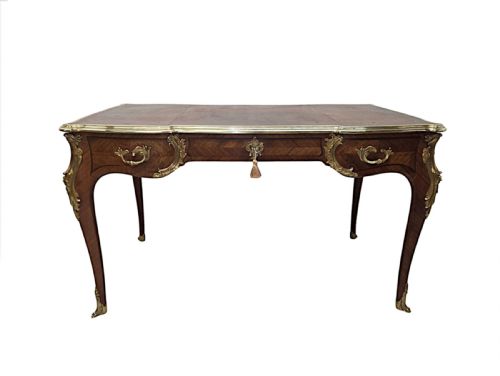
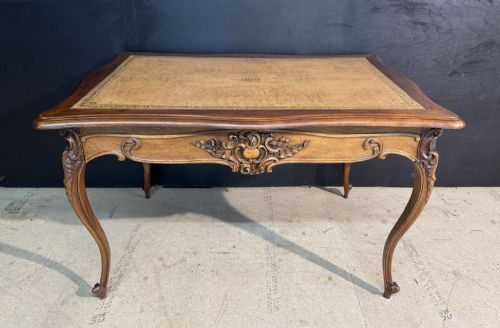
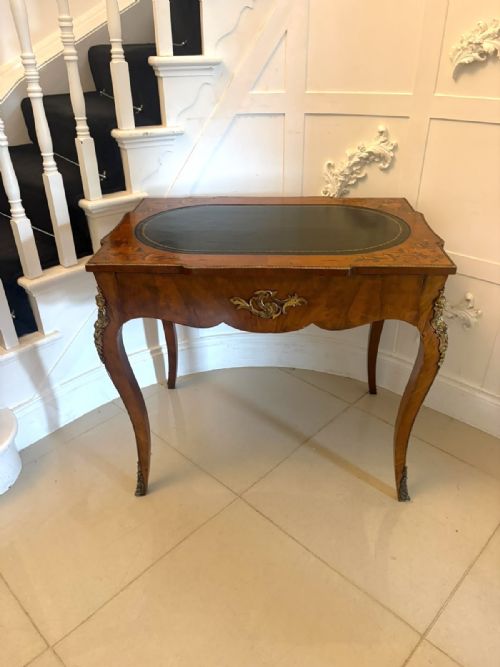
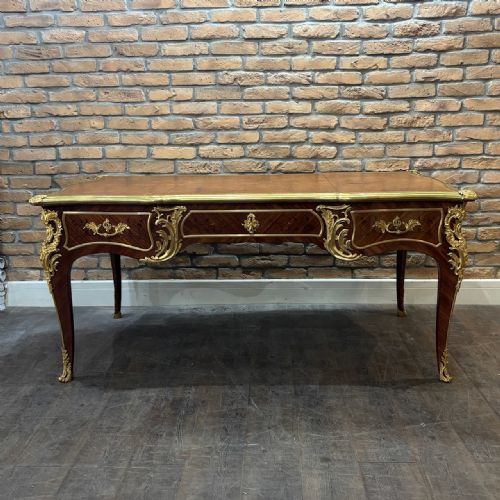
When you search for a rococo study desk, you find freestanding writing tables, bureau plat forms, and serpentine fronted desks designed with signature asymmetrical flourishes. These writing surfaces emerge predominantly from nineteenth century revivals of earlier French styles, alongside Victorian interpretations and Dutch marquetry pieces.
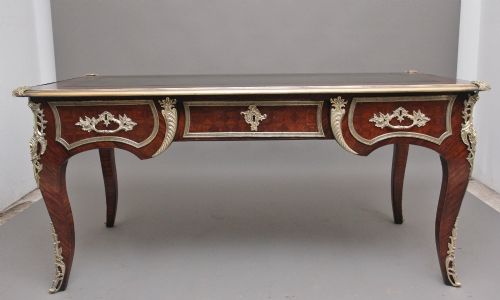
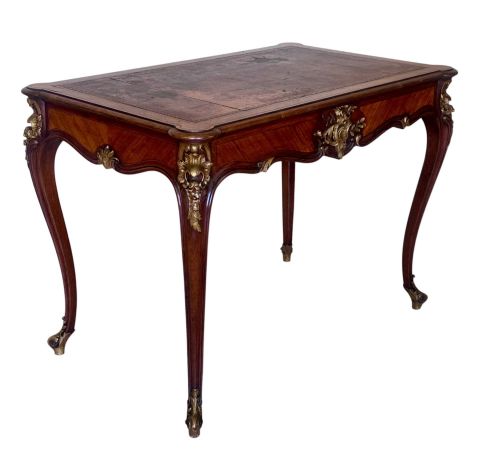
The version you are most likely to meet on this page is the nineteenth century bureau plat, executed in kingwood or walnut and mounted with ormolu. These writing tables offer leather inset tops and cabriole legs that embody the Louis XV aesthetic without dominating a modern interior entirely.
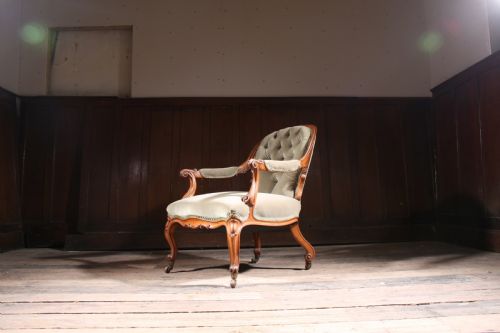
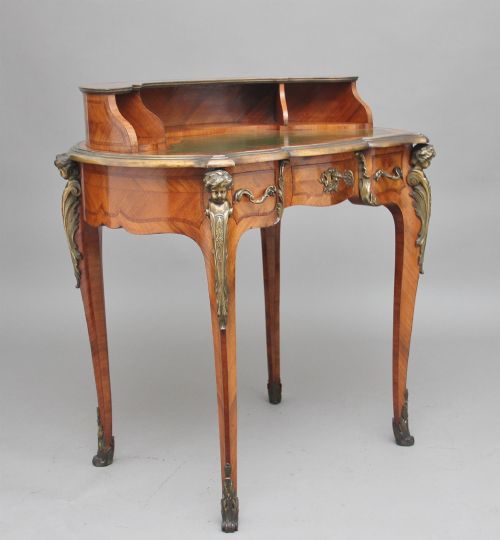
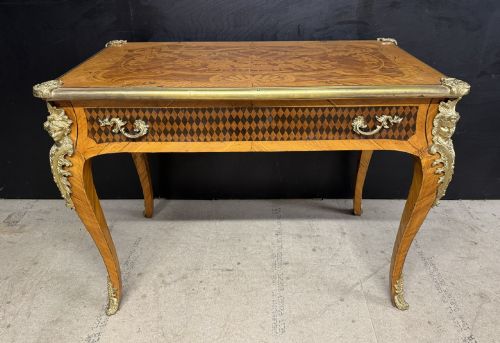
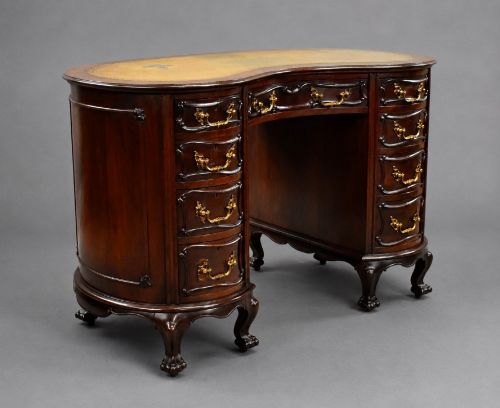
Beyond the standard bureau plat, the selection includes kidney shaped desks, inlaid writing tables, and occasional matching desk chairs. These objects span periods from the eighteenth century up through the Edwardian era and the twentieth century.
Materials and construction
Cabinet makers utilised choice timbers such as kingwood, walnut, mahogany, rosewood, satinwood, and calamander as bases for intricate marquetry and veneer work. Surfaces often feature detailed floral or geometric inlay paired with contrasting grain patterns.
Cast and chased ormolu or gilt bronze mounts highlight the structural contours, framing drawers, edging leather tops, and accentuating cabriole legs. These metal fittings require precise casting to fit the complex serpentine and kidney shapes of the timber carcases.
Materials documented across the inventory include leather, ormolu, kingwood, brass, mahogany, gilt bronze, walnut, and rosewood.
Distinctions in quality
The refinement of the ormolu mounts and the crispness of the chasing separate standard production pieces from workshop examples attributed to notable makers like Maison Millet or CH. Jeanselme. Superior pieces display finely articulated cast bronze details that integrate cleanly with the surrounding woodwork.
The complexity and execution of the marquetry inlay determine the tier of the piece, with dense floral patterns set into exotic woods marking higher craftsmanship. Structural integrity in the serpentine curves and the quality of the original leather writing surface further distinguish the better examples.
CH. Jeanselme & Co·Maison Millet
The Rococo Study Desk Glossary
- Bureau plat
- A freestanding writing table, typically featuring drawers in the frieze and a leather inset top. This form serves as the primary shape for French revival writing furniture.
- Ormolu
- Gilt bronze mounts applied to furniture edges and legs for decorative effect. The metal is cast and then finished with gold or mercury gilding.
- Marquetry
- Decorative veneer work arranged in pictorial or geometric patterns using various coloured woods. Craftsmen cut these segments precisely to fit flush across the desk surface.
- Cabriole leg
- A furniture leg that curves outward and then tapers inward, mimicking animal limbs. This silhouette defines the rococo revival aesthetic seen on these writing tables.
- Serpentine front
- A furniture front characterised by a wavy contour with a convex centre flanked by concave curves. This shape requires advanced woodworking skill to execute properly in solid timber or veneer.
Rococo Study Desk: Frequently Asked Questions
What is a bureau plat?
A bureau plat is a formal freestanding writing table designed to sit in the centre of a room rather than against a wall. It typically includes one or more drawers beneath the writing surface and stands on cabriole legs.
The top is frequently lined with tooled leather, providing a smooth surface for correspondence and paperwork. These tables gained popularity during the reign of Louis XV and were revived extensively in the nineteenth century.
How do I identify a revival piece?
Nineteenth-century revival pieces often utilise machine-cut veneers, standardised ormolu casting techniques, and construction methods distinct from eighteenth-century originals. Timber selection and secondary woods inside the drawers also point towards later European workshops.
Examining the wear patterns on the bronze mounts and the underside of the desk helps clarify the exact manufacturing period. Most examples encountered in trade date from the Victorian era and the late nineteenth century.
Were these desks used for writing?
These tables served as primary workstations for correspondence, estate management, and administrative duties in period homes. Their freestanding nature allowed writers to place them wherever natural light fell best.
While decorative, their generous proportions and integrated drawers ensured they remained functional pieces of furniture rather than purely ornamental objects.
How do I care for leather top desks?
Leather writing surfaces require regular dusting and occasional treatment with neutral leather balms to prevent drying and cracking. Avoiding direct sunlight helps preserve the colour and tooling of the hide.
Spills should be blotted immediately with a dry cloth to protect both the leather and the underlying timber carcase from moisture damage.