

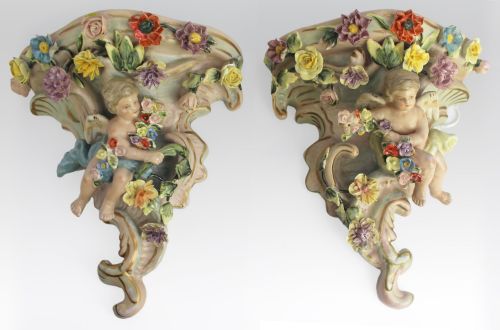
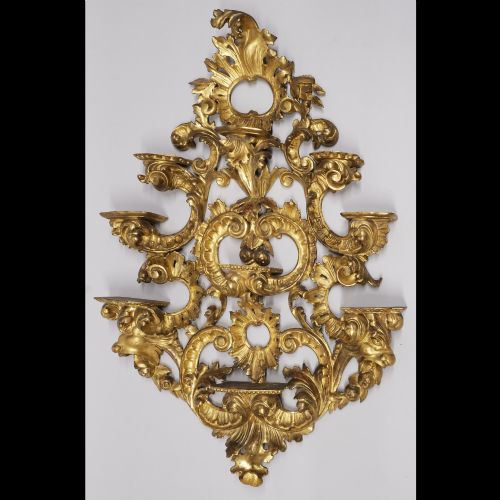


Rococo Revival Wall Brackets
Rococo revival wall brackets bring asymmetrical scrollwork and ornate display ledges to interiors, prized for their sculptural presence.
Rococo Revival Wall Brackets
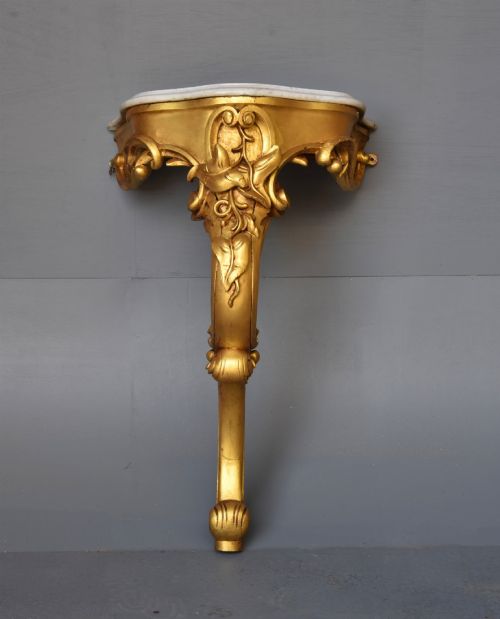
Rococo revival wall brackets encompass ornate display ledges, console tables, and corbels rooted in nineteenth-century interpretations of French decorative arts. These items span Victorian, Edwardian, and early twentieth-century periods, including pieces dated to eighteen-sixty, eighteen-seventy, and nineteen-twenty.
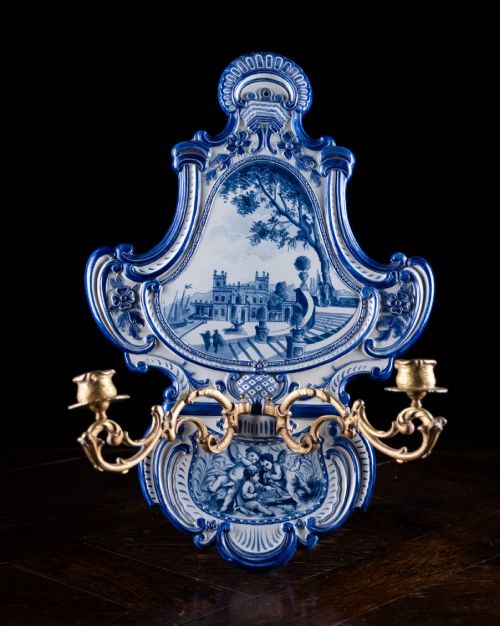
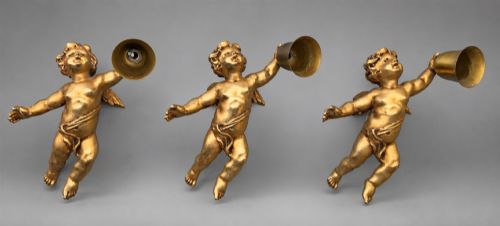
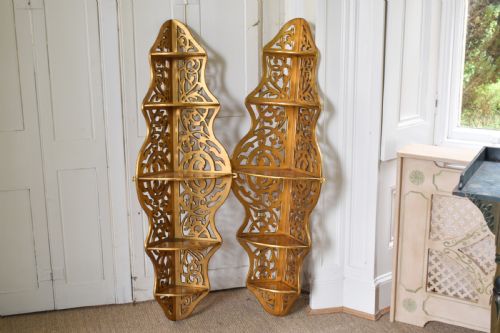
Buyers frequently encounter carved giltwood examples alongside porcelain and ormolu variants on this page. Formats range from corner shelves and wall lights to single candle sconces and console mirrors with shelves underneath.
The objects serve as functional ledges for ornaments or as integrated lighting mounts, drawing heavily upon French rococo and Louis revival design vocabularies. Their origins stretch across Victorian workshops and continental European production.
How they were made
Giltwood and gesso form the structural base for many carved wooden examples, utilising surface gilding to achieve a reflective metallic finish. Carvers shaped timber and applied plaster layers before adding gold leaf to highlight the C-scrolls and foliage characteristic of the style.
Porcelain and enamel components appear in combination with ormolu mounts, pairing ceramic bodies with cast gilt-bronze frameworks. Brass and mirror glass also feature in lighting fixtures and console mirrors, combining reflective surfaces with structural metalwork.
Rococo Revival Wall Brackets Retail Price Guide 2026
Typical asking prices for rococo revival wall brackets among the pieces listed under this phrase on Sellingantiques today, from the lower quarter to the upper quarter. They describe what is for sale here now, not the wider market.
Listings feature items spanning the Victorian, Edwardian, and early twentieth-century periods, utilising giltwood, porcelain, ormolu, and marble.
What varies in quality
The refinement of the carving distinguishes high-end giltwood brackets from simpler alternatives, particularly in the depth and undercut of the scrollwork. Crisp detail in the execution of foliage and asymmetrical motifs indicates superior craftsmanship.
Material combination also drives distinction, such as the integration of finely modelled porcelain figures or hand-painted ceramic elements with cast ormolu. The weight and finish of the gilding and metal mounts create notable differences across the range.
The Rococo Revival Wall Brackets Glossary
- Giltwood
- Wood that has been coated with gold leaf or powder over a preparation of gesso. This finish provides a bright metallic sheen that catches interior light.
- Ormolu
- Cast bronze that has been mercury gilded to produce a rich gold-coloured surface. It appears frequently in mounts and wall lights.
- Gesso
- A plaster mixture applied to wood surfaces as a smooth base for gilding. It allows carvers to build up crisp decorative details.
- Corbel
- A structural or decorative bracket projecting from a wall to support a weight. In this context, it functions as a display shelf.
- Pier glass
- A tall mirror designed to hang on the wall between windows, often incorporating a small console or shelf underneath.
Rococo Revival Wall Brackets: Frequently Asked Questions
How were rococo revival wall brackets used?
These brackets served primarily as ornamental ledges for displaying small porcelain figures, clocks, or vases on interior walls. Many versions also incorporated candle branches or light fittings to illuminate rooms.
Positioned above console tables or flanking mirrors, they added sculptural depth and utility to nineteenth-century domestic spaces without occupying floor area.
What materials make up these pieces?
Makers utilised a variety of materials including carved giltwood, gesso, porcelain, ormolu, and mirror glass. Wooden brackets typically feature applied gold leaf over a prepared plaster ground.
Examples incorporating ceramic elements often combine blue and white porcelain or enamel with cast ormolu mounts and brass frames.
How do I date a wall bracket?
Dating relies on observing stylistic markers, material combinations, and construction methods characteristic of Victorian, Edwardian, or early twentieth-century production. Pieces explicitly marked with dates or associated with specific revival phases offer clear chronological reference points.
Stylistic shifts between mid-nineteenth-century carved giltwood and later nineteen-twenty painted designs help establish the timeline of individual items.
How do I live with these brackets?
Mounting these pieces securely to a solid wall is essential due to the weight of carved wood, marble tops, or porcelain components. They function effectively in hallways, living rooms, or dining spaces as focal display points.
Pairing them with appropriate objects of the same scale helps balance their decorative ornamentation within a room.