



Rococo Revival Plates
Rococo revival plates bring high-relief scrollwork and asymmetrical moulding into domestic interiors through porcelain and ceramic service forms.
Rococo Revival Plates
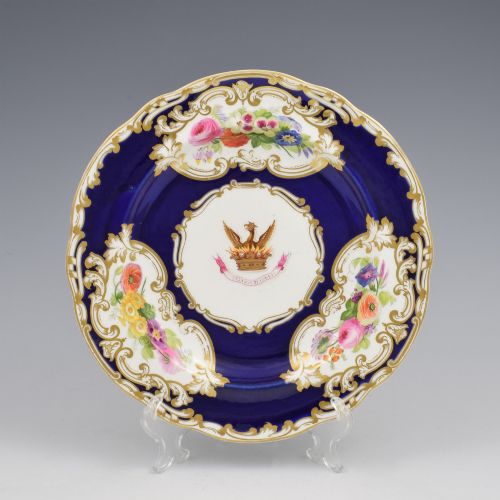
When you search for rococo revival plates, you encounter decorative plates and cabinet plates produced across the nineteenth and early twentieth centuries in porcelain, bone china, and hard-paste porcelain. The examples found here span diverse periods including the Victorian era, Edwardian period, and Georgian eras, reflecting sustained interest in eighteenth-century continental design.
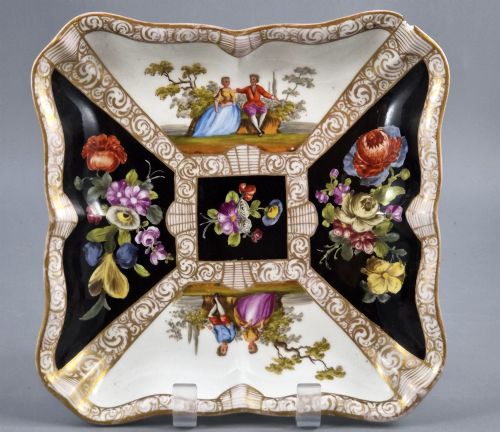
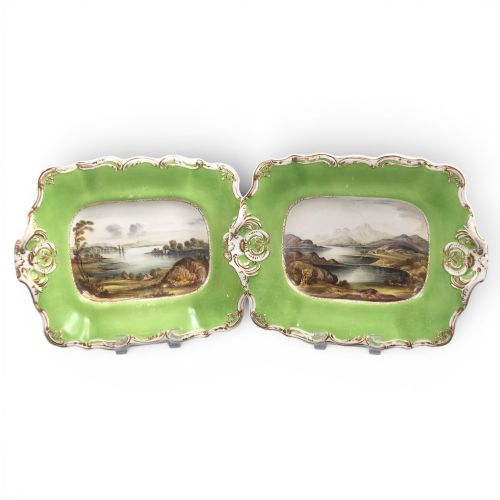
The objects include individual cabinet plates and components from larger dessert services, often bearing hand-painted scenes or armorial crests. Manufacturers from English and continental potteries utilise classical shapes combined with extravagant scrollwork borders typical of the style.
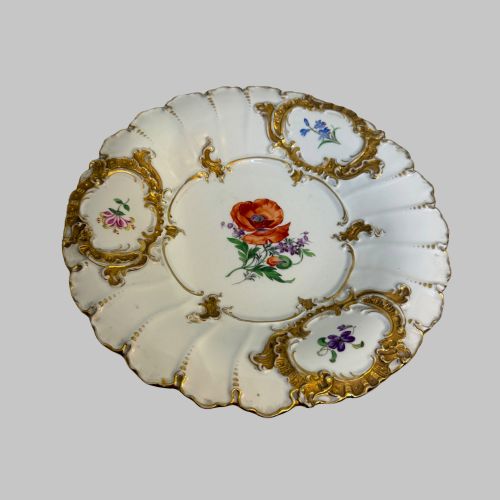
Most items on this page emerge from nineteenth-century production centres, displaying the characteristic C-scrolls, floral motifs, and gilt highlights associated with revivalist taste. These ceramic pieces functioned primarily for display within cabinet collections or formal dining rooms rather than daily service.
What varies in quality
The standard of painting on the ceramic surface determines much of the distinction between individual cabinet plates. Precise brushwork in hand-painted figural scenes or botanical subjects separates factory masterworks from simpler production pieces.
The preservation of the gold leaf and enamel colours against the porcelain body indicates how carefully a plate has been stored and handled. Crispness in the moulded relief work around the rim also signals the quality of the original ceramic moulds used during manufacture.
Makers represented include Meissen, Copeland, John Ridgway, and Royal Worcester, alongside unmarked continental pieces.
Meissen Porcelain·Copeland and Garrett·Royal Worcester·John Ridgway·Helena Wolfsohn
The Rococo Revival Plates Glossary
- Cabinet plate
- A decorative ceramic plate intended for display in a cabinet or on a wall rather than for dining use. These pieces often feature elaborate hand-painted decoration and gilt borders.
- Hard-paste porcelain
- A durable ceramic composition fired at high temperatures, composed of kaolin and petuntse. It provides a crisp white body that accepts detailed enamel painting.
- Bone china
- A type of soft-paste porcelain incorporating animal bone ash, developed in England to create a translucent and strong ceramic body suitable for intricate moulding.
- Armorial
- A term describing ceramics decorated with a family crest, coat of arms, or heraldic insignia. Commissioned pieces often feature these specific family markers.
- Enamel
- Vitreous coloured glass fused to the ceramic surface during firing. It supplies the vibrant blues, pinks, and greens found on decorative plates.
Rococo Revival Plates: Frequently Asked Questions
Were rococo revival plates used for dining?
Most surviving examples functioned as cabinet plates or formed part of specialised dessert services meant for display. Their intricate moulded borders and delicate gilding made them unsuited for everyday meals.
Wealthy households kept such ceramics in glass-fronted cabinets or brought them out for formal dessert courses where visual presentation outweighed utility.
How do I identify a nineteenth-century plate?
Examine the ceramic body, glaze consistency, and any factory marks stamped or painted on the reverse. Nineteenth-century pieces often combine moulded C-scroll borders with transfer-printed outlines finished by hand.
Stylistic markers like heavy gilding and asymmetrical cartouches point directly to Victorian and Edwardian interpretations of earlier eighteenth-century designs.
What is the difference between porcelain and bone china?
Hard-paste porcelain contains natural minerals fired at extremely high heat, resulting in a dense, vitreous body. Bone china includes calcined bone ash, which lowers the firing temperature and yields a slightly warmer, translucent finish.
Both materials accepted the elaborate enamelling and gilding demanded by nineteenth-century revivalist aesthetics.
How should I display cabinet plates safely?
Use specialised wall hangers or plate stands lined with protective material to prevent scratching the glaze and gilt rim. Ensure the display location avoids direct sunlight and sudden temperature fluctuations.
Secure mounting is particularly important for plates with heavy relief moulding, as the weight distribution differs from flat tableware.