


Rococo Revival Ceramic Vase
A rococo revival ceramic vase brings fluid asymmetry and lavish gilding into a room, offering the ornamental excess that nineteenth-century interiors prized.
Rococo Revival Ceramic Vase
When you search for a rococo revival ceramic vase, you encounter a distinct category of nineteenth-century decorative vessels designed to echo the theatrical curves of eighteenth-century court art. These pieces draw on French and English traditions, spanning everything from intimate cabinet pieces to substantial palace-scale ornaments.
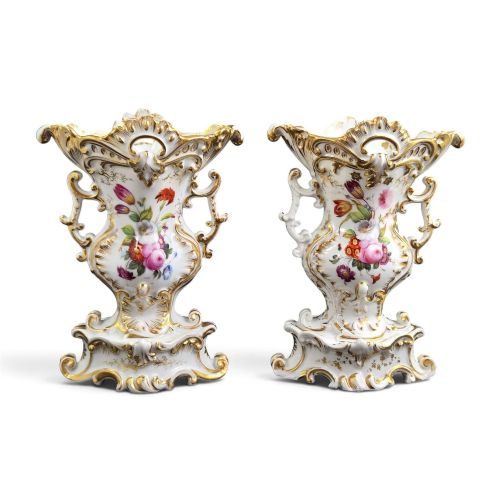
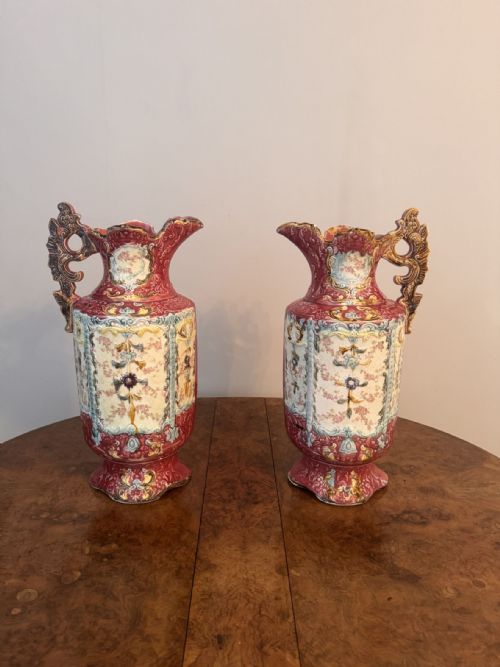
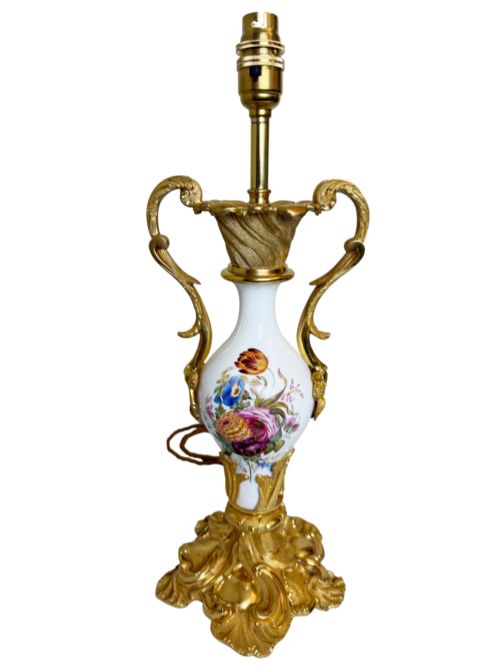
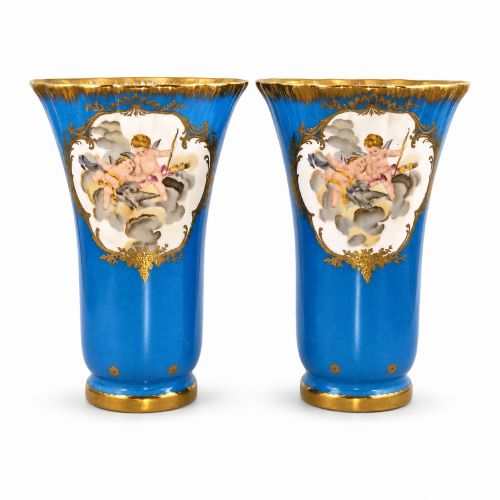
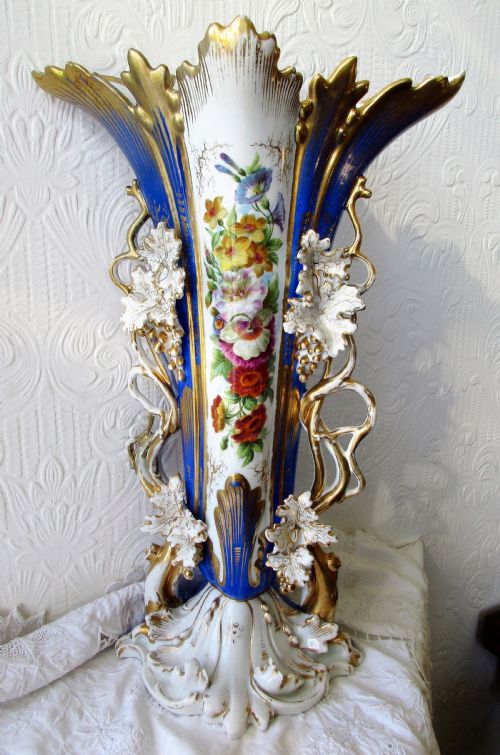
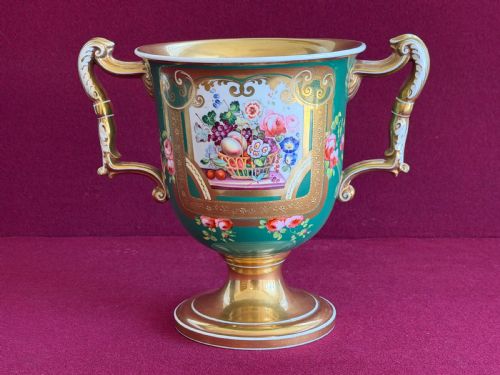
The objects appearing on this page take various forms, including lidded urns, decorative ewers, loving cups, and even table lamps or pilgrim flasks. The most frequent iteration is the porcelain vase or pair of vases, often painted with floral scenes or classical figures and accented with gilt bronze, ormolu, or gold leaf.
How they were made
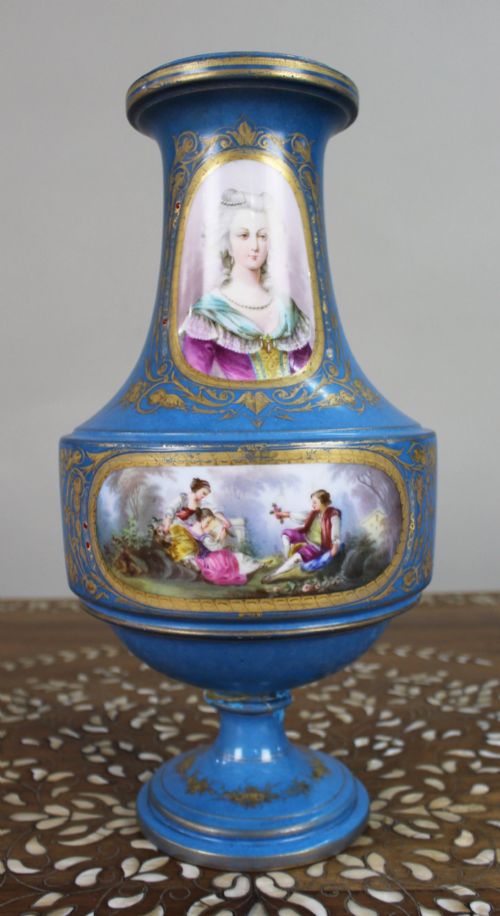
Potters shaped these vessels using fine porcelain or bisque clay, frequently building complex, multi-part forms such as lidded ginger jars and double-handled ewers. Artisans applied rich glazes, ranging from deep blue grounds to white enamel relief work, before hand-painting subjects like Watteau-style gallant scenes.
Makers integrated metalwork directly into the design, mounting porcelain bodies on gilt bronze and ormolu bases or fitting them with cast brass handles. Gold leaf and hand-applied gilding highlight the swirling C-scrolls and asymmetrical cartouches characteristic of the revival style.
Listings feature porcelain, gilt bronze, and ormolu across styles spanning French Rococo, Victorian, and Regency periods.
What varies in quality
The upper tier of these pieces reveals itself in the crispness of the porcelain moulding and the precision of the hand-painted details. Workshops employing master artists achieved subtle gradations in floral motifs and figures, whereas standard production pieces relied on simpler stencilled or hastily brushed patterns.
Mounting and gilding further separate standard wares from exceptional examples. Heavy, finely chased gilt bronze mounts and thick applications of gold leaf indicate substantial manufacture, while lighter brass fittings and thin, rubbed gilding point to more commercial output.
Jacob Petit·Samson Paris·H and R Daniel·Samuel Alcock·Helena Wolfsohn·Vion et Baury·Sitzendorf·Coalport
The Rococo Revival Ceramic Vase Glossary
- Bleu céleste
- A bright sky-blue porcelain ground colour popularized by Sèvres and widely adopted by nineteenth-century revival makers. This distinctive hue forms the backdrop for many hand-painted floral panels.
- Ormolu
- Gilded bronze used for mounts, handles, and bases on decorative ceramics. It provides a warm metallic contrast to glazed porcelain bodies.
- Bisque
- Unglazed porcelain with a matte, marble-like texture. It allows sculptural details and relief work to show without the distraction of a shiny finish.
- Potpourri
- A vessel featuring a pierced or perforated lid designed to hold scented dried plant material. These jars combine ornamental painting with functional fragrance diffusion.
- Ewer
- A large jug with a wide spout and elaborate handle, shaped after historical water vessels. In nineteenth-century ceramics, it served purely as a decorative display piece.
Rococo Revival Ceramic Vase: Frequently Asked Questions
What periods do these vases come from?
The pieces span the nineteenth and early twentieth centuries, capturing the height of nineteenth-century historicism and revival aesthetics.
Dates across the listings cluster primarily around the middle and late decades of the eighteen-hundreds, alongside a few early twentieth-century examples.
How were these vases originally used?
These vessels served as formal garnitures and decorative centerpieces in grand nineteenth-century drawing rooms and parlours. Some variations, such as potpourri jars, were also filled with dried scented petals to perfume the air.
Others functioned purely as sculptural displays on mantelpieces, often arranged in matching pairs alongside matching clocks or candelabra.
Are these pieces French or English?
The selection includes both French and English origins, alongside notable German manufactories producing pieces in imitation of French styles. Paris workshops and English potteries alike drew heavily on Sèvres and Meissen aesthetics.
Maker marks and stylistic traits help distinguish between Paris porcelain, English factories like Coalport, and continental houses like Dresden.
How do I style a ceramic vase at home?
These decorative vessels make strong focal points on sideboards, mantels, or dedicated display tables. Because many survive as pairs, they work well framing a mirror or large artwork.
Allowing adequate surrounding space lets the intricate gilding and painted scenes catch the light without competing with other items.