


Rococo Revival Candleholders
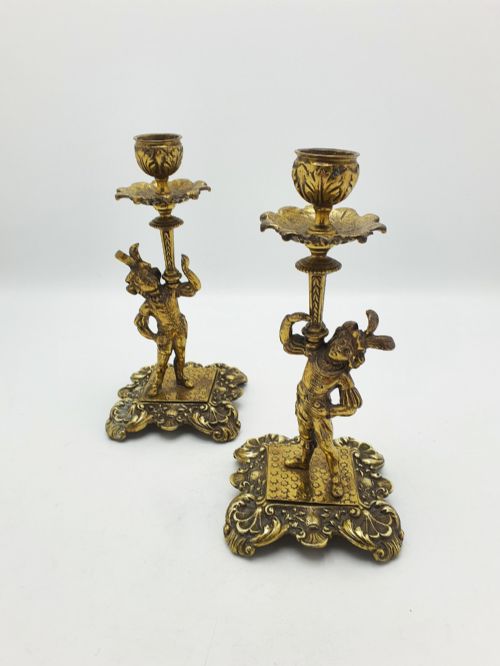
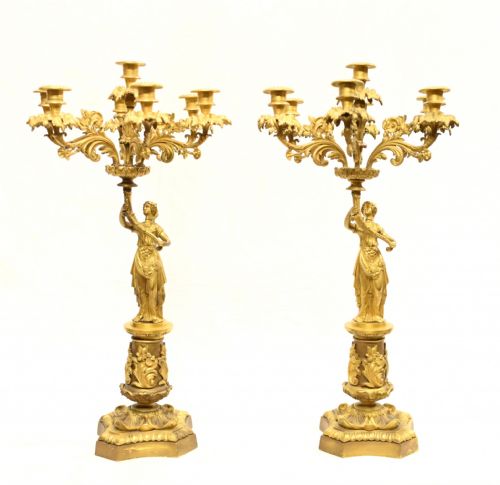
These rococo revival candleholders bring exuberant nineteenth-century curves, asymmetric scrollwork and figural charm to a mantelpiece.
Rococo Revival Candleholders
When you search for rococo revival candleholders, you are looking at nineteenth-century lighting accessories modelled with the lively, flowing asymmetrical curves characteristic of the eighteenth-century movement. These pieces range from single-branch candlesticks to multi-arm candelabras featuring figures such as cherubs, maidens and gardeners.
The versions you are most likely to meet on this page date predominantly from the nineteenth century, including specific decades from the eighteen-sixties to nineteen-hundred. They appear in forms spanning simple brass sticks to elaborate porcelain figural groups with floral bases.
How they were made
These items were constructed using metal casting and ceramic production methods typical of the nineteenth century. Ormolu, bronze and brass components were cast and frequently gilt or silver-plated, while porcelain elements were hand-modelled and painted, often incorporating floral encrustations.
Many examples combine materials, mounting bronze or gilt metal figures and branches onto marble bases. The integration of different mediums requires precise joining techniques to support multi-branch candelabra structures securely.
Listings feature materials including porcelain, gilt bronze, ormolu, marble, enamel, gold leaf and brass across the nineteenth century.
What varies in quality
The quality of the materials and finish also creates distinction, particularly in the depth of the gilt bronze or ormolu and the finesse of the hand-painted porcelain. Heavier, more stable mounting on materials like marble indicates a sturdier build.
Minton·Meissen·Sitzendorf
The Rococo Revival Candleholders Glossary
- Ormolu
- Gilded bronze, often mercury-gilded, used extensively for decorative mounts and metalwork on nineteenth-century pieces. It provides a bright, lasting golden finish.
- Candelabra
- A branched candlestick holding multiple lights. These often feature two, three or four arms.
- Go-to-bed
- A small pocket or bedroom candlestick designed for carrying safely to a sleeping quarter. They frequently feature a ring handle.
- Rococo Revival
- A nineteenth-century design style reviving the asymmetrical scrolls, shell motifs and organic curves of the mid-eighteenth century. It dominated much of the Victorian decorative arts.
- Figural
- Incorporating human or animal figures into the design, such as cherubs, putti or pastoral characters. These figures often form the stem or base of the candlestick.
Rococo Revival Candleholders: Frequently Asked Questions
How do I clean antique brass and ormolu?
Dust gently with a soft, dry cloth to prevent the accumulation of dirt in the intricate scrollwork and crevices.
Avoid using abrasive polishes or chemical dips, which can strip away original gilding or patination entirely.
Can I use real candles in these?
Standard taper candles can be fitted into the sockets, provided they match the diameter of the bobeche.
Ensure drips are removed carefully with warm water rather than scraping to protect the metal or ceramic surfaces.
How do I date a porcelain candelabra?
Inspect the underside for factory marks, impressed numbers or painter's ciphers characteristic of the period.
Stylistic cues, such as Victorian dress details or nineteenth-century colour palettes, also help narrow down the decade.
Are multi-arm candelabras stable?
Weight distribution depends largely on the materials used, with marble bases offering a solid foundation for heavier branches.
Place them on level surfaces away from heavy traffic to prevent accidental tipping of the extended arms.