


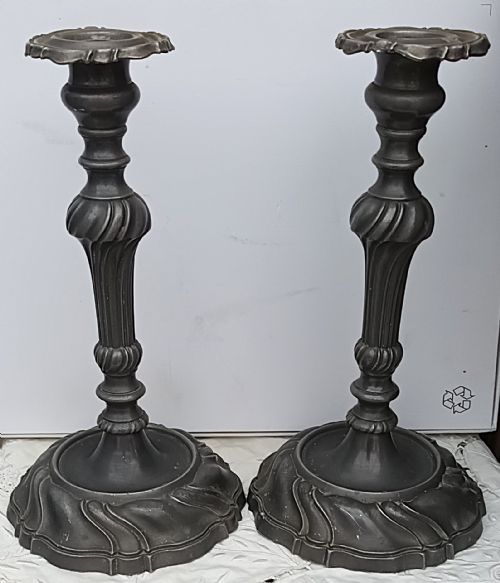


Rococo Revival Candle Holders
These rococo revival candle holders bring asymmetric curves and naturalistic ornament to any mantel.
Rococo Revival Candle Holders
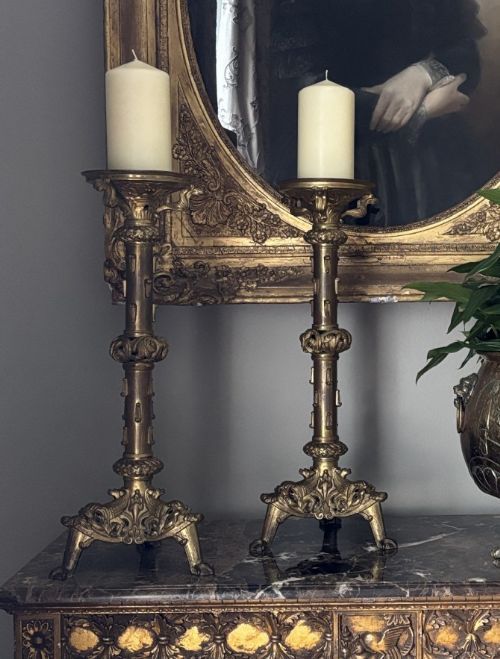
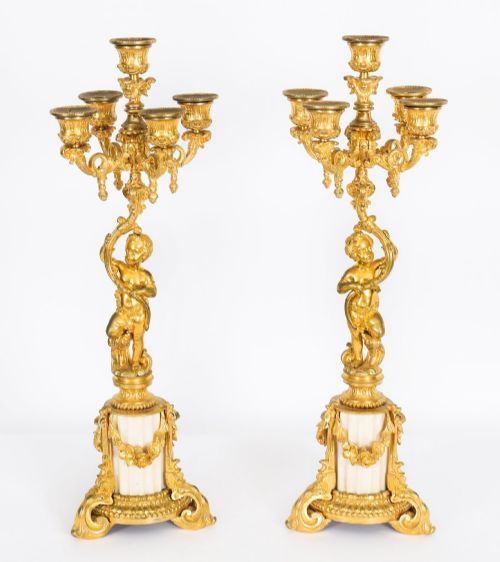
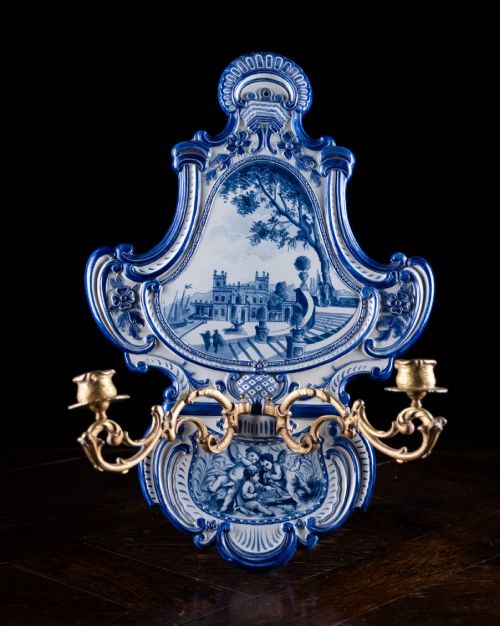
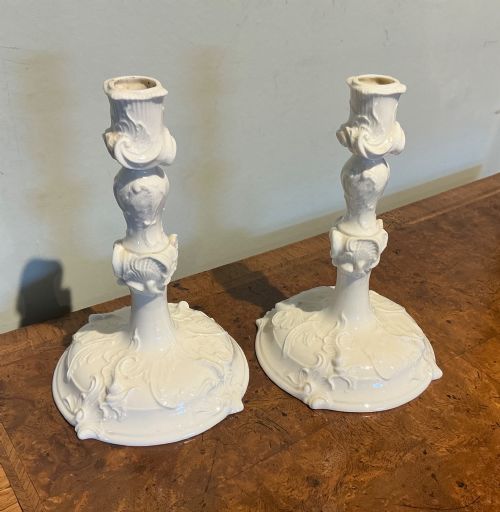
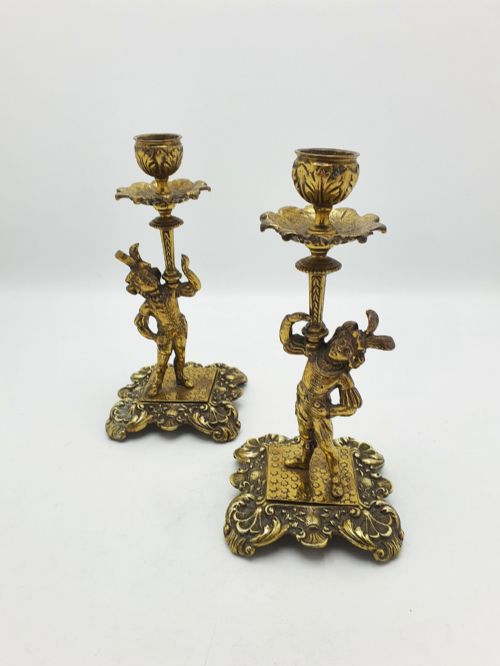
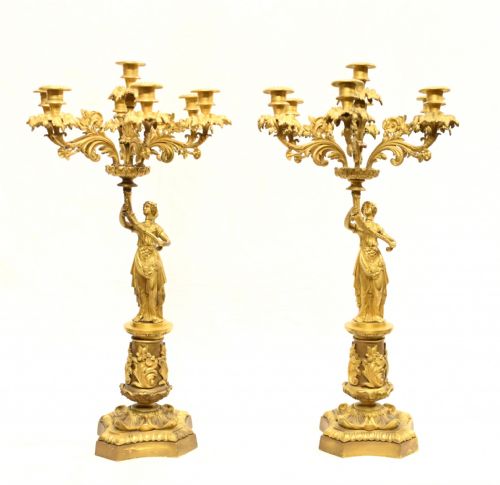
Rococo revival candle holders encompass candlesticks, branch candelabra, and wall sconces produced across the nineteenth and early twentieth centuries. These forms draw heavily upon earlier eighteenth-century French design, favouring scrolls, shell motifs, and asymmetrical flourishes. The examples appearing here range from modest single-light sticks to multi-arm candelabra incorporating figures.
The dominant variants encountered on this page pair cast metal frames with hand-painted porcelain or glazed earthenware. Pairs predominate, reflecting the formal symmetry popular on nineteenth-century dining tables and mantelpieces. Makers from England, France, and Germany dominate the selection, spanning periods from Regency to the early twentieth century.
How they were made
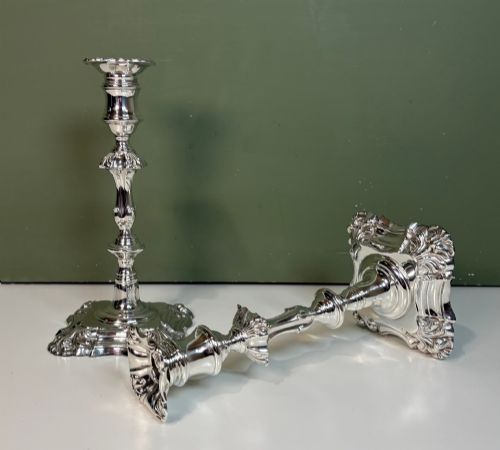
Gilt bronze, ormolu, and brass provide the structural frames for many pieces, shaped through casting and detailed chording. Ormolu involves the application of finely ground gold to a bronze base, creating a durable golden lustre. Silver plating and solid silver also appear, offering a brighter, reflective surface for candlelight.
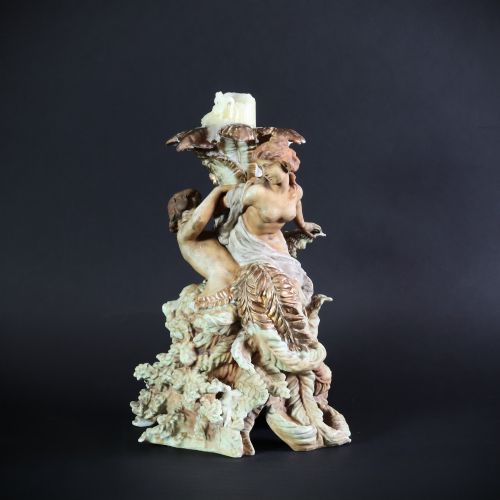
Ceramic elements rely on porcelain bodies shaped in moulds, often decorated with hand-painted floral details or applied figural groups such as putti and gardeners. Marble bases provide weight and stability to taller metal candelabra, contrasting with the polished metal above.
Rococo Revival Candle Holders Retail Price Guide 2026
Typical asking prices for rococo revival candle holders among the pieces listed under this phrase on Sellingantiques today, from the lower quarter to the upper quarter. They describe what is for sale here now, not the wider market.
Go-to-bed candlesticks included a small ring handle so weary Victorians could carry their flickering flame upstairs without burning their fingers.
What varies in quality
The crispness of the cast ornament separates finer examples from simpler production pieces. In high-grade ormolu and bronze work, details remain sharp and deep, whereas secondary items show softer edges from worn moulds. Hand-painted porcelain components display similar variation in the precision of the brushwork and the delicacy of applied floral elements.
Completeness dictates much of the standing within this category, particularly for multi-arm candelabra and figural groups with fragile porcelain petals or fingers. Pieces retaining their original gilding or silver plating without extensive rubbing hold greater visual coherence. The weight and stability of the base material further distinguish substantial parlour pieces from lighter boudoir items.
Villeroy and Boch·Nymphenburg·Minton·Sitzendorf·Dresden·Helena Wolfsohn·Meissen
The Rococo Revival Candle Holders Glossary
- Ormolu
- Gilded bronze, where a mercury-gold amalgam is applied to a bronze object and fired to leave a durable gold layer. This technique gives nineteenth-century French pieces their characteristic warm lustre.
- Candelabra
- A multi-branched lighting device designed to hold several candles simultaneously. These often feature removable branches to allow use as a single candlestick.
- Sconce
- A wall-mounted lighting fixture with arms to hold candles. In period interiors, these were often placed near mirrors to amplify the flickering light.
- Putti
- Depictions of plump, winged infant figures, frequently used as decorative supports in nineteenth-century porcelain and bronze groups. They derive from classical sculpture and Renaissance art.
- Rococo Revival
- A nineteenth-century design movement mimicking the ornate, curving, and asymmetric style of the mid-eighteenth century. It rejects strict classical symmetry in favour of natural forms like shells and scrollwork.
Rococo Revival Candle Holders: Frequently Asked Questions
How do I date rococo revival candle holders?
Dating relies on material composition, maker marks, and stylistic shifts within the nineteenth century. Earlier pieces from the Regency or 1830s often show heavier neoclassical influence alongside emerging rococo curves.
Later Victorian and Edwardian items tend toward busier surface decoration and specific manufacturing stamps underneath the porcelain or metal bases.
Where were these pieces displayed in period homes?
Paired candlesticks and candelabra sat primarily on dining tables, sideboards, and drawing room mantelpieces. Wall sconces were fixed directly to walls, frequently positioned to reflect light from looking glasses.
Smaller go-to-bed candlesticks lived in bedrooms or hallways for carrying down corridors before the widespread adoption of gas and electric lighting.
How should I clean porcelain and gilt metal holders?
Gilt bronze and ormolu require gentle dusting with a soft dry cloth to preserve the delicate gold surface. Water and chemical polishes strip the historic finish and should be avoided entirely.
Porcelain sections tolerate light cleaning with a damp cloth, taking care around hand-painted enamel details and fragile applied floral elements.