

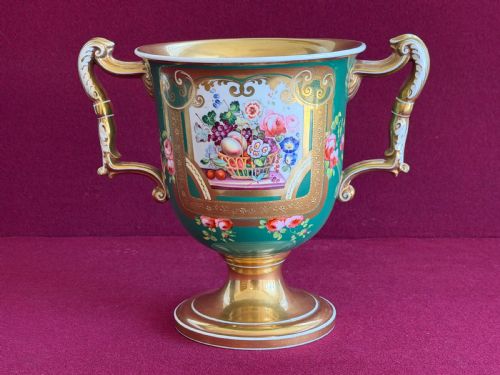


Rococo Painted Porcelain Vases
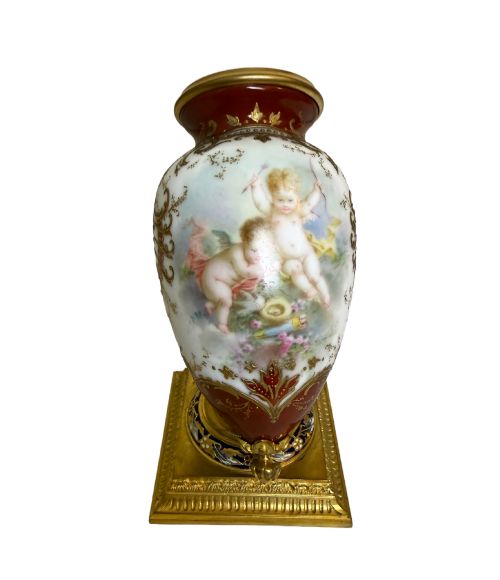
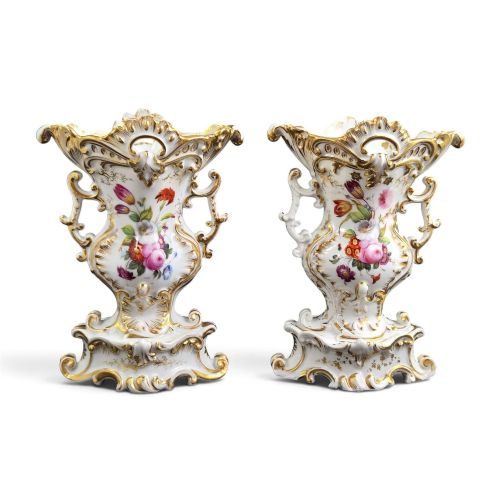
These rococo painted porcelain vases bring sculptural curves, bright floral scenes and gilded mounts into nineteenth-century interiors.

Rococo Painted Porcelain Vases
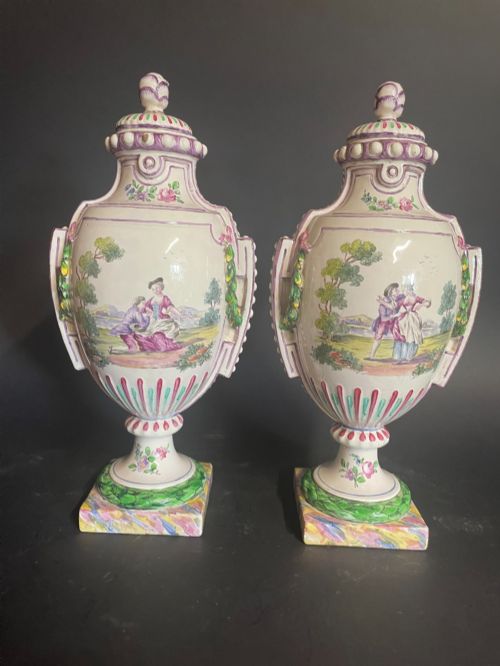
When you search for rococo painted porcelain vases, you encounter nineteenth-century objects spanning the Regency and Victorian periods up to the early twentieth century. These items appear as pairs, garniture sets, lidded jars, table lamps and ewers reflecting French revival styles. Pieces frequently take inspiration from major continental factories such as Sèvres, Meissen and Dresden.
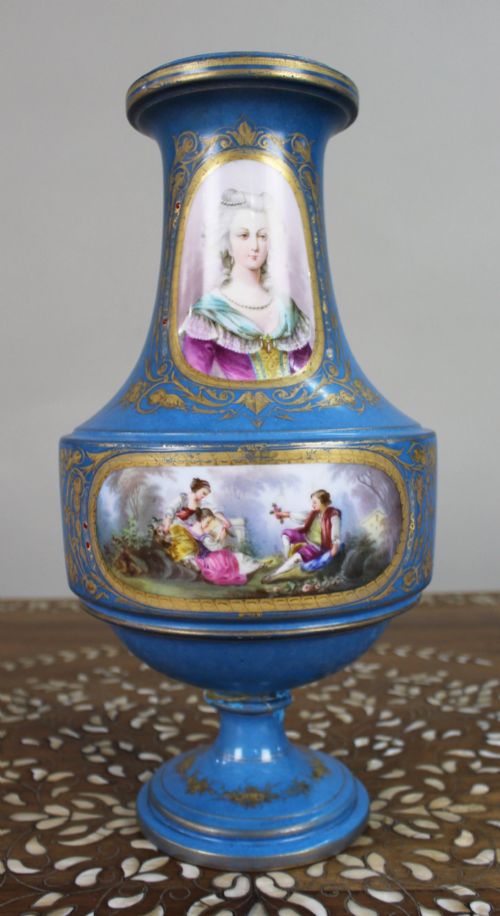
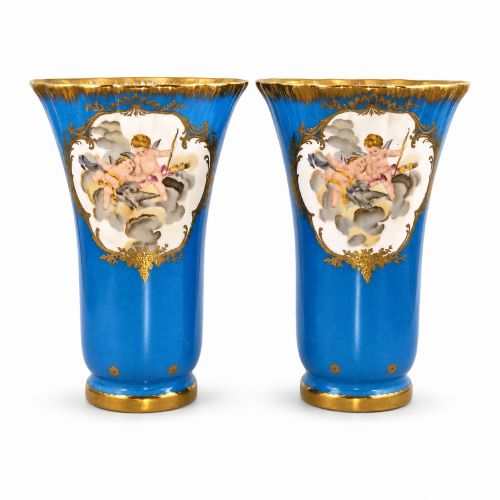
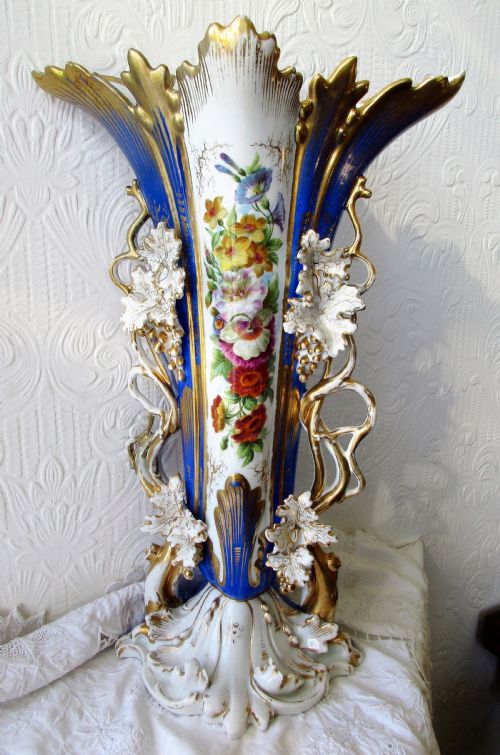
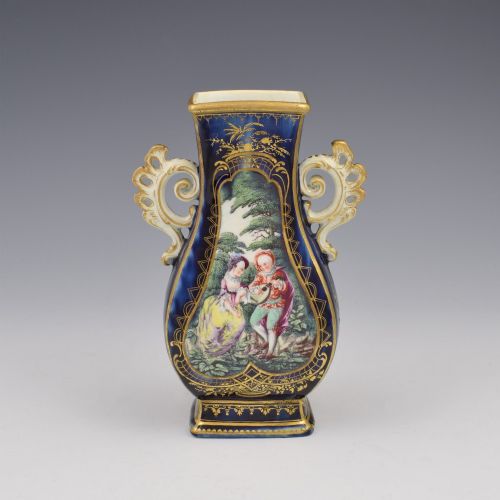
The selection demonstrates considerable variety in form, ranging from small cabinet pieces to large mantle garnitures and centrepieces. Many feature cobalt or bleu céleste grounds accompanied by hand-painted pastoral scenes or floral motifs. English makers like Coalport and Chelsea also contribute to this stylistic group through distinct interpretations of eighteenth-century aesthetics.
Materials and construction
The foundation of each piece is hard-paste or soft-paste ceramic porcelain, shaped into vessels, urns and ewers. Artisans applied hand-painted enamels alongside raised white enamel to construct floral and figurative scenes. Gilding, gold leaf and applied enamel decorate the surfaces.
Metal components provide structural contrast and ornamentation. Gilt bronze, ormolu, brass and gilt metal mounts frame the ceramic bodies, particularly on French and Sèvres-style vases. These metal mounts secure handles, bases and lids.
Object forms here include lidded jars, pilgrim flasks, mantle clocks, and matching garniture sets alongside traditional vases.
Assessing quality
Quality rests upon the execution of the hand-painted decoration and the precision of the ceramic form. Finer examples display meticulous brushwork in pastoral scenes and floral panels, whereas lesser pieces rely on simpler repetitive patterns. The depth and saturation of cobalt and bleu céleste ground colours distinguish standard production from superior output.
The integration of metal hardware marks another tier in the hierarchy. High-end items utilise finely cast ormolu and gilt bronze mounts that complement the porcelain body without obscuring its lines. Heavier, clumsier mounts or simple brass indicate a different standard of manufacturing.
Jacob Petit·Sceaux Faience·Samson Paris·Royal Vienna·Chelsea Porcelain·H & R Daniel·Samuel Alcock·Helena Wolfsohn·Augustas Rex·Vion et Baury·Coalport·Meissen·Sevres
The Rococo Painted Porcelain Vases Glossary
- Bleu céleste
- A bright sky-blue ground colour commonly associated with mid-eighteenth-century Sèvres porcelain and later revival pieces. This tone frequently serves as a backdrop for pastoral panels.
- Garniture set
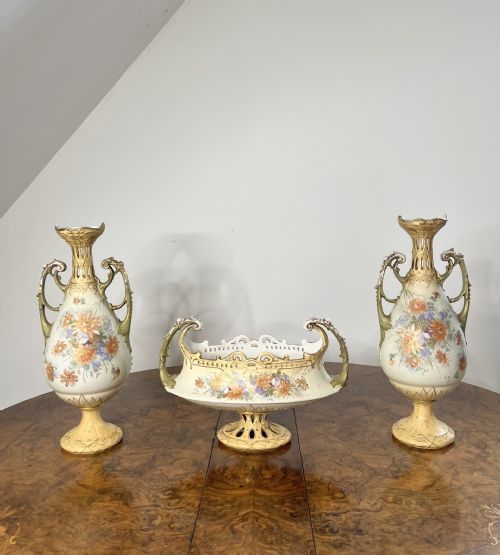
- A symmetrical arrangement of three or more matching vases or urns designed to sit together on a mantlepiece or sideboard. These sets usually comprise a central lidded vase flanked by two smaller vessels.
- Ormolu
- Finely ground high-carat gold applied in a mercury amalgam to bronze mounts. The technique creates a rich golden finish on decorative hardware.
- Ewer
- A large jug with a bulbous body and a flared spout, originally designed for water but adapted as a decorative vase in nineteenth-century interiors.
- Bisque
- Unglazed white porcelain fired to a matte finish that resembles marble. This material highlights sculptural form and human figures.
Rococo Painted Porcelain Vases: Frequently Asked Questions
What periods do these vases come from?
The pieces available primarily date from the nineteenth century, encompassing Regency, Victorian and later revivals from the 1850s to the 1920s. A small number reference eighteenth-century prototypes.
These dates reflect nineteenth-century enthusiasm for historical styles rather than the original production eras of the factories they emulate.
How were garniture sets displayed?
Garniture sets of three or five pieces were designed to sit symmetrically across a mantlepiece, dresser or table top. The tallest vessel typically occupied the centre.
In nineteenth-century interiors, these groupings provided a decorative focal point for formal reception rooms.
How do I care for gilt bronze mounts?
Metal mounts require dusting with a soft, dry cloth to prevent the accumulation of grime in recessed areas. Avoid chemical cleaners that can strip the gilding from bronze or ormolu.
Porcelain surfaces can be wiped gently with a damp cloth if necessary, taking care around hand-painted enamel and gold leaf.
How do I distinguish Sèvres style from original Sèvres?
Revival pieces marked as Sèvres-style or produced by factories like Samson and Dresden date from the nineteenth century rather than the 1700s. They often imitate the blue ground colours and pastoral scenes of the French royal factory.
Examining the paste, glaze and secondary factory marks usually clarifies whether an item is a nineteenth-century homage or an earlier production.