
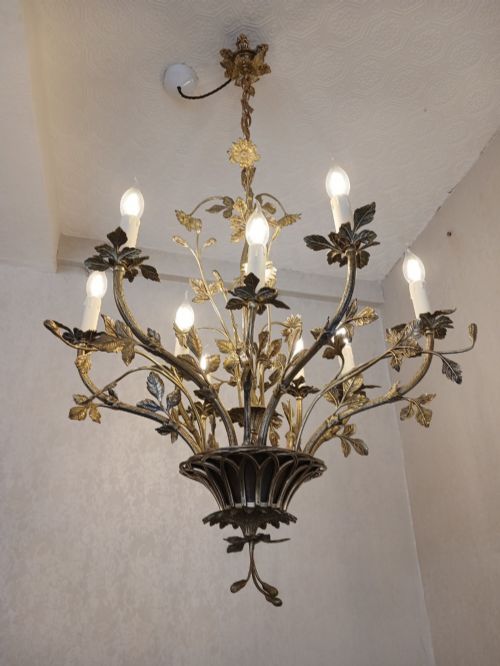
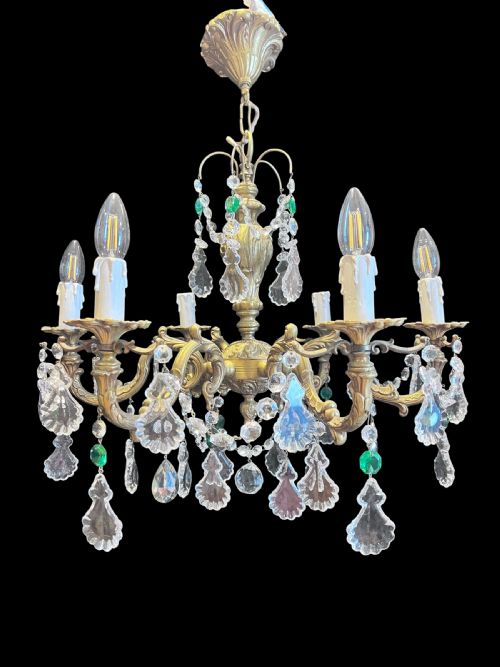
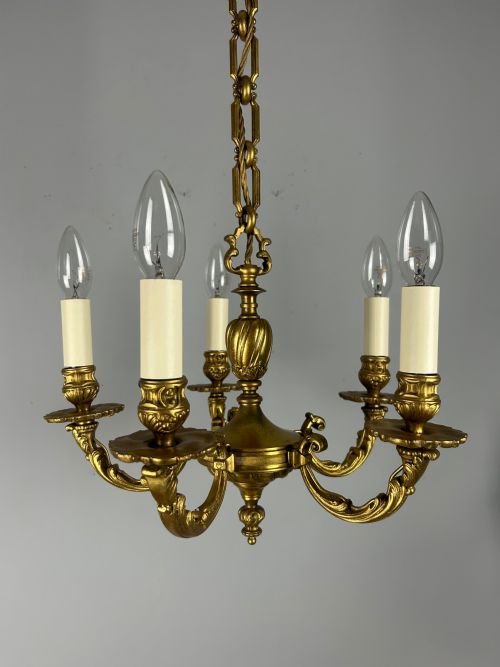
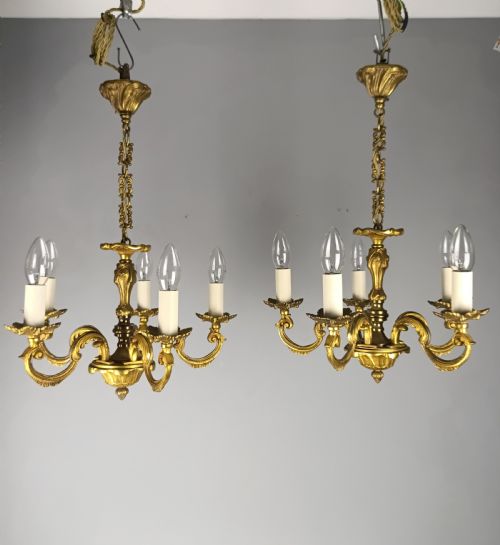
Rococo Gilt Brass Chandelier
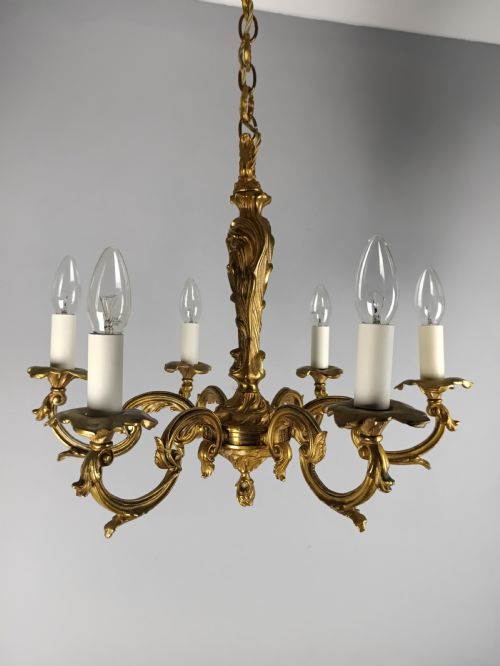
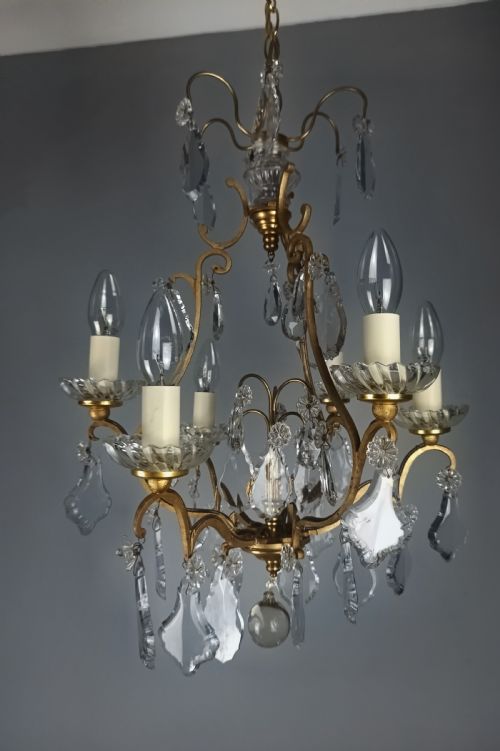
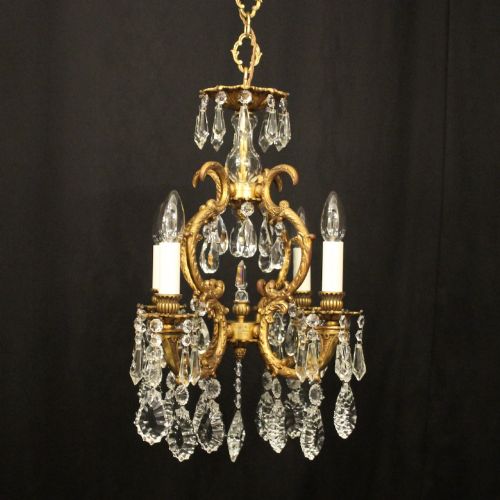
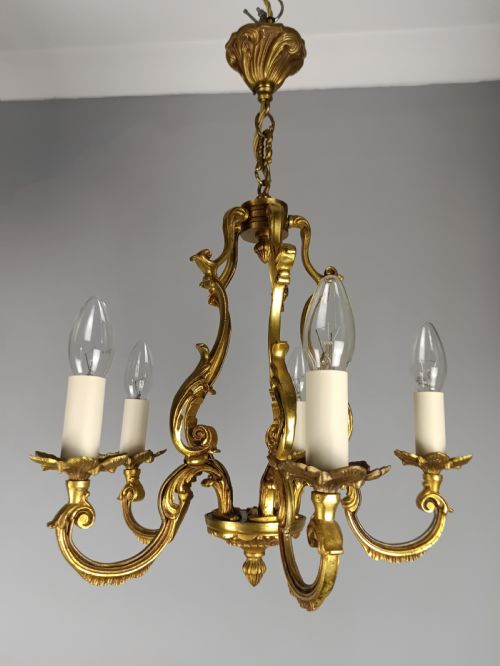
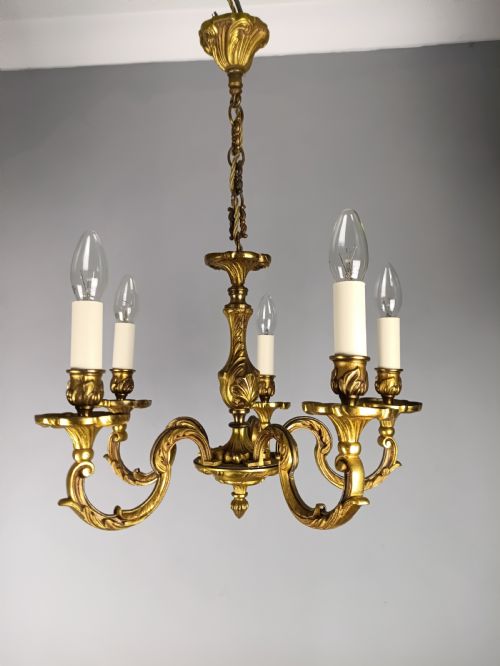
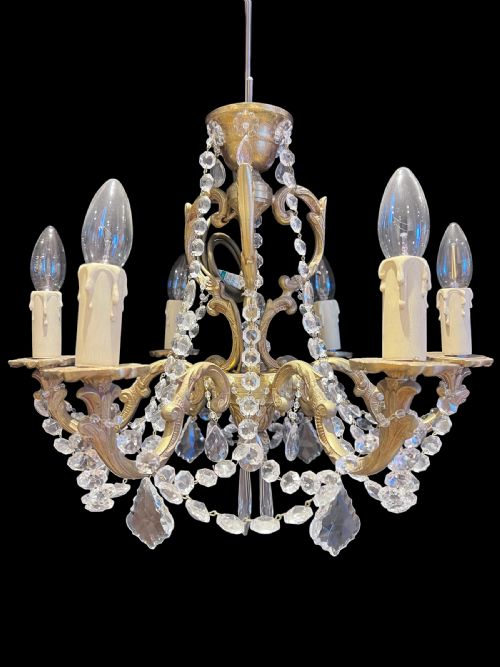
These rococo gilt brass chandelier options bring together intricate cast metalwork and luminous crystal drops to illuminate a room with period character.
Rococo Gilt Brass Chandelier
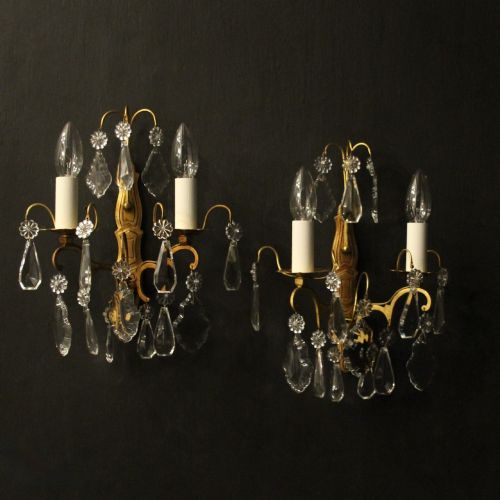
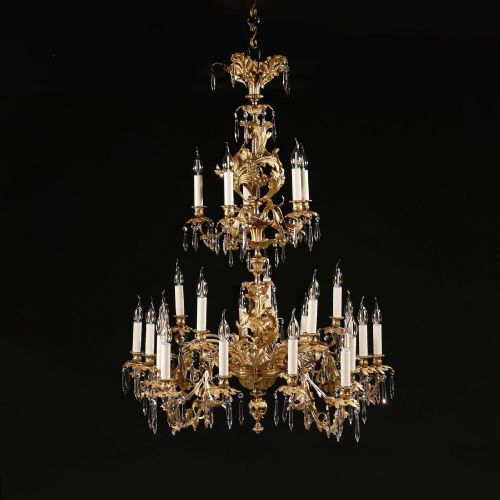
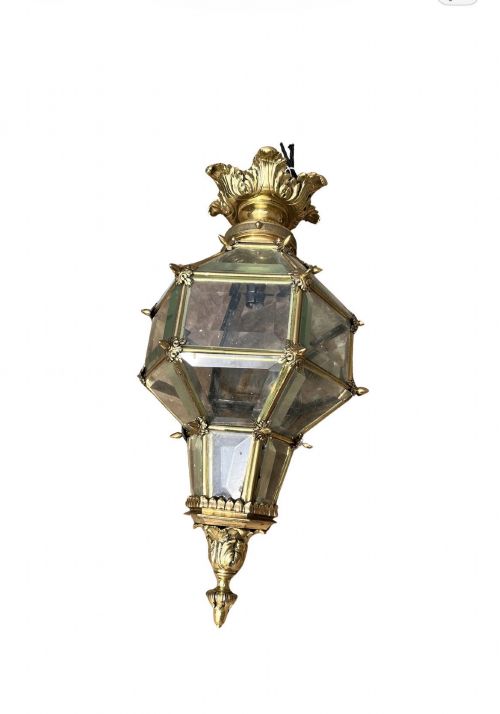
A rococo gilt brass chandelier brings together elaborate metal casting and often glass or crystal elements to create a dramatic overhead focal point. These fixtures draw upon historical design repertoires such as French Rococo, Louis XV style, and Italian Rococo Revival, spanning periods from the nineteenth century into the early decades of the twentieth century. Buyers seeking this aesthetic will encounter multi-arm ceiling lights, birdcage configurations, wall sconces, and hanging lanterns.
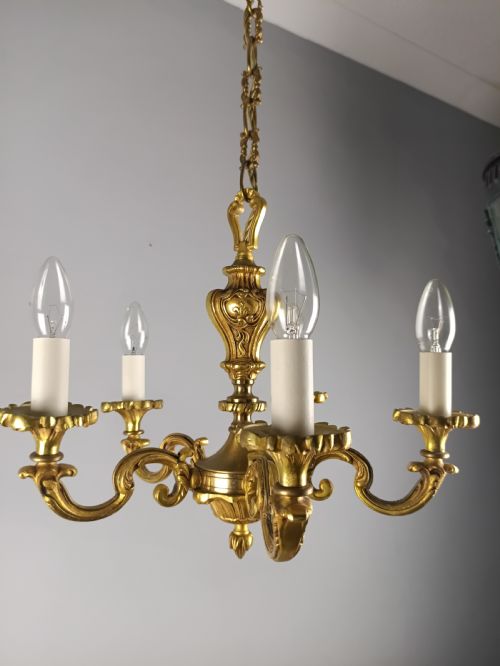
The most common examples on this page are French pieces originating from the late nineteenth century and the early twentieth century, particularly around nineteen-thirty and nineteen-twenty. Such fixtures typically feature three to six lights, though larger multi-tiered examples appear for grander spaces. Alongside standard ceiling lights, the selection includes related items like wall lights and hall lanterns sharing the same brass and bronze vocabulary.
Materials and Construction
Makers utilised brass, gilt brass, bronze, and gilt bronze as the primary structural metals for casting ornate frames, scrolling arms, and decorative mounts. These metal components were frequently gilded to enhance their reflective quality and visual warmth under candlelight or early electric illumination.
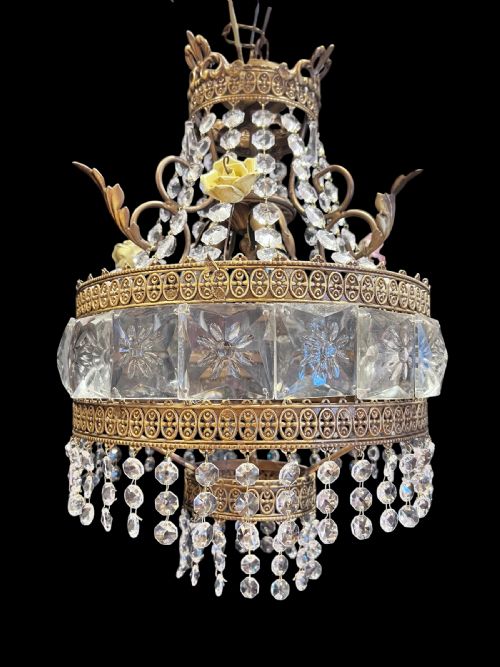
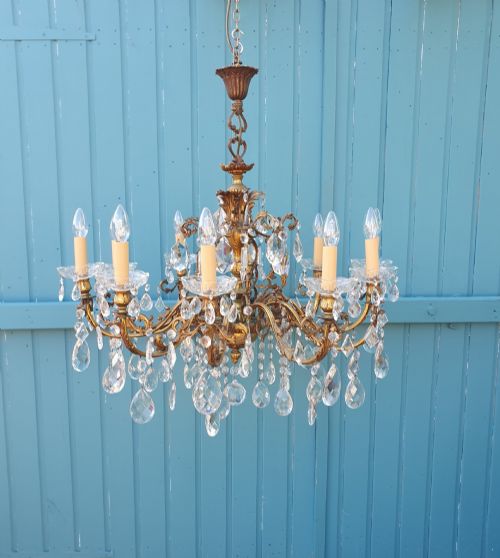
Cut crystal and glass drops, beads, and pendants were suspended from the metal frameworks to amplify the diffusion of light. Certain examples integrate delicate porcelain flowers or coloured crystals to introduce subtle shifts in tone and texture.
Materials recur across multiple object types, pairing gilt brass and bronze with cut crystal, glass, and occasional porcelain flowers.
Judging Quality
The sophistication of the metal casting and the depth of the chasing separate standard examples from finer works. Superior pieces display crisp, sharply defined asymmetric rococo scrolls and foliate motifs rather than soft or repetitive details.
The integration of the glass and crystal elements also marks a distinction in quality. Hand-cut crystal pendants with sharp facets and heavy mineral content refract light more brilliantly than plain moulded glass components.
The Rococo Gilt Brass Chandelier Glossary
- Gilt Bronze
- Bronze metal treated with a thin layer of gold or gold-coloured alloy to give a rich surface finish. This technique protects the underlying metal while providing a brilliant metallic sheen.
- Birdcage Chandelier
- A lighting fixture featuring a skeletal metal frame shaped like an avian cage, densely strung with crystal beads. The form creates a cascading vertical profile.
- Rococo Revival
- A nineteenth-century design movement resurrecting the asymmetric curves, C-scrolls, and naturalistic motifs of the eighteenth-century French court. It dominates the decorative vocabulary of these chandeliers.
- Cut Crystal
- Glass containing lead oxide that is hand-cut and polished to create sharp facets. These facets maximise light refraction across the room.
Rococo Gilt Brass Chandelier: Frequently Asked Questions
How do I clean a crystal chandelier?
Cleaning requires a gentle hand and specialised cleaning solutions applied carefully to the glass and crystal drops while they remain on the frame.
Many specialists recommend wiping each crystal individually with a lint-free cloth rather than submerging the entire fixture.
Can these chandeliers be wired for modern electricity?
Most antique lighting fixtures of this type have been adapted for contemporary electrical standards by replacing older internal wiring.
It is sensible to have a qualified electrician inspect the fitting and ensure the ceiling hook can support the combined weight of the metal and crystal.
What rooms suit a birdcage chandelier?
Birdcage chandeliers work well in spaces with sufficient ceiling height where the vertical, cascading crystal design can hang unobstructed.
They are frequently installed in dining rooms, entrance halls, or drawing rooms where they serve as a central decorative anchor.
How do I distinguish brass from bronze?
Brass is an alloy of copper and zinc, typically yielding a brighter yellow or golden tone, whereas bronze is primarily copper and tin with a warmer, deeper brownish hue.
Many pieces listed as gilt brass or gilt bronze also carry a surface gold finish that visually unites the underlying metal.