





Rococo Fireplace Clock
A rococo fireplace clock brings exuberant, scrolled metalwork and classical figures to a mantelpiece, offering the ornate aesthetic of nineteenth-century France.
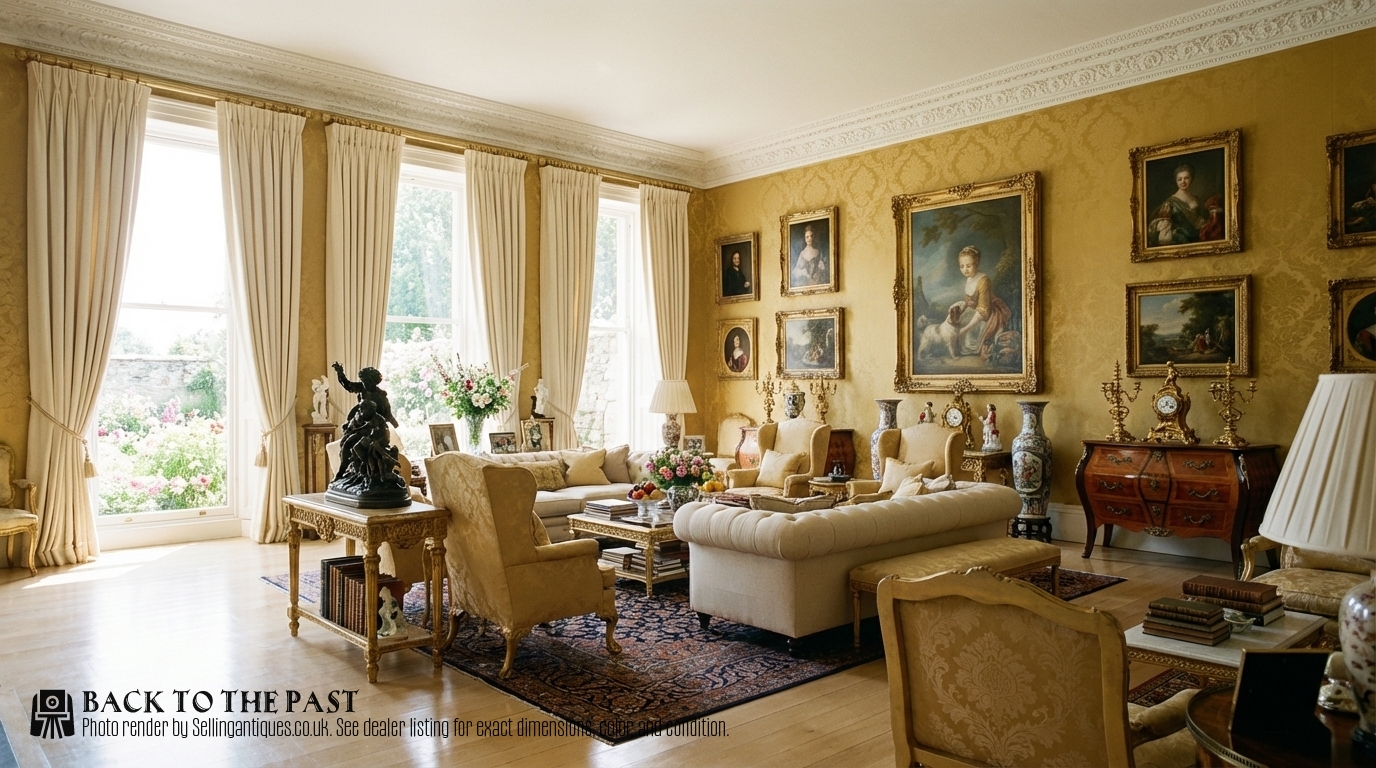
Rococo Fireplace Clock
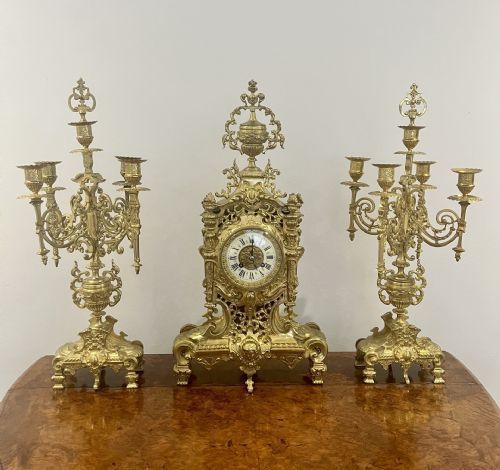
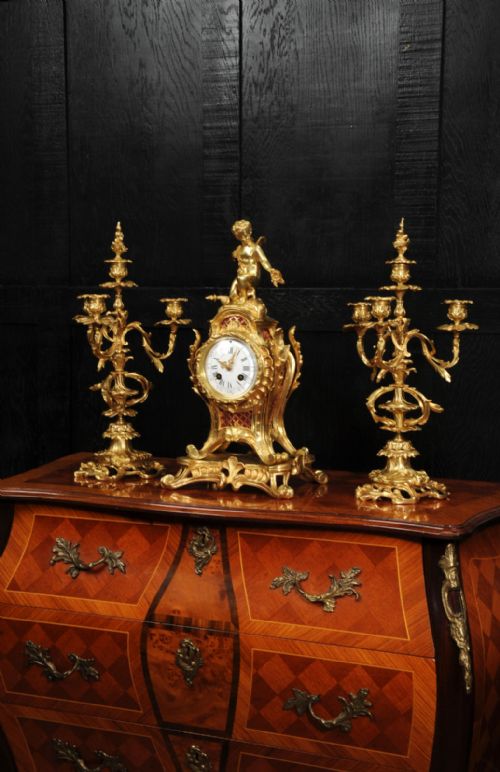
A rococo fireplace clock on this page typically takes the form of a mantel clock, clock set, or clock garniture originating from nineteenth-century France. These decorative timepieces display the asymmetrical scrolls and naturalistic motifs characteristic of the style, often accompanied by matching side ornaments or garnitures.
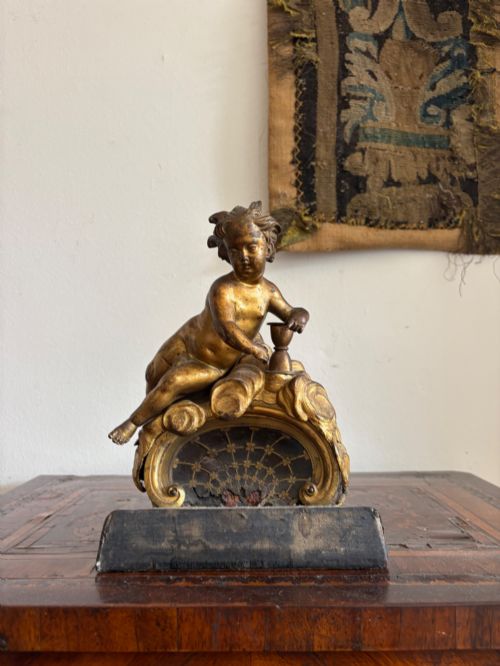
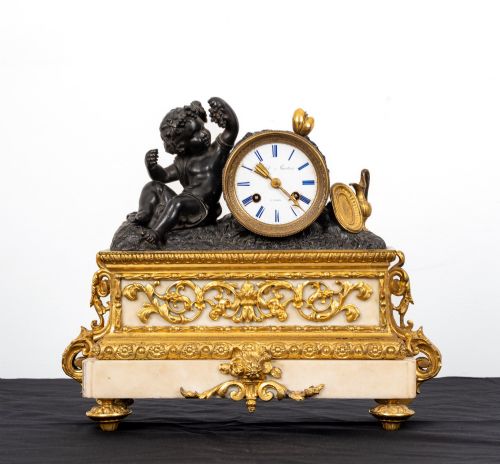
The pieces available span various decades of the nineteenth century, including the Victorian era, Napoleon III period, and Second Empire, reflecting steady popularity across different workshops. Buyers encounter forms ranging from simple mantel clocks housed in marble and ormolu to elaborate multi-piece sets featuring figural mounts like putti or Cupid.
Origins heavily lean towards French manufacture, employing classical stylistic descriptors such as Louis XV and Sevres style alongside broader Victorian classifications. The physical presence of these objects combines timekeeping utility with sculptural display, designed specifically to sit prominently on a mantel or fireplace.
Materials and construction
Construction relies heavily on cast metals such as ormolu, gilt bronze, brass, and standard bronze, which provide the structural weight and complex detailing required for the ornate style. These metal elements are frequently combined with carved marble bases or porcelain panels to add contrasting texture and colour.
Dials and decorative accents often incorporate enamel for numerals or painted face details, while glass covers protect the clock mechanism and face. Individual components like putto finials and decorative mounts are cast separately before being assembled into the final mantel clock or garniture set.
Rococo Fireplace Clock Retail Price Guide 2026
Typical asking prices for rococo fireplace clock among the pieces listed under this phrase on Sellingantiques today, from the lower quarter to the upper quarter. They describe what is for sale here now, not the wider market.
Listings feature pieces spanning the Victorian period and the nineteenth century, utilising materials like marble, ormolu, porcelain, and bronze.
Evaluating quality and craftsmanship
Quality in a rococo fireplace clock is determined by the crispness of the metal casting and the depth of the gilding applied to the bronze or ormolu surfaces. Finer examples display sharp definition in sculptural figures such as Cupid or putti, whereas lesser pieces show softer, shallower detailing in the scrollwork.
The choice of materials also dictates the standing of a piece, with solid marble bases, genuine porcelain elements, and multi-piece clock garnitures representing more ambitious manufacturing standards than simpler brass-cased models.
Siffel and Cartier·PH Mourey
The Rococo Fireplace Clock Glossary
- Ormolu
- Gilded bronze, where a gold-mercury amalgam is applied to a bronze base. This technique produces a rich, durable golden surface seen on many nineteenth-century French clock cases.
- Clock Garniture
- A set comprising a central clock flanked by matching decorative side pieces, such as vases or candelabra. These sets were designed to create a balanced arrangement on a mantelpiece.
- Napoleon III
- A French design period spanning the mid-to-late nineteenth century. It is known for an eclectic revival of historic styles, including exuberant interpretations of Louis XV rococo.
- Sevres Style
- Ceramic work emulating the decorative porcelain produced by the royal French manufactory. Items featuring this style typically display painted scenes and rich coloured grounds.
- Putto
- A representation of a small winged infant, frequently used as a decorative finial or sculptural mount on clock cases. These figures add a playful, classical element to the design.
Rococo Fireplace Clock: Frequently Asked Questions
What is a clock garniture?
A clock garniture is a matched set consisting of a central mantel clock and two accompanying side ornaments, such as vases or urns. These sets were manufactured to create a symmetrical display on a fireplace.
The pieces share identical materials, styles, and decorative motifs, tying the mantel arrangement together as a unified decorative scheme.
How do I identify French ormolu?
Ormolu refers to gilded bronze, created by applying a mixture of gold and mercury to a cast bronze base before heating. It exhibits a warm, deep golden lustre that differs significantly from modern brass plating.
Under closer inspection, genuine nineteenth-century fire-gilded bronze displays subtle hand-chasing marks where artisans refined the cast metal details after gilding.
Where should I place my clock?
These timepieces were specifically built to sit upon a mantelpiece or fireplace shelf, serving as the visual centrepiece of a room. The substantial weight of marble and bronze bases provides stability on flat surfaces.
When positioning the clock, ensure it rests away from direct heat sources and dampness to protect the delicate enamel dials and metal finishes.
How do I date a nineteenth-century clock?
Dating relies on examining the combination of materials, stylistic markers, and any maker signatures stamped on the movement or bronze case. The presence of specific revival styles, such as Napoleon III or Louis XV, helps narrow down the production era.
Marks left by makers like PH Mourey or Siffel and Cartier provide concrete evidence of the workshop and decade of manufacture.