

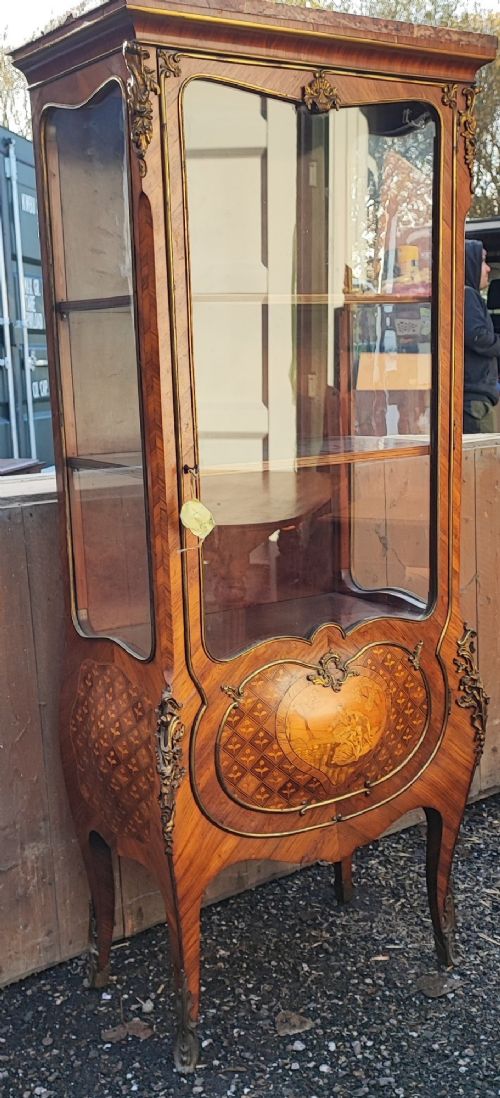
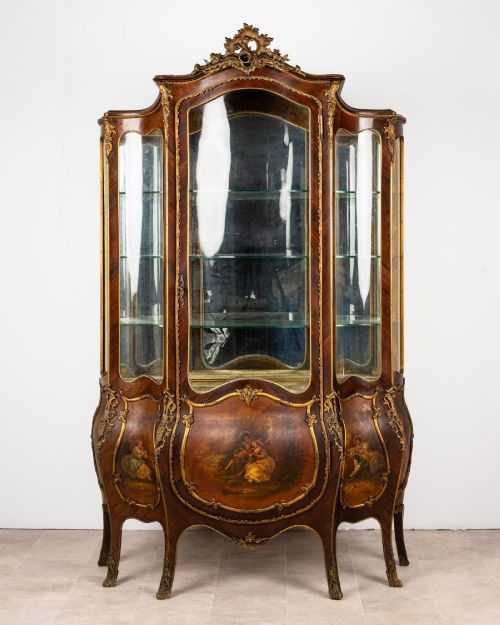
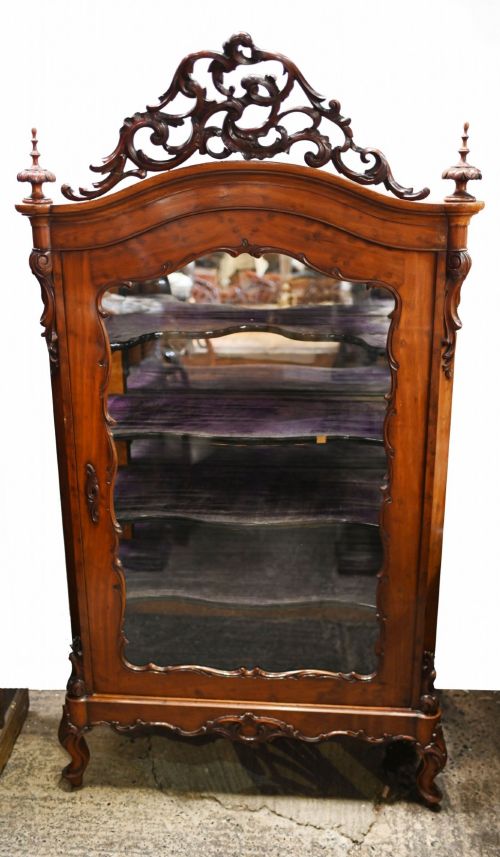
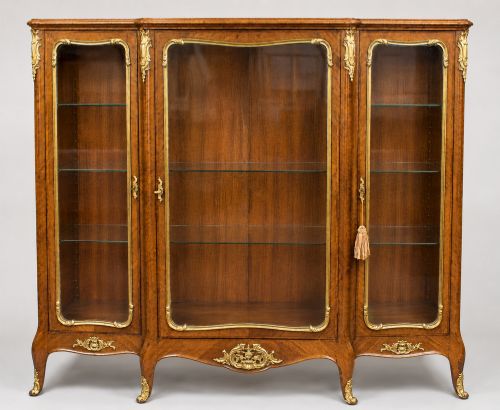




Rococo Curio Cabinet
These pieces transport the French rococo curio cabinet into your room, offering glass and ormolu stages for treasured objects.
Rococo Curio Cabinet
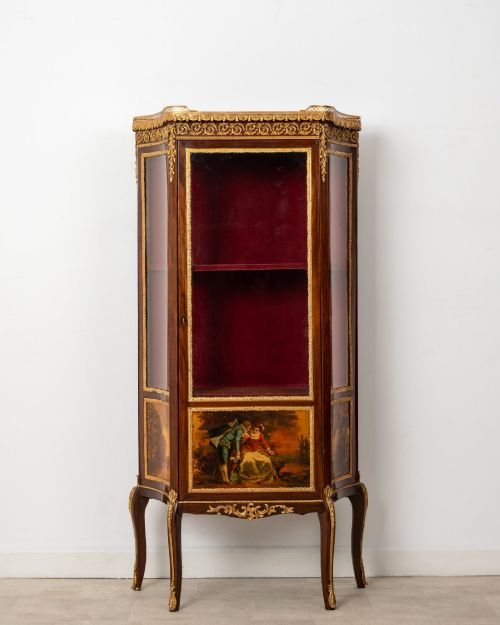
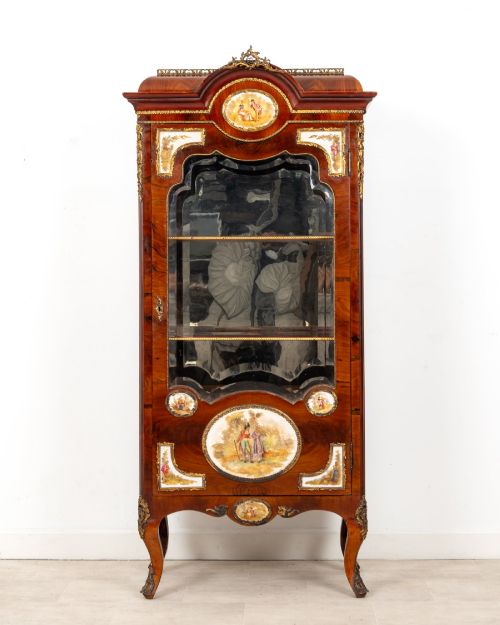
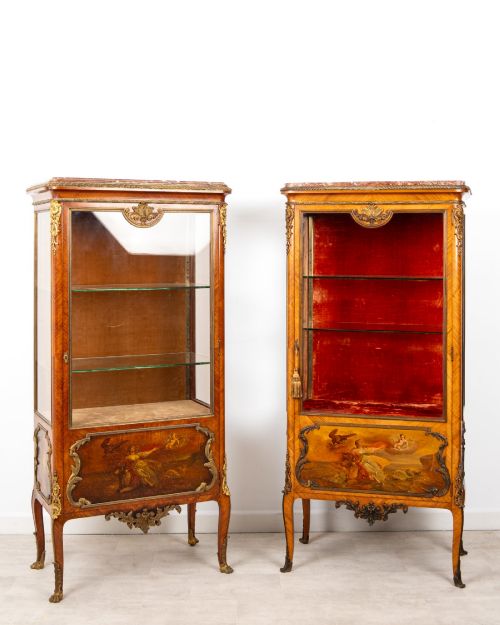
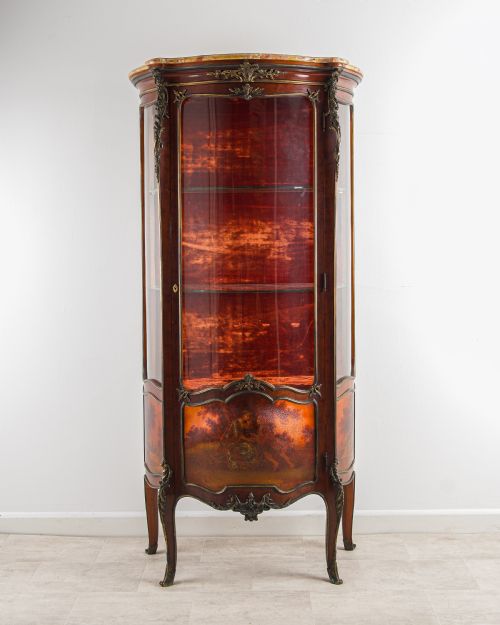
A rococo curio cabinet brings glazed display space into a room, serving as a vitrine or bijouterie table for small valuables. The versions met on this page date principally from the nineteenth century, including Victorian and Edwardian examples, alongside eighteenth-century origins.
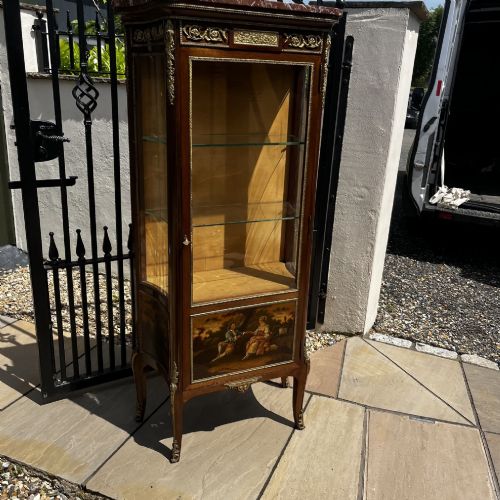
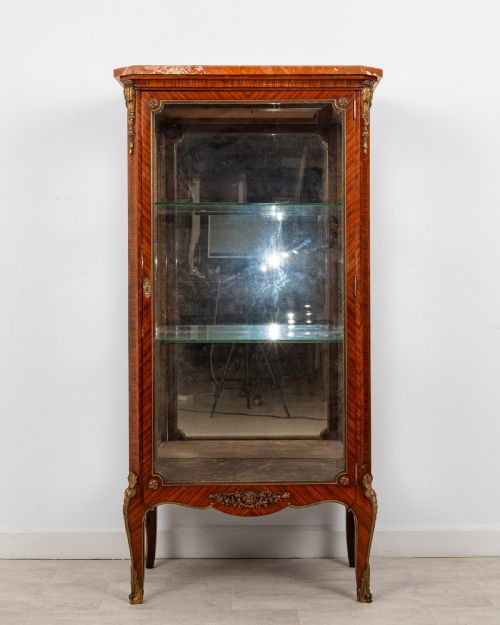
Makers shaped these display cabinets in French revival styles such as Louis XV and Louis XVI, often incorporating serpentine fronts or freestanding forms. Cabinets frequently combine glass panels with painted lower panels and marble tops.
The primary function remains the exhibition of porcelain, plaques, and small artefacts behind clear glass. These pieces employ revivalist aesthetics to create ornamental storage within domestic interiors.
Materials and construction
Workshops built carcases from timber foundations of mahogany, walnut, and kingwood, frequently applying parquetry or marquetry patterns to the exterior surfaces. Vernis Martin techniques provided the distinctive decorative painted panels seen on cabinet lower sections.
Gilt bronze and ormolu mounts punctuate the timber surfaces, framing glass doors and accentuating curves with cast metal decoration. Marble tops appear on numerous examples, providing solid stone surfaces above wooden frames.
Rococo Curio Cabinet Retail Price Guide 2026
Typical asking prices for rococo curio cabinet among the pieces listed under this phrase on Sellingantiques today, from the lower quarter to the upper quarter. They describe what is for sale here now, not the wider market.
Listings demonstrate cabinet construction from the nineteenth century, utilising mahogany, walnut, and kingwood with marble tops.
Gradations of quality
The refinement of the ormolu mounts separates standard production from exceptional pieces, dictating the crispness of the cast bronze detailing. Heavier, more intricate metalwork indicates higher workshop standards.
Timber selection and execution of marquetry create visible distinctions, with figured kingwood veneers and detailed parquetry marking superior furniture. Painted Vernis Martin panels display varying degrees of artistic skill in their pastoral scenes.
François Linke·Gouffel
The Rococo Curio Cabinet Glossary
- Vitrine
- A glass-fronted display cabinet designed for showing porcelain and small collectibles. These pieces rely on glazed sides to maximise light penetration.
- Ormolu
- Gilded bronze used for decorative mounts on furniture. This material provides metallic highlights along the structural edges of cabinets.
- Vernis Martin
- A simulated Japanese lacquer technique developed in France, used here for painted cabinet panels. This finish creates decorative lower door panels.
- Bijouterie table
- A glass-topped display table intended for jewellery and small ornaments. These items sit on slender legs with glazed tabletop compartments.
- Kingwood
- A dense, heavily figured exotic timber utilised for cabinet veneers. This wood provides rich brown tones with darker figuring.
Rococo Curio Cabinet: Frequently Asked Questions
What is a rococo curio cabinet used for?
These cabinets house small collections of porcelain, plaques, and decorative objects behind glass panels. They protect delicate items while keeping them visible within a reception room.
Surviving examples provide elevated display surfaces that reflect nineteenth-century interior display habits. The enclosed glass design limits dust accumulation on fragile contents.
How do I identify a revival style?
Revival pieces adopt eighteenth-century French design vocabulary, employing serpentine curves, cabriole legs, and asymmetrical ornamentation. Nineteenth-century makers reinterpreted these historical motifs using contemporary joinery.
Look for the combination of ormolu mounts and Kingwood veneers characteristic of Louis XV and Louis XVI revivals. These stylistic markers distinguish nineteenth-century production from earlier originals.
Where were these cabinets placed?
Owners positioned these display pieces in drawing rooms and parlours where guests gathered. Freestanding vitrines allowed all-round visibility of contents within the room.
Corner placements and wall locations suited serpentine front designs, matching the architectural scale of period interiors. Their compact footprints accommodated varied domestic layouts.
What maintenance do these cabinets need?
Preservation requires stable indoor humidity to protect timber carcases and veneer adhesion. Gentle dusting preserves the integrity of delicate ormolu mounts and painted panels.
Avoid abrasive cleaners on glass and metal components to maintain original surfaces. Wax polishes suited to antique furniture keep hardwood exteriors nourished.