


Rococo Brass Table Lamp
A rococo brass table lamp brings exuberant, asymmetrical curves and warm metallic reflection to a room, drawing on nineteenth-century French and Victorian design.
Rococo Brass Table Lamp
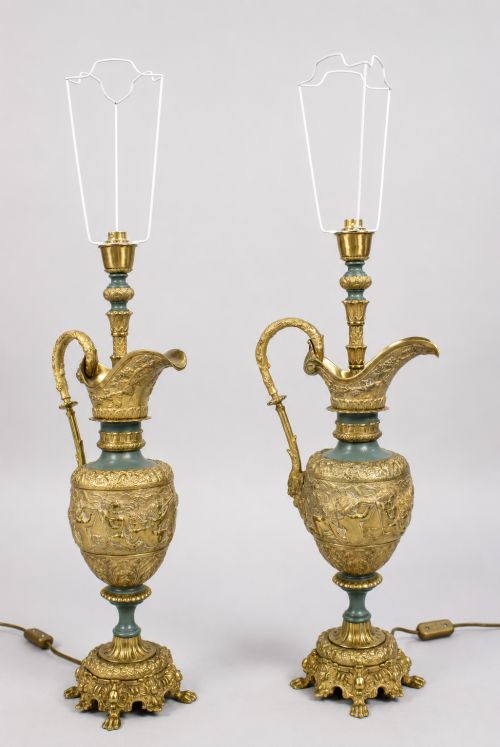
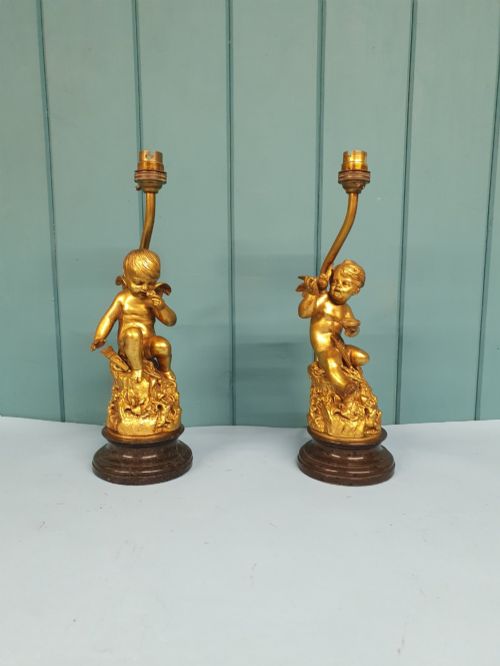
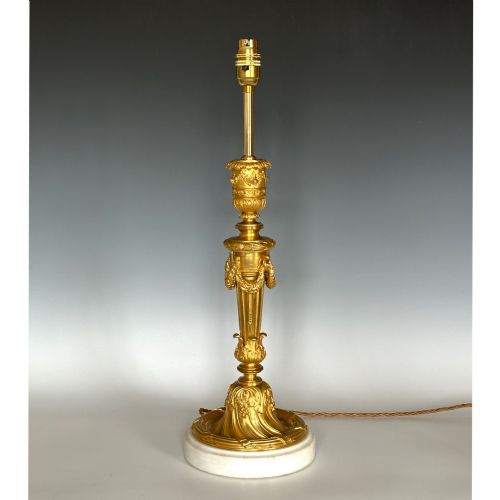
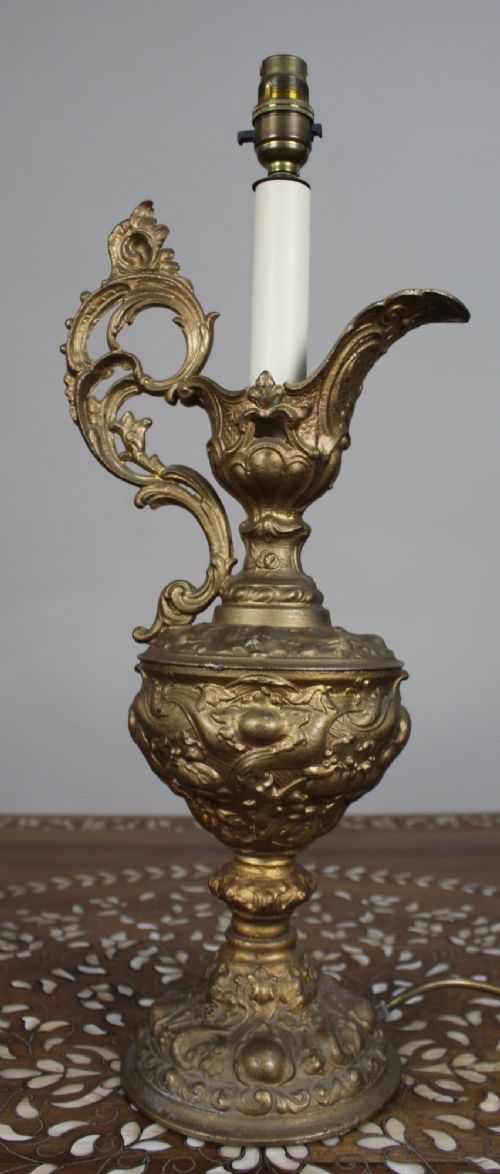
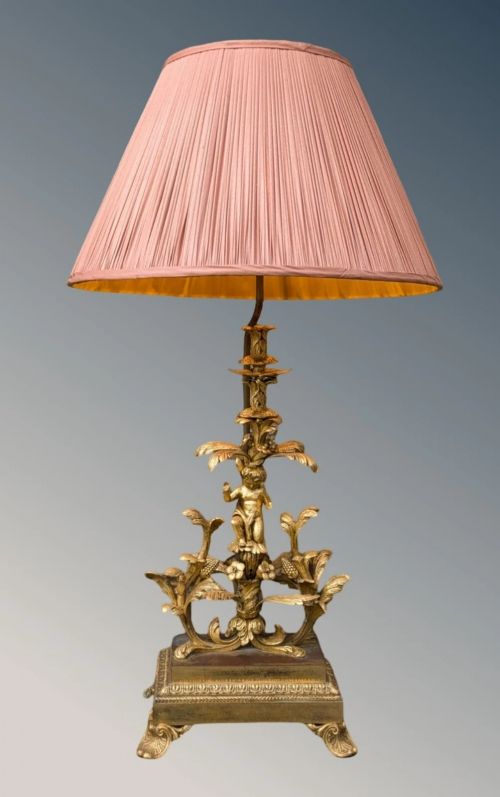
A rococo brass table lamp embodies the fluid, decorative vocabulary of the nineteenth century, channelling Louis XV revival tastes through cast metal, gilt bronze and ormolu. These pieces frequently incorporate figural elements such as cherubs, scrolling foliage and ewer or candlestick forms adapted for illumination.
The versions most commonly met on this page span the Victorian era into the early twentieth century, originating largely from French workshops and embracing styles from French rococo revival to chateau interiors. Alongside dedicated table lamps, the selection includes converted oil lamps, candelabra lamps and standard lamps sharing the same ornate aesthetic.
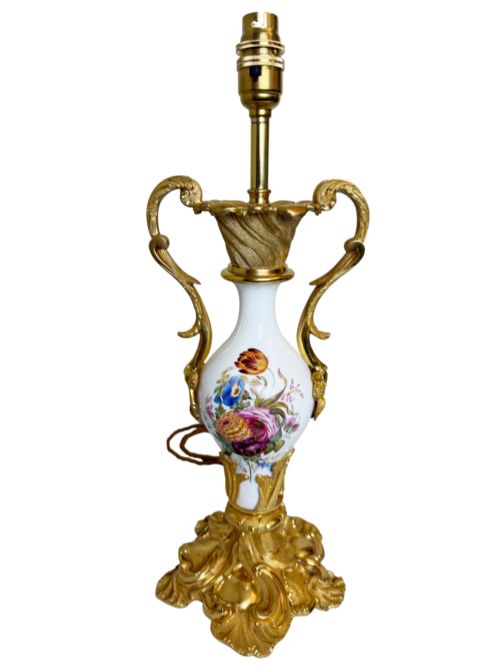
Buyers encounter everything from petite floral designs to monumental ormolu pieces mounted on marble or porcelain bases. The overarching characteristic remains the celebration of natural, twisting motifs cast in solid brass, gilt metal or bronze.
Materials and construction
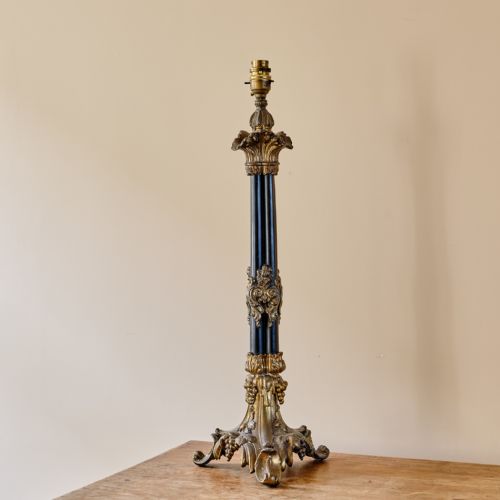
Makers utilised brass, gilt bronze and ormolu as primary metals, often casting them with intricate detail before applying fire gilding or surface finishing to achieve a rich lustre. These metal structures frequently combine with porcelain, glass or marble elements, anchoring the more flamboyant forms with solid weight.
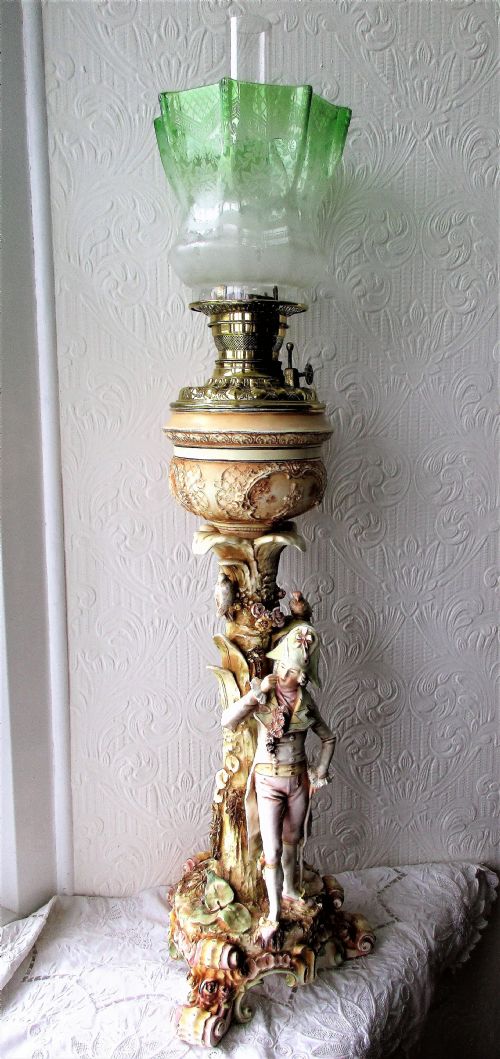
Many examples began life as oil lamps, candlesticks or statuettes before undergoing later conversion to electricity, retaining their original burners, fonts or glass shades. The assembly relies on threaded rods, hand-chased mounts and secured bases that reflect period manufacturing standards.
Listings feature brass, gilt bronze, porcelain and marble, spanning the Victorian period through to the 1920s.
Judging execution and finish
Quality rests principally in the crispness of the casting and the depth of the metal finishing. Superior examples display sharp, hand-chased relief in the foliage and figures, whereas lesser pieces show softer, blurred contours resulting from worn moulds.
The integration of secondary materials like porcelain, marble or coloured glass dictates the tier of the piece. Heavy, finely veined marble plinths and hand-painted porcelain reservoirs elevate the object above standard brass castings.
The Rococo Brass Table Lamp Glossary
- Ormolu
- Gilt bronze produced by applying a mercury and gold amalgam to cast bronze and heating it until the mercury vaporised. This technique creates a distinctive deep golden surface found on finer nineteenth-century pieces.
- Rococo Revival
- A nineteenth-century design movement that reinterpreted the eighteenth-century French rococo style characterised by asymmetry, C-scrolls and naturalistic organic motifs. It dominated furnishings and decorative arts throughout the Victorian period.
- Ewer
- A large jug with a wide spout traditionally used for pouring water, which makers frequently adapted into the body of nineteenth-century table lamps. These tall, handled vessels provide an architectural silhouette.
- Gueridon
- A small occasional table or stand, sometimes fitted with a lamp or marble top, originating in seventeenth-century France and revived in nineteenth-century interiors. They share the decorative metal mounts seen on contemporaneous lighting.
Rococo Brass Table Lamp: Frequently Asked Questions
How do I clean a brass lamp?
Dust the metal gently with a soft, dry cloth to prevent the accumulation of dirt in the chased crevices of the rococo ornament. Avoid harsh chemical polishes that can strip original gilding or patina from antique bronze and brass surfaces.
For glass or porcelain components, use a damp cloth with mild soap, taking care to keep moisture away from any electrical wiring or vintage lamp holders.
Are these lamps recently rewired?
Wiring status varies across individual pieces, with some retaining older cord sets while others feature modern electrical components. Buyers should inspect the listing details regarding rewiring and PAT testing.
Many collectors prefer to have antique lamps professionally inspected and rewired by a qualified electrician to ensure safety standards suit modern household use.
How do I identify the period?
Dating relies on examining casting techniques, fastener types, wear patterns on the metal, and the style of accompanying materials such as opaline glass or porcelain inserts. Nineteenth-century pieces typically exhibit heavier cast construction and hand-finished chasing.
Makers often drew directly from Louis XV design books during the Victorian revival periods, blending historical motifs with contemporary nineteenth-century manufacturing methods.
Can I replace missing glass shades?
Sourcing replacement shades requires matching the fitter size and the period style, such as ruffled opaline glass or etched lustres appropriate to late nineteenth-century lighting. Finding matching antique glass can take patience.
Many lamps accommodate standard contemporary galleries if historical accuracy is less of a priority than daily illumination.