
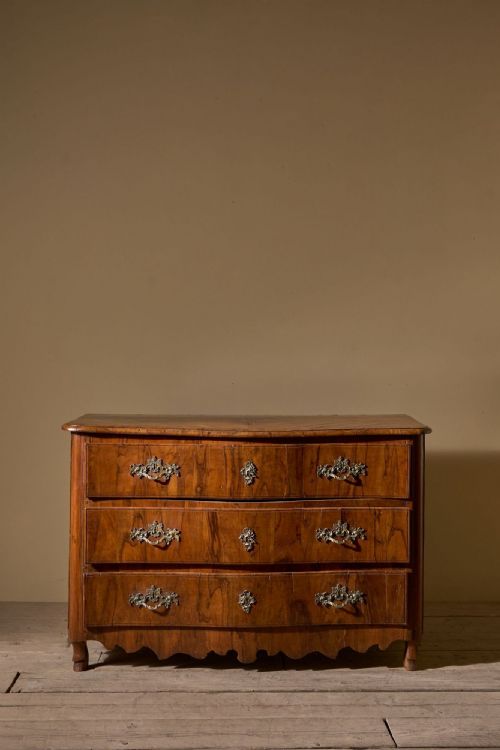


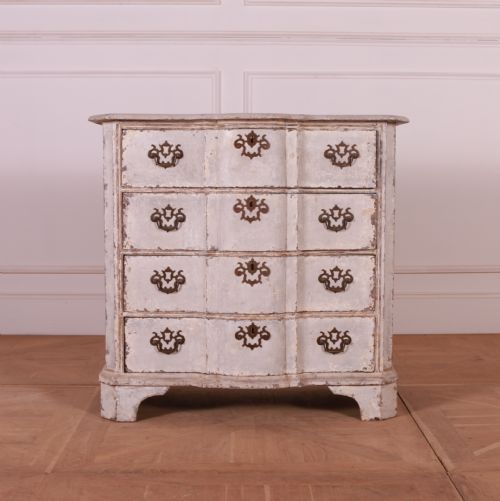


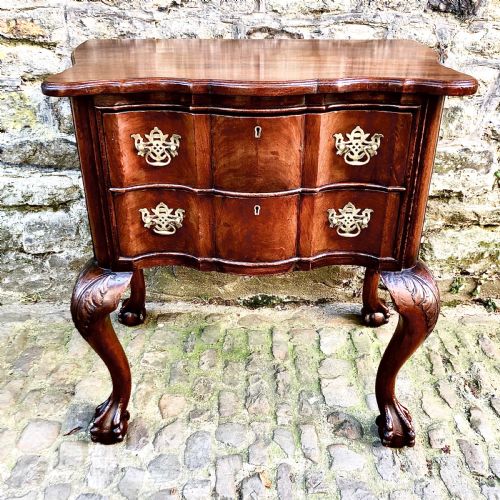

Rococo Brass Handle Chest
A rococo brass handle chest brings fluid, asymmetrical elegance and substantial storage to a room through richly figured timber and expressive hardware.
Rococo Brass Handle Chest
When you search for a rococo brass handle chest, you are looking at eighteenth and nineteenth century case furniture defined by serpentine, bombe, or straight fronts fitted with ornate metalwork. These pieces originate from regional European workshops across England, the Netherlands, France, Portugal, Malta, and Scandinavia.
The version you are most likely to meet on this page is a compact or full-sized chest of drawers or commode, often constructed from walnut, mahogany, oak, or olivewood. Certain examples take the form of miniature or apprentice furniture, reflecting the meticulous scale of workshop trials or specialised cabinetmaking.
Stylistic influences range from Dutch rococo and French provincial to Louis XV designs and Chippendale interpretations. The overriding character relies on curved drawer fronts, shaped aprons, and prominent brass pulls that complement the organic movement of the wood.
Materials and construction methods
Cabinetmakers utilised dense hardwoods including walnut, mahogany, and native oak, frequently selecting olivewood or painted finishes for decorative impact. Timber boards were selected for prominent grain patterns, particularly on serpentine and bombe profiles that required precise shaping of the carcase.
Hardware was cast and chased in brass, secured to drawer faces to punctuate the undulating lines of the furniture. Construction techniques involved dovetail joints for drawers and pegged framing to support the substantial weight of hardwood tops and marble slabs.
Listings feature eighteenth and nineteenth century periods, with materials spanning oak, mahogany, walnut, olivewood, and marble.
Assessing quality in regional case furniture
Quality rests upon the crispness of the timber carving and the harmony between the brass hardware and the wood grain. Pieces with fluid serpentine or bombe profiles demonstrate superior joinery skill compared to straightforward rectangular carcases.
The integrity of the original timber selection and the retention of period brass mounts distinguish finer regional examples from later utilitarian alternatives. The subtlety of the polish and the proportion of the hardware shape the overall visual weight.
The Rococo Brass Handle Chest Glossary
- Bombe
- A bulging, outward-curving chest profile swelling towards the base. This exuberant shape demands advanced woodworking skill to maintain structural stability.
- Serpentine
- A front line curving outward in the centre and inward at the sides. It creates a rhythmic undulating surface across the drawer fronts.
- Commode
- A low chest of drawers originating in France. The term frequently describes continental European examples with generous proportions and decorative mounts.
- Chippendale
- An eighteenth-century English style incorporating rococo and Gothic motifs. It bridged classical proportions with asymmetrical carved details.
Rococo Brass Handle Chest: Frequently Asked Questions
What defines a rococo brass handle chest?
These pieces are eighteenth and nineteenth century chests of drawers and commodes characterised by curved drawer fronts and prominent brass hardware. They showcase regional European styles from Dutch bombe shapes to English Chippendale designs.
Cabinetmakers built them using hardwoods such as walnut, mahogany, oak, and olivewood, often incorporating marble tops or painted finishes. The combination of dynamic wood grain and cast metal handles creates their distinctive visual appeal.
Where were these chests made?
The evidence points to workshops across continental Europe and Britain, including the Netherlands, France, Portugal, Malta, and Scandinavia. Each region adapted the broader rococo taste to local materials and architectural preferences.
Dutch and French pieces frequently display pronounced serpentine or bombe contours, while English examples lean towards Chippendale proportions. Regional variations in timber choice, from native oak to exotic mahogany, reflect local trade routes and tastes.
How do I style a antique chest in a modern room?
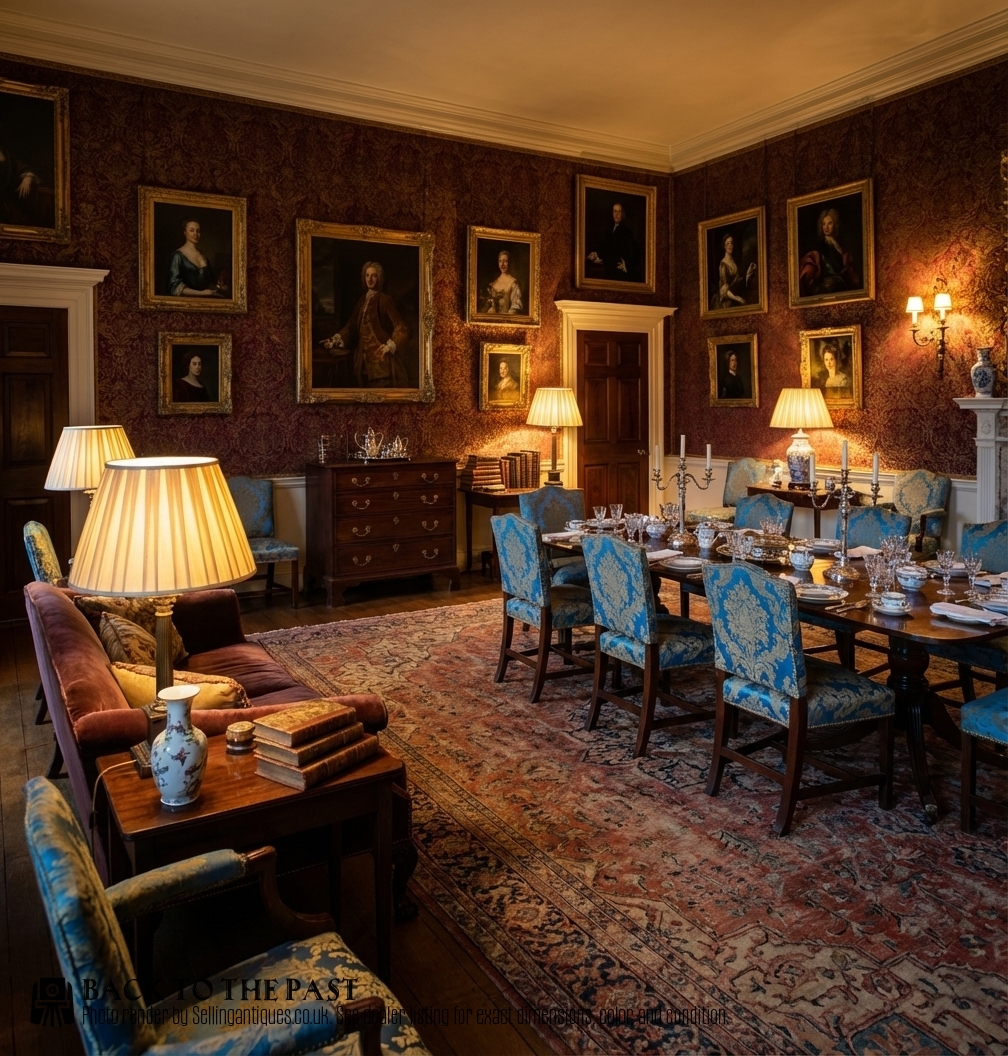
A period chest functions effectively as a focal point in a hallway, bedroom, or living space, offering generous drawer storage while displaying rich wood textures. Placing a simple mirror or lamp above the surface balances the ornate character of the brass handles.
Allowing sufficient space around serpentine or bombe forms ensures the curved silhouette remains visible. The natural warmth of walnut, mahogany, or olivewood complements both contemporary neutral interiors and traditional settings.
How can I tell the period of a chest?
Dating relies on examining the construction methods, timber species, and stylistic vocabulary evident in the carcase and drawer linings. Eighteenth-century examples often feature hand-cut dovetails and native hardwoods specific to regional European traditions.
Stylistic shifts, such as the transition from rigid geometric forms to fluid Louis XV or Chippendale curves, help narrow down the decade of manufacture. Hardware styles and secondary woods like pine or oak further clarify the geographic origin and era.