


Rich Mahogany Buffet
A rich mahogany buffet brings profound grain and substantial storage to a dining room, uniting utility with the warmth of aged timber.
Rich Mahogany Buffet
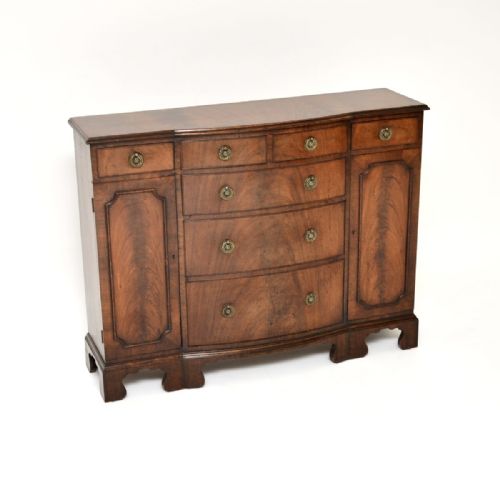
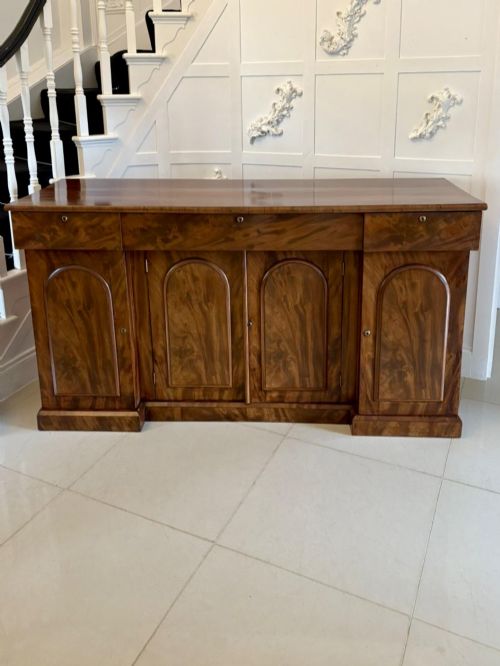
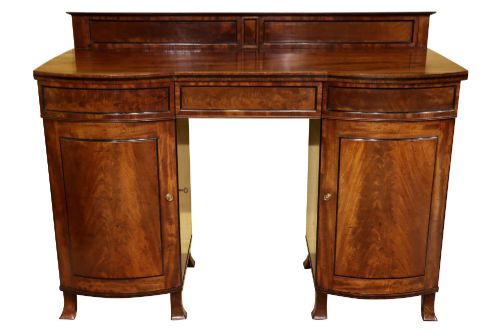
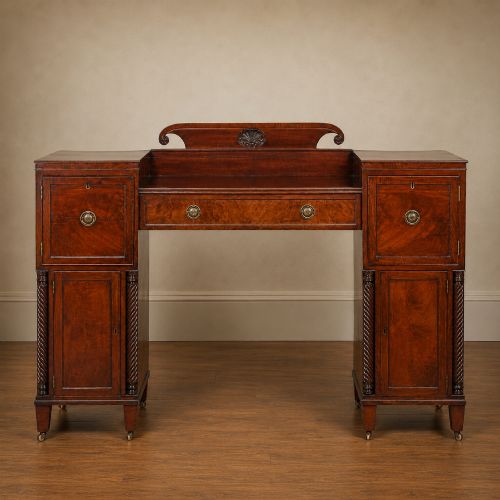
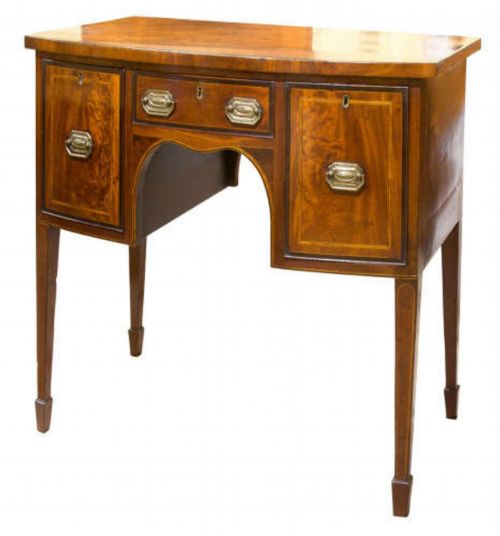
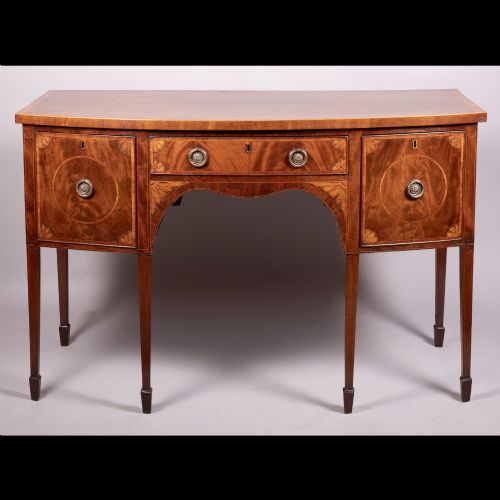
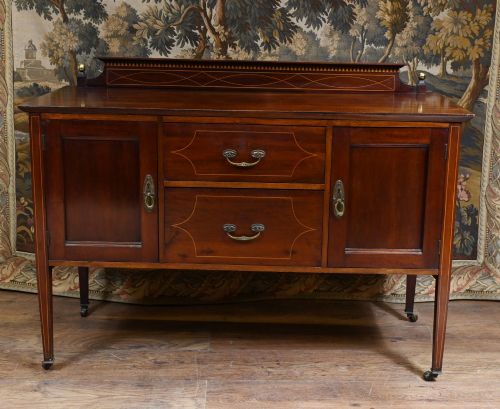
A rich mahogany buffet encompasses sturdy dining room furniture designed for serving and storage, spanning forms such as sideboards, pedestal tables, and chiffoniers. These pieces emerge predominantly from Victorian, Regency, and Georgian periods, alongside later revival interpretations.
Buyers meet variations featuring bow fronts, breakfronts, and serpentine shapes. The selection leans heavily toward nineteenth-century Victorian and Regency examples, alongside eighteenth-century Georgian formats.
Materials and construction methods
Cabinet makers utilised solid timber alongside flame mahogany veneer to create deep, figured surface patterns. Satinwood inlay, purpleheart banding, maple, and walnut often accent the primary mahogany carcase.
Carved details, brass fittings, and structural elements define the joinery of these serving tables and cabinets. Construction methods balance heavy timber frames with delicate decorative veneers.
Listings feature pieces spanning the eighteenth, nineteenth, and early twentieth centuries, incorporating materials like flame mahogany, satinwood, and purpleheart.
Distinctions in quality
The standard of a buffet rests in the depth of the timber figuring and the precision of veneer selection. Flame mahogany and balanced grain patterns distinguish finer examples from plain timber carcases.
Proportion and scale dictate desirability, particularly in unusually small pieces or grand pedestals. Subtle details such as banded inlays and carved mouldings separate standard production from master craftsmanship.
Gillow
The Rich Mahogany Buffet Glossary
- Flame mahogany
- A veneer figure resembling flickering flames, prized for its dramatic pattern. It derives from the fork of the mahogany tree where the grain twists.
- Bow front
- A convex, curved front section popular in nineteenth-century sideboards. This shape softens the room's geometry while expanding interior capacity.
- Serpentine
- A gently undulating front edge curving outward and inward in a continuous wave. This profile requires immense skill from the cabinet maker.
- Pedestal sideboard
- A central serving board flanked by separate pedestals or cupboards. It represents a grand dining room form common in the Regency era.
- Chiffonier
- A low cabinet equipped with drawers and shelves, often serving a similar function to a sideboard. Victorian iterations frequently incorporate enclosed lower cupboards.
Rich Mahogany Buffet: Frequently Asked Questions
How do I spot a Georgian buffet?
Georgian buffets display restrained classical proportions, often featuring subtle stringing, tapered legs, and straight or bow fronts.
Construction from this era relies on dense, heavy mahogany timber with hand-cut dovetails inside the drawers.
What is a pedestal sideboard?
A pedestal sideboard consists of a central board connected to two distinct side cupboards or pillars. This arrangement dominated high-status dining rooms during the Regency period.
The layout provided designated storage for dining china and serving platters.
How do I maintain mahogany furniture?
Mahogany requires stable humidity levels and protection from direct sunlight to prevent the timber from drying or fading. Regular dusting with a soft cloth preserves the polished finish.
Occasional waxing feeds the grain and maintains the rich lustre of the wood.
What distinguishes Victorian buffets?
Victorian buffets tend to be heavier and more elaborately carved than their Georgian predecessors. They frequently incorporate four doors, bold scrolling brackets, and plum pudding mahogany veneers.
These pieces were built to accommodate the formal dining practices of the nineteenth century.