



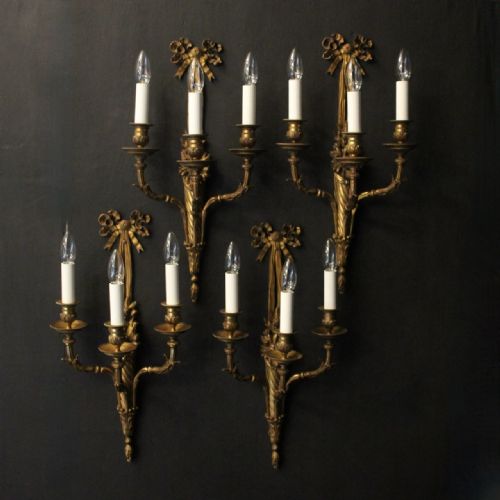


Ribbon Bow Lights
Ribbon bow lights bring delicate neoclassical elegance to a room, casting warm illumination from wall sconces and chandeliers.
Ribbon Bow Lights
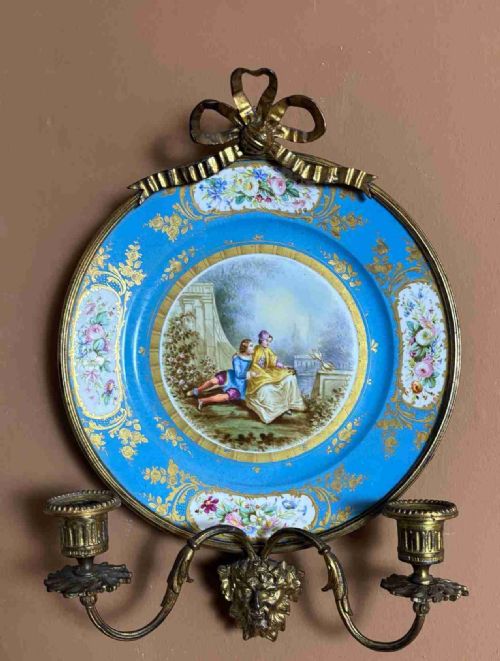
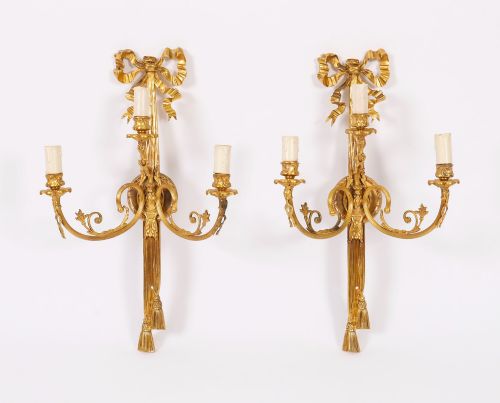
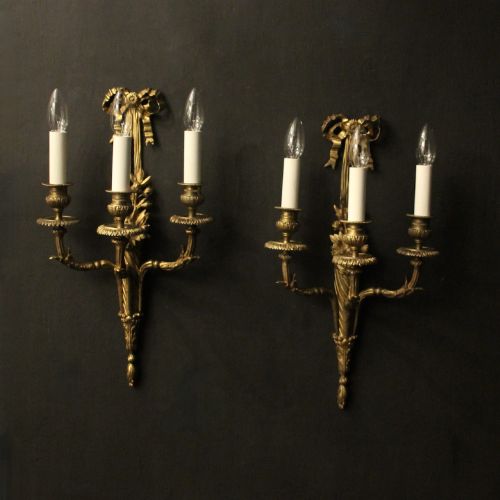
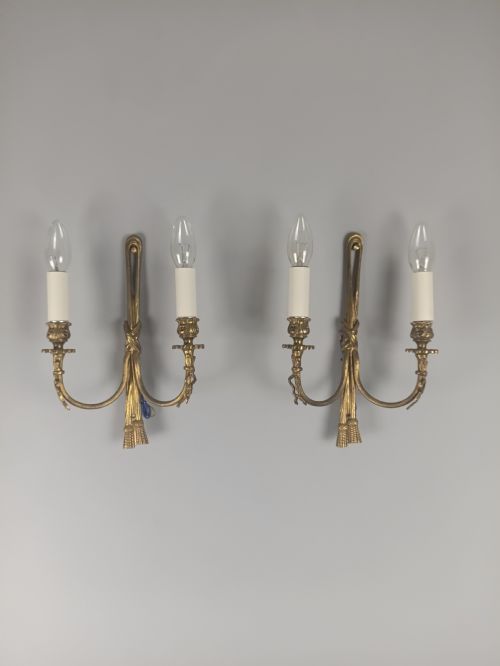
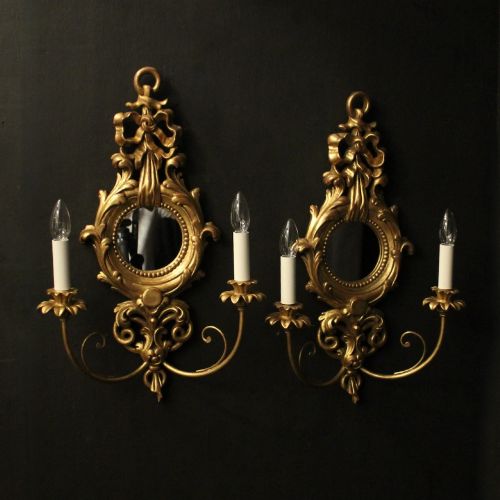
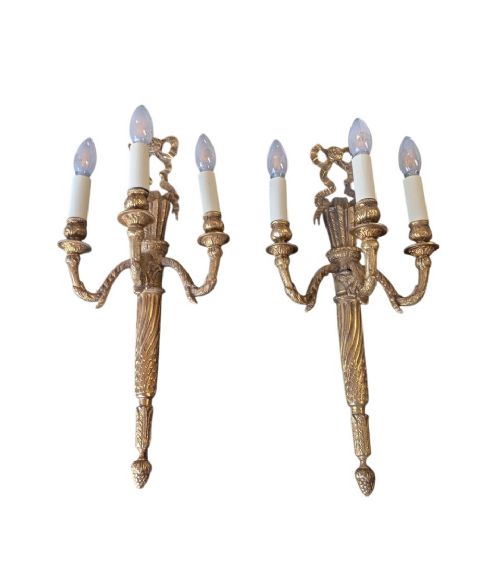
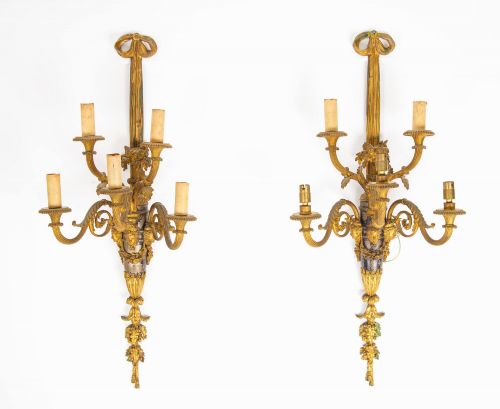
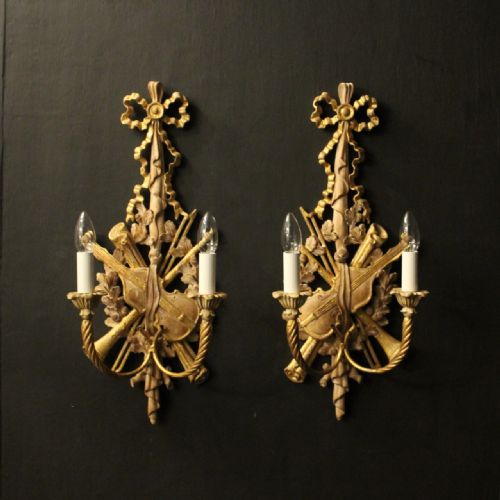
Ribbon bow lights encompass decorative wall sconces, girandoles, and chandeliers defined by sculptural ribbon and bow motifs. These fixtures appear primarily as pairs of French wall lights reflecting Neoclassical, Louis XVI, and Adam Revival styles.
The selection ranges from twin-arm brass fixtures to large multi-armed gilded bronze designs. Pieces span the Victorian, Edwardian, and Georgian periods alongside early twentieth-century interpretations.
Materials and Techniques
Casting forms the structural basis of these metal fixtures, utilising brass, bronze, and ormolu. Metal elements frequently receive surface treatments such as gilding, gold leaf, or silver gilding.
Carved wood and giltwood appear alongside metalwork, sometimes combined with toleware or glass elements. Stamped signatures on bronze pieces indicate skilled foundry production from Parisian makers.
Ribbon Bow Lights Retail Price Guide 2026
Typical asking prices for ribbon bow lights among the pieces listed under this phrase on Sellingantiques today, from the lower quarter to the upper quarter. They describe what is for sale here now, not the wider market.
Periods represented include Victorian, Edwardian, Georgian, and nineteen-thirties pieces.
Quality and Distinction
The finesse of the chased and carved details dictates the calibre of the piece, separating standard production from exceptional artistry. Crisp relief work in the ribbons and bows distinguishes superior castings.
Substantial weight in bronze and brass fixtures alongside the richness of the original gilding marks the finer examples. Maker signatures and stamps provide additional distinction to historical lighting.
Henri Vian·Maison Baques
The Ribbon Bow Lights Glossary
- Ormolu
- Gilded bronze typically associated with French decorative metalwork from the eighteenth and nineteenth centuries. This technique involves applying a finely ground mercury and gold amalgam to bronze.
- Girandole
- An ornamental branched wall light or sconce often incorporating a mirror to reflect the candlelight. These pieces frequently feature carved giltwood or gilded bronze frames.
- Toleware
- Painted or lacquered sheet metal items produced in various European workshops. The material is often shaped into floral or foliate components for decorative lighting.
- Louis XVI Style
- A neoclassical design aesthetic popular during the late eighteenth century and revived in later periods. It employs restrained classical symmetry, ribbon motifs, and botanical swags.
Ribbon Bow Lights: Frequently Asked Questions
What periods do these lights come from?
The inventory spans the nineteenth and twentieth centuries, incorporating Victorian, Edwardian, and Georgian eras alongside pieces from the nineteen-twenties and thirties.
Design influences draw heavily from earlier Neoclassical and Louis XVI traditions, often expressed through later revivals.
How do I mount wall sconces?
Wall sconces attach directly to wall studs or via appropriate wall anchors depending on the weight of the metal or wooden structure. Professional electrical installation ensures secure connection to household wiring.
Consider the mounting height relative to furniture placement and eye level to achieve balanced illumination.
Are these fixtures suitable for modern wiring?
Most antique wall lights and chandeliers adapt well to contemporary electrical standards when inspected by a qualified electrician. Wiring can be integrated through the existing structural channels of the arms and backplates.
Using low-heat LED candle bulbs helps protect fragile gilt surfaces and old materials from thermal damage.
How do I distinguish Louis XVI style?
Louis XVI style identifies through straight structural lines, symmetrical geometry, and classical motifs such as acanthus leaves, urns, and suspended ribbons. This aesthetic contrasts with the more flamboyant curves of earlier Rococo design.
Cast bronze, brass, and giltwood provide the primary mediums for expressing these architectural proportions.